

Magazine
How Did He Become a Torah Giant? The Night That Changed Everything
There was no bread in the house that night. But what happened in that moment ignited a lifelong devotion that would transform a poor child into a Torah giant.
- Naama Green
- | Updated
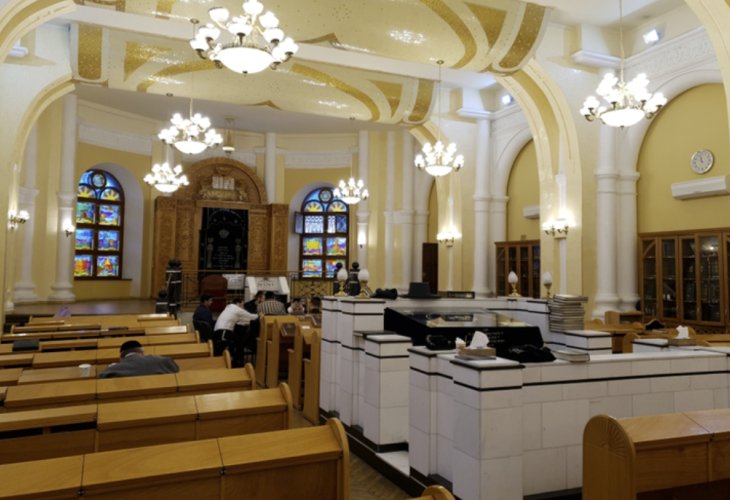 (Illustrative photo: Shutterstock)
Rabbi Asher Kovalsky shares a remarkable story about the renowned Kabbalist Rabbi Raphael Moshe Luria, one of the great Torah scholars of Jerusalem.
Rabbi Luria was known worldwide as a towering Torah scholar and one of the leaders of the Sha'ar HaShamayim yeshiva. Over the course of more than seventy years of learning and teaching, he authored dozens of books covering many areas of Torah. Anyone who studies his writings is struck by the depth of his knowledge and the clarity of his insight.
Yet Rabbi Luria himself once shared a surprising explanation for how he became such a great scholar.
The Night That Changed Everything
Toward the end of his life, Rabbi Luria’s sister once asked him a question.
“Raphael Moshe,” she said, “how did you merit becoming such a great Torah scholar?”
Rabbi Luria smiled gently.
“I actually know the reason,” he replied. “It’s because I stayed awake that night. You were already asleep.”
His sister looked puzzled.
“Which night are you talking about?”
Rabbi Luria then began to tell a story from their childhood.
“I grew up in a very modest home,” he said. “Supporting the family was extremely difficult. My father, Rabbi Mordechai Yechiel Luria, worked tirelessly just to bring home enough bread for the children.”
His parents lived with extraordinary sacrifice.
“Sometimes my parents had only a single slice of bread for the entire day,” Rabbi Luria recalled. “My father took on exhausting manual labor whenever he could find it, and each evening he would bring home whatever he had earned that day so my mother could buy basic food for the family.”
One day, however, things were different.
A House Without Bread
That evening his father came home empty handed.
Instead of placing money on the table, he let out a heavy sigh.
“All day I searched for work,” he said. “But today there was none.”
The meaning was clear. There would be no money that night and no bread for the next day.
His father quietly gave up the small piece of bread that had been meant for him.
“At least the children will have something in the morning,” he said to himself as he went to sleep hungry.
The children woke up the next morning and ate the little bread that had been left for them. They went to school, but when they returned home later there was no lunch waiting.
Their father had gone out again to search for work. The house remained empty and the children were hungry.
A Note From the Teacher
That evening young Raphael Moshe returned home from school with a note from his teacher.
The note read:
“Today your son Raphael Moshe asked such a deep question that even I could not answer it. I will bring the question to the great scholars of the city. This child is extraordinary.”
His mother read the note with excitement.
The entire family was filled with pride and joy.
Then Rabbi Luria turned to his sister and asked softly:
“Do you remember that day?”
She nodded.
“Yes,” she said. “I remember.”
“Up until that point,” Rabbi Luria continued, “everything I told you happened while we were all awake. But now I will tell you what happened later that night, after you had already fallen asleep.”
The Meal of Joy
Late that night their father returned home.
The first thing he asked was about the children.
“Did they go to sleep hungry?” he asked.
His mother answered gently.
“No. Tonight they went to sleep full and happy.”
The father was surprised.
“How could that be? I didn’t leave any money for food.”
Then the mother explained.
“Today Raphael Moshe came home with a note from his teacher. The teacher wrote about the remarkable question he asked in class. He was so excited, and we were all so proud of him.”
She smiled as she continued.
“That excitement filled the house. Tonight we ate Raphael Moshe’s question. We drank that question. We even made a blessing over it. That was our meal.”
The Discovery of the Taste of Torah
Rabbi Luria paused as he told the story.
“That night,” he said, “I could not fall asleep.”
A powerful realization filled his heart.
“If the Torah can bring so much joy into a home even when there is no bread,” he thought, “then the Torah is the true nourishment of life.”
In that moment he made a decision.
“I resolved that night to devote my entire life to Torah. I understood that Torah is a higher kind of nourishment that gives a person strength far beyond physical food.”
And from that moment, the young boy began the journey that would lead him to become one of the great Torah scholars of his generation.
When Children Taste the Sweetness of Torah
Rabbi Kovalsky concludes with an important lesson.
When children grow up in a home where Torah is cherished and celebrated, they develop a deep connection to it. When they see their parents’ love for Torah and feel the spiritual joy it brings, that experience shapes their entire lives.
The Torah becomes part of them.
And just as the verse promises, the connection continues from generation to generation.
“They shall not depart from your mouth, nor from the mouth of your children, nor from the mouth of your children’s children.”

