

Wonders of Creation
NASA Research on the Moon and an Ancient Talmudic Insight
Lunar research suggests the Moon is cooling and shrinking. Jewish tradition described a diminished Moon centuries ago
- Shuli Shmueli
- | Updated
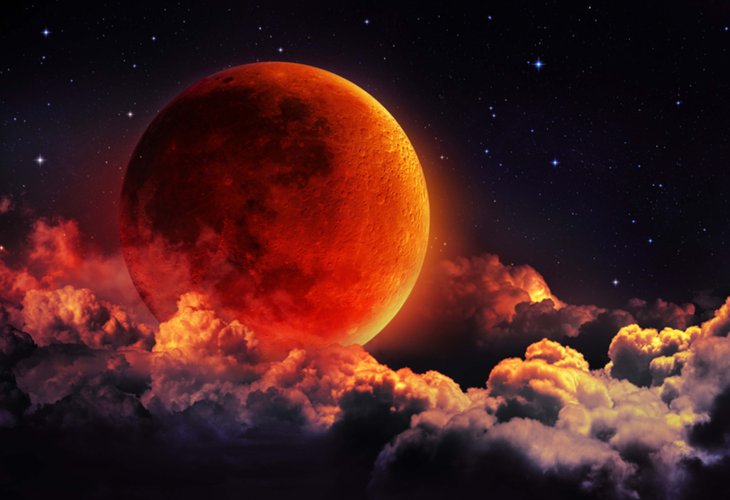 (Photo: shutterstock)
A study by the United States space agency analyzed measurements taken from the Moon during the Apollo missions. These missions included both crewed landings and unmanned experiments. When combined with new data, researchers concluded that the Moon’s core is gradually cooling and shrinking.
As the Moon’s core contracts, the rigid lunar crust breaks. One section is pushed into another, forcing the surface upward and creating steep cliffs. These cliffs are known as thrust faults. According to findings published in the scientific journal Nature Geoscience, researchers believe these faults are responsible for the moonquakes that occasionally occur on the Moon.
Geological Effects of the Moon’s Contraction
The Moon’s contraction also causes another geological phenomenon called thrust faulting, where older layers of lunar soil are pushed upward over younger layers.
Thomas Watters, a senior scientist at the Center for Earth and Planetary Studies at the Smithsonian’s National Air and Space Museum in Washington, explained the significance of the findings in a statement to NASA: “Our study provides the first evidence that these faults are still active and likely producing moonquakes as the Moon gradually cools and contracts.”
The research therefore indicates ongoing tectonic activity on the Moon, caused by the slow and continuing cooling of its interior.
Evidence of the Moon’s Volcanic Past
Additional research conducted in recent years suggests that in its early history the Moon had a hot and geologically active surface. According to NASA researchers, it once experienced intense volcanic activity, with lava fountains erupting across its surface.
Scientists studying images captured by the Lunar Reconnaissance Orbiter have identified geological formations that point to volcanic activity in the Moon’s past. These formations provide clues about the fiery processes that shaped the Moon during its earliest stages.
Ancient Jewish Teachings About the Moon
Rabbinic tradition also contains descriptions related to the Moon’s original state. According to the sages, the Moon was initially created as a great luminary, similar to the Sun, shining powerfully and blazing with fire. Over time, however, its light diminished and its size became smaller.
The Talmud, written about 1,500 years ago, describes a well known teaching about the creation of the two great luminaries: “God created the two great lights… The Moon said before the Holy One, Blessed be He: ‘Master of the universe, can two kings share one crown?’ He said to it: ‘Go and diminish yourself.’” (Talmud, Chullin 60b)
According to this teaching, the Moon was originally equal to the Sun but later became the “smaller light,” both in size and in brightness.
A Midrashic Explanation
A similar idea appears in Otzar HaMidrashim, a collection of ancient rabbinic teachings. The text explains that on the fourth day of creation, God formed the Sun and the Moon and initially made them equal in stature.
The Moon questioned why two great lights were created if one would ultimately be greater than the other. In response, God decreed that the Moon should diminish itself and become one sixtieth the brightness of the Sun.
According to the Midrash, the Moon later expressed regret and asked why it was punished for raising the question. God then promised that in the future the Moon’s light would again increase, as described in the prophetic verse: “The light of the Moon will be like the light of the Sun.”
Ancient Wisdom and Modern Discoveries
These ancient teachings raise an interesting question. How could such ideas about the Moon’s changing condition have been preserved in Jewish tradition long before the development of modern astronomy?
According to this perspective, the knowledge contained in the Torah and rabbinic tradition originates from the divine source that created the universe itself. In this view, technological and scientific advances often confirm insights that were already present in the teachings of the sages.
As scientific understanding continues to develop, discoveries about the structure and history of the universe sometimes echo ideas that appeared in ancient traditions centuries or even millennia earlier.

