

Behind the News
Why Israel Is Now Targeting Iran’s Oil Infrastructure
Strikes on Tehran fuel depots signal a shift from targeting weapons to hitting the systems that fuel and finance Iran’s military
 Iran Oil Refineries (27a)
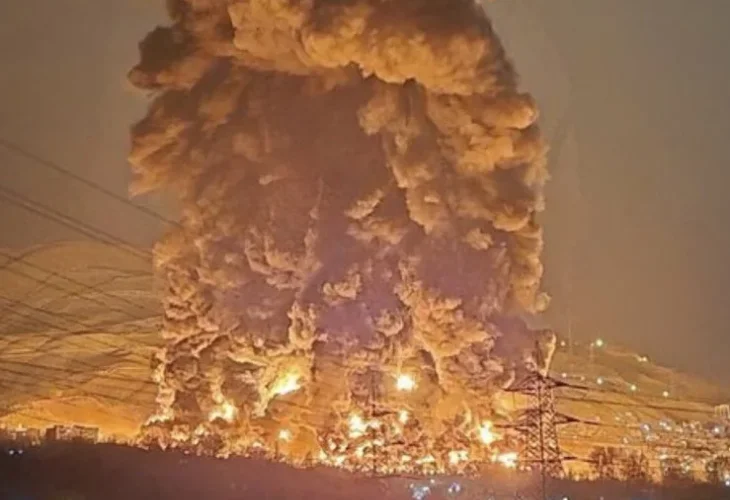
Israel expanded its campaign against Iran on Saturday night by striking several fuel storage facilities in and around Tehran, igniting massive fires visible across parts of the capital. The attack marks the first time in the current war that Israeli forces have targeted infrastructure connected to Iran’s energy system.
Iran’s Oil Ministry confirmed that multiple fuel depots in Tehran Province and neighboring Alborz Province were hit, including sites near the capital and in the city of Karaj west of Tehran. Israeli reporting said roughly 30 oil storage tanks were targeted in the wave of strikes near Tehran’s refinery complex and other storage facilities, as emergency crews worked to contain the fires.
The IDF confirmed the strike and said the targeted facilities were used directly by Iran’s military forces. “The Iranian regime’s military forces use these fuel tanks directly and frequently to operate military infrastructure. This is a significant strike that represents another layer in deepening the damage to the military infrastructure of the Iranian regime.”
The move represents a notable shift from the previous round of direct Israel-Iran fighting last June. During that conflict, Israeli strikes focused on missile systems, launch sites, air defenses and command centers while largely avoiding Iran’s oil infrastructure.
At the time, the United States strongly opposed attacks on Iranian energy facilities because of concerns about regional escalation and potential disruption to global energy markets. The current campaign reflects a different calculation, with energy infrastructure now included among the targets tied to Iran’s military system.
Parts of Iran’s oil industry have increasingly come under the influence of the IRGC, which controls major parts of the country’s economy and uses those resources to support military activity and proxy groups across the region. Oil revenue from these sectors helps fund Iran’s military programs and proxy groups abroad like Hezbollah and Hamas.
Fuel infrastructure also plays a direct logistical role in sustaining Iran’s military operations. Storage depots supply fuel for aircraft, vehicles and other operational systems used by the Iranian armed forces and the IRGC, making them a critical part of the regime’s ability to sustain military activity.
The strike fits the broader pattern of Israel’s campaign against Iran. Earlier phases of Operation Roaring Lion focused on degrading Iran’s air defenses, ballistic missile production sites and launch systems before expanding to infrastructure that helps sustain the regime’s military activity. By targeting fuel depots, Israel is now moving beyond weapons systems to the logistical and economic networks that allow those weapons to be produced, fueled and deployed.
Energy infrastructure sits at the center of Iran’s economy and its ability to finance military programs and regional allies. Striking oil-linked facilities therefore extends Israel’s campaign beyond weapons systems to the infrastructure that allows the regime to sustain its war effort.
Questions & Answers
+Does Iran’s oil sector fund the Islamic Revolutionary Guard Corps?
+Why did Israel avoid Iranian oil targets in previous conflicts?
+Why is Iran’s oil infrastructure strategically important?

