

Magazine
A Miracle in Auschwitz: The Baby Who Captivated a Nazi Officer
A baby’s smile in Auschwitz led to an incredible miracle. That child later became Dr. Ephraim Wasservogel.
- Hidabroot
- | Updated
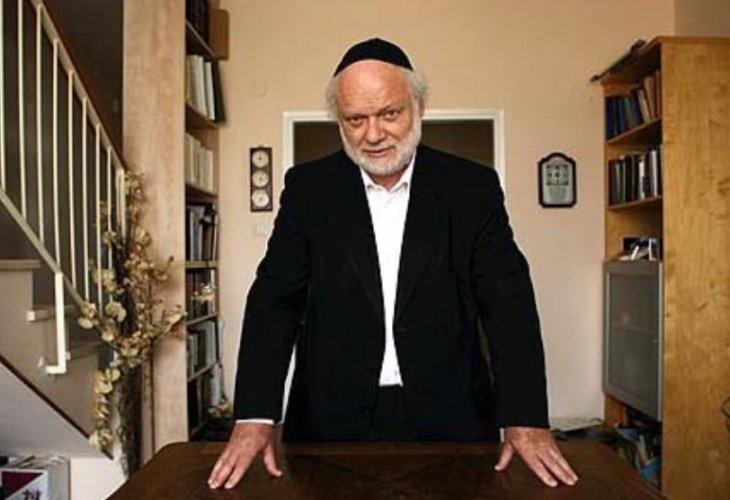 Dr. Ephraim Wasservogel
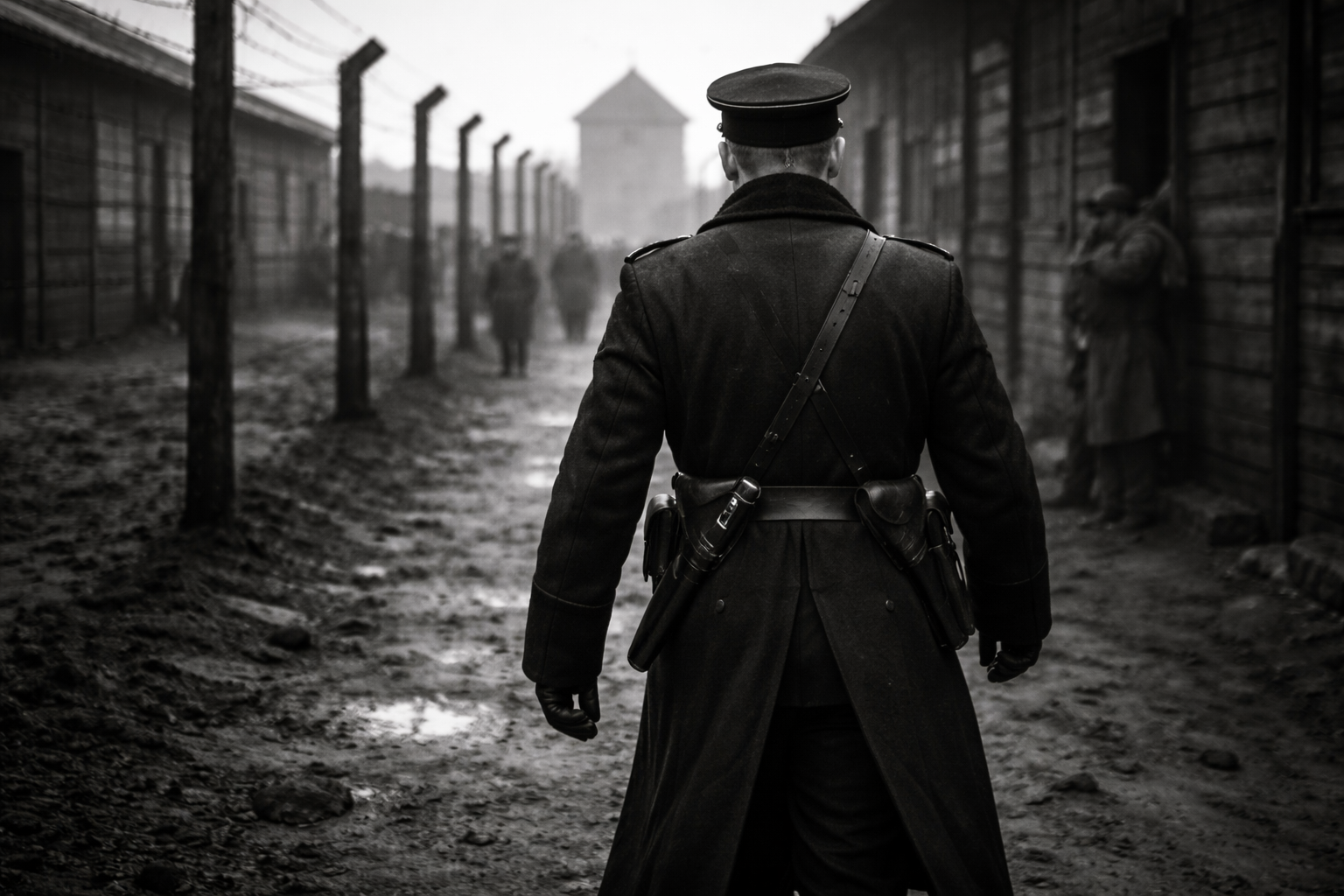
Auschwitz Camp 1, April 1944. The camp suddenly burst into unusual activity. A high ranking Nazi officer had arrived and immediately summoned the SS command staff for an urgent meeting.
Germany’s vision of a thousand year Reich was collapsing. The war was turning against them, and the Nazis no longer saw a reason to maintain large numbers of prisoners. A decision was discussed regarding the fate of the camp’s political prisoners. In the middle of the conversation, the officer asked a surprising question.
“Who is the longest serving political prisoner here?”
That question would soon change the life of one woman and her infant son.
A Courageous Woman in Nazi Occupied Poland
Poland, 1941.
Miriam Veniger was a Jewish lawyer, one of the few women at the time who had been able to study at university. She was educated, outspoken, and courageous.
She came from an intellectual Jewish family, but as a child she had a Christian nanny who taught her Christian customs and rituals. At the time, no one imagined how valuable that knowledge would one day become.
Unlike many Jewish homes in Eastern Europe, Miriam’s family did not speak Yiddish. This would later help her survive. The Nazis often tried to identify Jews pretending to be Christians by testing their Yiddish. Those who spoke it were immediately exposed.
Miriam also possessed a passport issued before the war that did not identify her as Jewish. Her appearance and social standing helped her hide her true identity.
She married Joseph Zimmer, a Jewish pianist and mathematician, the son of the rabbi of Bialystok. Their marriage certificate described them simply as “Polish and Jew,” marking them as a mixed couple in the eyes of the Nazis.
When Germany invaded Poland, Miriam and Joseph managed to hide in a secret apartment. But eventually a neighbor reported them to the Gestapo.
Tragedy and Arrest
The Gestapo burst into the apartment and immediately shot Joseph Zimmer in front of his wife.
Believing Miriam to be Christian, they spared her life but sent her to prison. Only there did she discover that she was pregnant.
After enduring a series of interrogations and hardships, she was eventually transferred to Auschwitz Camp 1, which housed political prisoners.
It was there, inside the camp, that she gave birth to a baby boy.
A Baby in Auschwitz
By December 1943 the Germans knew about the child.
To this day, no one fully understands why they allowed the baby to live.
Life in Auschwitz was almost impossible even for adults. For a newborn it seemed unimaginable. Miriam herself was severely malnourished, and the tiny food rations given to prisoners did not include anything for the baby.
Every day that the infant remained alive was nothing short of a miracle.
As an educated woman, Miriam knew that sunlight was essential for a child’s health and development. Food might be impossible to obtain in the camp, but the Nazis could not control the sun.
Every day she carried the baby outside, undressed him, and allowed his small body to absorb the weak European sunlight.
She did this with remarkable confidence, so much so that even the guards eventually ignored her.
A Smile That Changed Everything
We return now to April 1944.
The Nazi commander walked through the camp accompanied by his entourage, inspecting the prisoners and searching for the longest serving inmate.
At that moment Miriam happened to be outside her barracks holding her baby.
The officer stopped when he noticed the unusual sight. A baby in Auschwitz was something he had never seen before.
Curious, he approached the young mother and looked down at the infant.
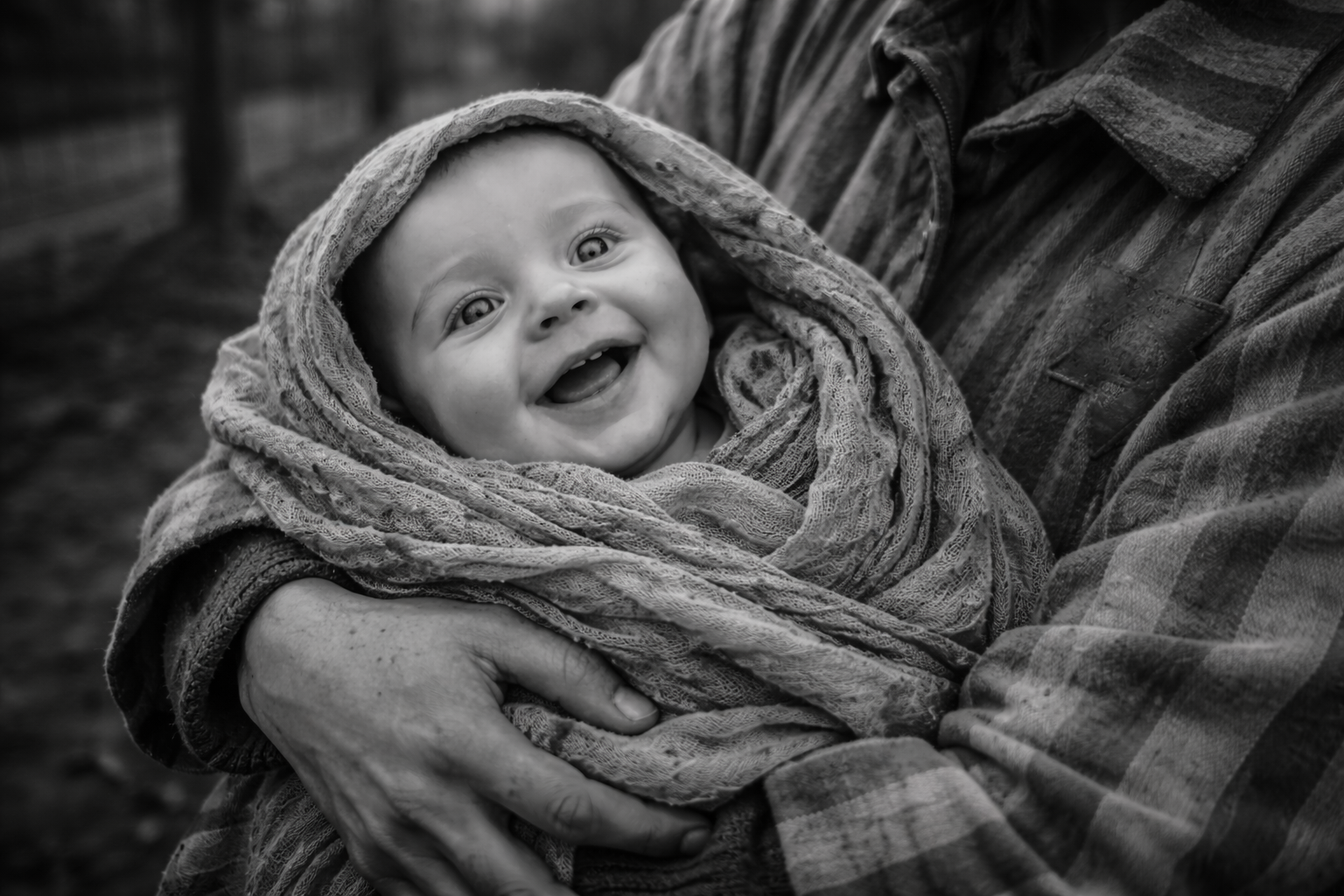
At that moment the baby opened his wide blue eyes and smiled.
The officer seemed captivated by the child.
“Take your belongings and leave,” he ordered.
Incredibly, Miriam and her baby were released from Auschwitz.
Survival and a New Life
Miriam walked out through the gates of the camp, stunned by the magnitude of the miracle. Yet she knew that danger still surrounded them. As long as Nazi Germany continued to operate, their lives were still at risk.
Mother and son endured many hardships until the complete liberation of Poland by the Russian army.
The baby was named François.
His Jewish name would later become Ephraim Wasservogel.
A Brilliant Career
Dr. Ephraim Wasservogel grew up far from Jewish religious practice.
After the war, Miriam moved with her son to France. When Ephraim was three years old, his mother introduced him to Moshe Wasservogel, whom she married after the war.
In those chaotic years, formalities were simple. Registering a child at the town hall was enough to establish legal parenthood.
François, as he was then known, grew into a gifted and brilliant young man.
At a very young age he held prestigious positions. He served as an envoy for the French government to Venezuela. In 1968 he became personal assistant to Pierre Dreyfus, president of Renault, and by the age of twenty five he had already joined the company’s executive leadership.
He played a key role in developing the famous Renault 5 and was involved in managing Renault’s racing division.
Later he became vice president of Batel, integrating advanced technology into the automotive industry. In 1986 he was appointed head of the automotive division at Usinor, the world’s second largest steel supplier.
Discovering His True Identity
Throughout his childhood Ephraim knew he was Jewish but did not fully understand what that meant.
His home contained almost no signs of Jewish practice.
“There wasn’t even a brit milah,” he later recalled.
His mother rarely spoke about the war. The only thing she would say was, “Whatever you hear about the war, it was a million times worse.”
As Ephraim grew older he began to notice inconsistencies in the story of his father.
His analytical mind began doing the math.
In 1971, while working at Renault, he received a phone call informing him that Moshe Wasservogel had passed away. When he arrived at the hospital he turned to his mother and said something surprising.
“He was very good to me, even though he wasn’t my real father.”
His mother was shocked.
“How do you know?” she asked.
Only then did she realize that her son had uncovered the truth long before she had ever told him.
Later she showed him a photograph of his real father. Ephraim immediately saw the resemblance.
He was looking at his own reflection.
A Journey Back to Faith
Ephraim’s return to Judaism did not happen suddenly.
“It was not a mystical moment,” he explains. “The process was gradual, step by step.”
Much of the inspiration came from his wife, Batya.
Unlike Ephraim, she had grown up in a home that maintained some connection to Jewish tradition. While living in Switzerland in the 1980s, she began attending Jewish classes.
At first Ephraim barely noticed the changes at home. His wife asked for separate dishes, covered her hair with a scarf, and adopted new habits.
Eventually he realized what was happening.
“I understood that I had two options,” he says. “Either I would go with her on this journey, or I would not.”
Torah and Science
When Ephraim first entered a beit midrash he was startled by the intensity of the discussions.
Hundreds of students debated loudly over the texts.
“At first I thought they were fighting,” he laughs.
But what caught his attention most was the enormous library filled with Jewish books.
Curiosity drove him to begin learning.
“I had always heard that Jews were people of the book. I wanted to know what those books actually contained.”
Over time he discovered something surprising.
“I never experienced a conflict between science and Torah,” Dr. Wasservogel says. “There was always an empty space inside me waiting for something spiritual. Only when I discovered Torah did that space become filled.”
A Life in Israel
In 1996 Dr. Wasservogel immigrated to Israel.
He initially lived in Ra’anana, working during the day while studying Torah at night. Later he moved to Bnei Brak and changed his daily routine.
In the mornings he studied in a kollel in Kiryat Sefer. In the afternoons he continued his professional work with major companies, including Israel Aerospace Industries.
“When I arrived wearing black clothes, people were shocked,” he recalls. “They could not understand how someone could be both a scientist and a Haredi Jew.”
Today Dr. Wasservogel continues to combine both worlds.
Half his day is devoted to Torah study, and the other half to high level scientific and defense industry work.
For a baby who once smiled inside Auschwitz, it is a life that reflects nothing less than a miracle.

