

Relationships
The Fear of Choosing: Why Some Decisions Feel So Hard in Relationships
Some people struggle with even small decisions. This relationship conversation reveals the deeper difference between preference, choice, and the search for certainty.
- Hannah Dayan
- | Updated
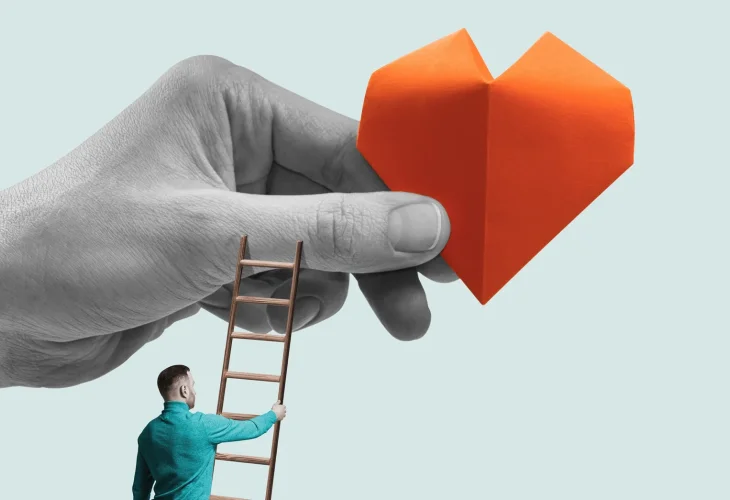 (Photo: shutterstock)
“I really think that if she learned to make choices like I do, our lives would be much easier,” Gidi said.
“What do you mean?” I asked.
“She spends half her life thinking about every little thing. What clothes to wear, what to buy, what’s better to do, which friends to meet. It exhausts me and drains my energy and time. Why can’t she just go with the flow? We agreed to go to a café, so why do we have to introduce so many dilemmas?” Gidi said in frustration.
“Do you think it’s easier for you to choose?” Ma’ira replied quickly. “I feel completely sure about my decision for a moment, and then soon afterward doubts appear again. It’s really important for me to do things wholeheartedly. I’m not willing to compromise on that.”
“But you can’t plan anything like this,” Gidi responded. “Everything gets postponed until the last moment. Remember when we decided to have a date night every Wednesday? You can never know if it will actually happen, because it depends on how you wake up that morning or how the night before went.”
“I also think it’s important to have anchors in our relationship,” she answered, “but what would you prefer, that I force myself?”
I paused for a moment and said, “Let’s take a step back and look at this discussion more carefully. It raises an important question. What exactly is a choice?”
Preference Versus Choice
“Many people confuse preference with choice. A large part of the dilemmas you experience, Ma’ira, may not actually be about choosing. They may be about clarifying what you prefer.”
“What’s the difference?” Gidi asked.
“A preference is something we are naturally drawn to. The moment it stops being pleasant, comfortable, or appealing, we no longer prefer it. Preferences are closely tied to how we feel in the moment.”
“So what is a choice?” Gidi asked.
“A choice comes from a deeper place within the soul. It is the ability to decide on something even when our preferences are not completely clear. Choice allows a person to commit to a direction simply because they have chosen it, without being completely tied to what feels easiest or most comfortable.”
Different Inner Structures
“I really feel that it’s harder for me to choose than it is for Gidi,” Ma’ira said. “Do you think that has something to do with me being a woman and him being a man?”
“According to Kabbalah,” I explained, “a man is described as standing somewhat above reality. This position allows him to detach from his preferences more easily and replace them with others. When he disconnects from those preferences, his ability to choose becomes more accessible, and once he chooses, he can pursue that choice with determination.”
“And what makes it more difficult for women?” Ma’ira asked.
“A woman is described as the place where connection occurs. She is the foundation, deeply connected to reality itself. It is no coincidence that a woman is compared to the moon. She is connected to time and cycles, and she experiences very clear boundaries within that reality."
“In such a structure, where the woman is closely tied to time and reality, letting go of those connections can feel like letting go of part of herself.”
When Reality Meets Dreams
“It is not uncommon for couples to come here and describe a similar tension,” I continued. “The man might say, ‘I dream and she destroys all my dreams. I invite her to sit with me in a café, and she says, “How can we go out with all the dishes in the sink?” I book a romantic getaway, and she reminds me that it’s the exact Shabbat when our son is coming back from yeshiva.’”
“He feels as if she is constantly puncturing his dreams.”
“This happens because her sense of reality is so strong. It makes it difficult for her to jump into a space that feels detached from the practical world.”
It is important to understand that the real difficulty in making choices is often not about what we choose, but about what we are willing to give up when we choose one option over another.
The Search for Certainty
“I feel that my difficulty comes from searching for certainty,” Ma’ira said quietly.
“But there’s really no certainty in anything,” Gidi replied.
“There may not be complete certainty,” I said, “but there can be a feeling of certainty. A person can feel confident in a direction even without absolute proof that it is the perfect choice."
“When someone seeks total certainty and also carries a strong sense of responsibility, they begin constantly calculating risks and sacrifices. That process slowly weakens their trust in their own ability to decide.”
“In that sense,” I continued, “a choice can feel like a gamble. You commit to a direction even though you cannot know with complete certainty how things will turn out.”
“But what if I still feel doubt after I choose?” Ma’ira asked.
“Then you are learning to value the choice even in the presence of doubt,” I answered. “You accept that every decision includes something you are giving up.”
Compassion Within the Relationship
“So you’re saying I have nothing to do about it?” Gidi asked.
“Of course you do,” I said. “The first step is understanding the inner structure behind the difficulty. When you understand this, it becomes easier to approach the situation with compassion."
“It’s not that Ma’ira is destroying dreams or refusing to go with the flow. She is deeply connected to reality, and that is not a weakness. In fact, it is a very important quality.”
“When you approach her with trust, warmth, and patience, you help create a space where she can rise slightly above that reality. In that environment, it becomes much easier for her to choose.”
Learning to Decide Without Perfection
Turning to Ma’ira, I said, “It is okay not to feel complete certainty. The most important thing is to respect and commit to your decision with a sense of calm and flexibility.
“In order to help you with the process of choosing, we will focus less on the content of the decision and more on the mechanism itself."
“There is a decision to be made. It will not be perfect, and it will not come with complete certainty. The real skill we are learning is not how to arrive at the perfect decision, but how to take a decision and stand behind it.”

