

Behind the News
Iran Names Mojtaba Khamenei Supreme Leader, Pointing to Harder Military Path
His rise with backing from the Revolutionary Guards suggests Iran may take a more aggressive military approach and deepen confrontation with Israel and the West
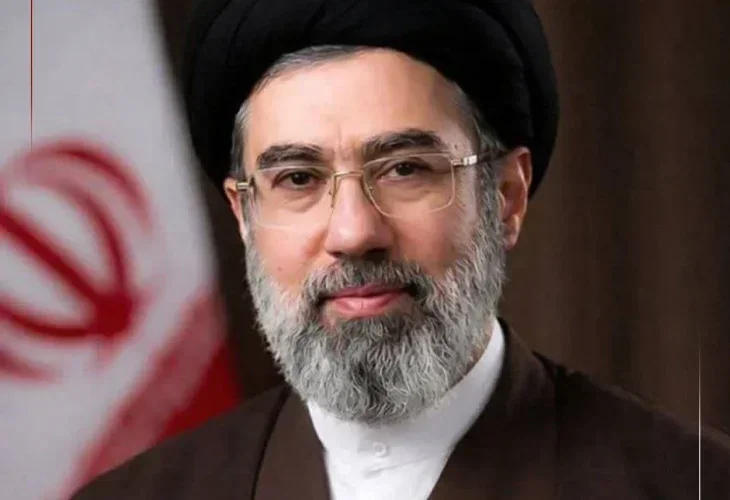 Mojtaba Khamenei (27a)
Iran’s clerical leadership has named 56-year-old cleric Ayatollah Mojtaba Khamenei as the country’s new supreme leader, replacing his father Ali Khamenei, who was killed during the opening phase of the war between Iran and the United States and Israel.
While the “Assembly of Experts,” Iran’s clerical establishment, formally selects the supreme leader, the IRGC, the powerful military force that protects the regime, has long held significant influence inside the country’s security and political system. Mojtaba Khamenei’s close ties to the IRGC have led analysts to interpret his appointment as a potential sign that Iran’s military-security establishment could play an even greater role in shaping the country’s strategic direction than under his father
If the IRGC gains greater influence over Iran’s leadership, the regime’s policies could become more militarized. In practice, analysts say this could mean Iran relying more heavily on armed proxy groups across the Middle East including Hezbollah in Lebanon and militias in Iraq and Yemen to confront its rivals. It could also mean greater emphasis on missiles, drones and other military tools aimed at deterring Israel and the United States, while making diplomatic engagement with Western countries less likely.
The 88-member Assembly of Experts announced the decision in a statement broadcast by Iranian state media. “By a decisive vote, the Assembly of Experts appointed Ayatollah Seyyed Mojtaba Hosseini Khamenei as the third leader of the sacred system of the Islamic Republic of Iran,” the body said. The statement added that the selection was made despite external pressure on the regime. “The Assembly did not hesitate for a minute despite the brutal aggression of the criminal America and the evil Zionist regime,” the statement said.
Shortly after the announcement, Iran’s IRGC issued a statement pledging loyalty to the new leader. The Guards declared they were ready for “complete obedience and self-sacrifice in carrying out the divine commands of the Guardian Jurist.”
The IRGC is one of the most powerful institutions in the Islamic Republic. It controls key elements of Iran’s military forces, missile programs and regional proxy networks, while also holding significant economic influence inside the country. Over the years it has grown into a central pillar of the regime’s security structure.
Mojtaba Khamenei, the second son of Ali Khamenei, has long been closely connected to the Guards. For years he operated largely behind the scenes as a key figure inside his father’s office, often described as a “gatekeeper” who maintained relationships with military and security officials across the regime.
Despite his influence behind the scenes, Mojtaba Khamenei has rarely appeared in public and has never held a formal government position in the Islamic Republic. His elevation to supreme leader has therefore been controversial, with critics warning that it risks concentrating power within the Khamenei family in a system that claims to select leaders based on religious authority rather than family ties.
Israeli officials had warned ahead of the Assembly of Experts meeting that any successor chosen by the regime could remain a target. Defense Minister Israel Katz said last week that “any leader appointed by the Iranian terror regime… will be an unequivocal target for elimination.”
US President Donald Trump also signaled opposition to Mojtaba’s elevation before the announcement. “If he doesn’t get approval from us, he’s not going to last long,” he said in an interview with ABC News.
Inside Iran, state media broadcast footage of supporters celebrating the appointment in several cities. At the same time, opposition activists circulated videos on social media in which residents of Tehran could be heard shouting “Death to Mojtaba” from apartment windows.
For the regime’s leadership, the rapid appointment of a new supreme leader appeared aimed at projecting stability despite the war and the death of the country’s most powerful figure. By quickly naming a successor, Iran’s clerical establishment signaled that the system’s leadership structure remains intact despite the ongoing conflict.
At the same time, Mojtaba Khamenei’s elevation underscores the growing influence of the Revolutionary Guards inside the Islamic Republic’s power structure. His close ties to the military-security establishment suggest that the Guards could play an even larger role in shaping Iran’s strategy as the war continues.
The leadership transition has already rattled global markets. Oil prices surged above $100 a barrel following the announcement, due to fears the conflict could escalate further and threaten shipping routes through the Strait of Hormuz.
As the new supreme leader, Mojtaba Khamenei now holds the final authority over Iran’s military, security forces and nuclear program, whose decisions will likely shape the next phase of the war.
Questions & Answers
+What does Iran’s supreme leader control?
+How is Iran’s supreme leader chosen?
+What is the Islamic Revolutionary Guard Corps (IRGC)?

