

Israel News
Herzog Tells BBC Iran War Is ‘Self-Defense for Britain,’ Challenging UK’s Limited Role
In BBC interview, Israel’s president argues the campaign protects Europe as London backs only defensive operations
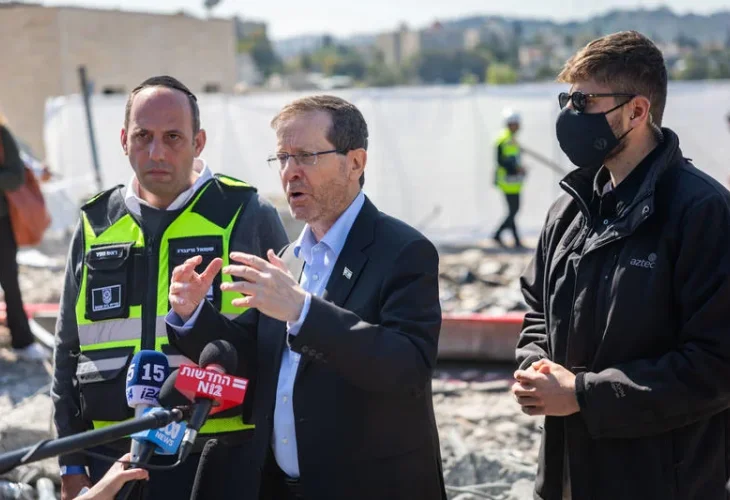 Isaac Herzog (Yonatan Sindel/Flash90)
Israel’s President Isaac Herzog said the war against Iran is an act of self-defense not only for Israel but also for Britain and Europe, pushing back against questions about the legality of the conflict during an interview with the BBC.
Speaking on the BBC’s Sunday with Laura Kuenssberg, Herzog argued that criticism of the war’s legal basis overlooks what he described as the broader threat posed by Iran and its regional network of armed groups. “It mind boggles me that legality is the focus rather than on the future of the Middle East and doing peace in the Middle East,” Herzog said.
Herzog’s remarks come as Britain debates the legal framework surrounding the ongoing U.S.–Israeli military campaign against Iran. While London has not taken part in offensive strikes, it has allowed the United States to use British bases for operations described by the government as defensive actions against weapons being used in retaliatory attacks across the region.
That limited role has allowed Britain to support aspects of the campaign while avoiding endorsement of the broader offensive. Herzog, however, argued that the war is defending Britain itself. “This war is clearly self-defense, which is not only self-defense for us but self-defense for Europe, for Britain, for the entire region,” Herzog said during the interview.
British officials have emphasized that their support is restricted to defensive measures. Senior ministers have also raised questions about the legal basis for the wider war during internal discussions about whether the United Kingdom should become more directly involved.
Herzog rejected those concerns, arguing that Iran itself has repeatedly violated international norms through its actions at home and abroad. He pointed to Iran’s backing of militant proxy groups throughout the Middle East, attacks on neighboring countries, and security threats uncovered in Europe.
In October, Britain’s domestic intelligence service said it had identified more than twenty Iran-linked plots in the previous year alone that were considered potentially lethal, underscoring the security concerns Herzog said Iran poses to Western countries.
Herzog also pointed to the fighting with Hezbollah in Lebanon as another example of what he described as Israel’s need to act in self-defense against Iran’s network of proxy groups.
The Iran-backed organization fired missiles into Israel following the killing of Iran’s Supreme Leader Ali Khamenei earlier in the conflict. Israeli forces have since struck targets in southern Lebanon and Hezbollah strongholds in the southern suburbs of Beirut, while troops have pushed further across the border as part of the campaign.
Herzog said Israel had been “attacked vehemently by missiles” launched by Hezbollah and argued that the Lebanese government opposes the group but lacks the power to dismantle it, leaving Israel to respond to the attacks itself.
He also framed the conflict as part of a broader geopolitical struggle between Iran and a coalition of countries he said are trying to stabilize the region. According to Herzog, Iran has spent decades building a network of proxy groups across the Middle East, which Israel and Western governments accuse Tehran of using to project military influence beyond its borders. “For a generation plus, Iran has been spreading terror and havoc all over the world,” Herzog said. “We’re doing this for the well-being of the entire free world.”
By describing the war as protecting Britain and Europe as well as Israel, Herzog’s remarks effectively turn the legal debate surrounding the campaign into a political test for Western allies weighing how closely they should align themselves with the effort against Iran. For London, the question now extends beyond whether the war is legal. It also raises a broader issue: whether Britain accepts Israel’s argument that the campaign is defending European security as well.
Questions & Answers
+Has Britain joined the military strikes against Iran?
+Who is Isaac Herzog?
+What is the role of Israel’s president?

