

Personal Stories
From Siberia to Survival: A Jewish Family's Tale of Endurance and Hope
Exile, forced labor, hunger, and faith in a gripping true story of endurance under Soviet rule
- Shalom Freund
- | Updated
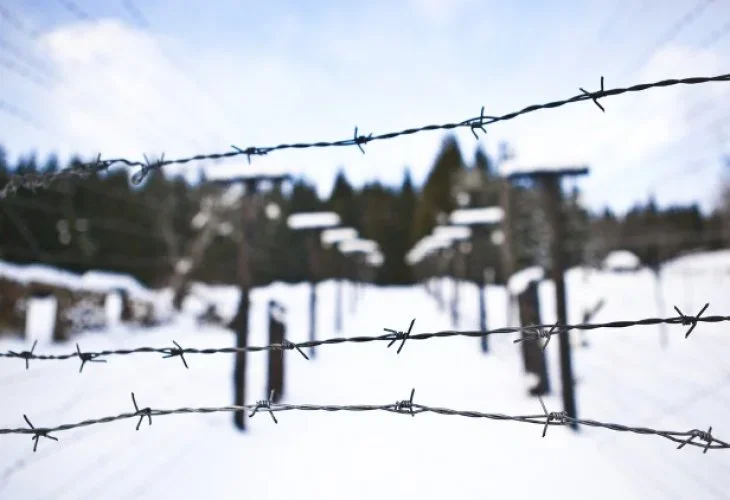
“Late at night on June 14, 1941, we were awakened by prolonged knocking on our door. When we asked who was there, someone announced in Russian: ‘Open up, we are from the NKVD’”—the notorious Soviet secret police of the communist regime, later associated with what became known as the KGB. “Two men burst into our small room with pistols drawn. They carried out a thorough search and ordered us to prepare for departure within twenty minutes. We were allowed to take up to 100 kilograms of belongings. In the darkness of night, they led us by truck, accompanied by soldiers, to the train station. We were forbidden to say goodbye to our parents and relatives. We were put into a freight car, the doors were locked with bolts and bars, and a Soviet guard stood watch over us. The next day, my mother, father, brothers, and sisters appeared. They stood far away, and were not allowed to come near. Through the barred window I saw them crying. The following night, at one of the stations, they knocked on the train car door and asked for Nissan. He was ordered to leave the car, and I never saw him again. He perished in the Reshoty camp in 1942.”
This is the testimony of Batya Paravoznik and Nissan Goldschmidt of Yanova, who was torn away from her family and sent to labor camps in the Siberian wilderness. It is one chilling, detailed account from the deportation stories of tens of thousands of Jews from across Poland and Lithuania who were uprooted from their homes during World War II by the Soviet regime and sent to forced labor in one of the harshest, stormiest, and most hostile regions on earth: Siberia.
Siberia is a vast territory in Russia bordering many countries, larger even than Canada, the world’s second-largest country by land area. Merely hearing the name “Siberia” is enough to send a shiver down one’s spine, conjuring images of the severe, unforgiving cold that dominates its climate, especially in winter.
Because it was so remote and inhospitable, Siberia served for generations as a place of exile for prisoners — both under the Tsars and later under the communist regime. Over the years, even during World War I, many Jews were forced to abandon everything, leaving behind their homes, livelihoods, possessions, and families for a bitter exile into the unknown. It was a dreadful and terrifying banishment: people did not always know how or where they were entering it, but certainly not how they would ever leave.
In the story before you, you will encounter for the first time an extraordinary tale of courage woven through suffering, torment, starvation, and constant mortal danger—a story in which one Jewish family endured with unimaginable inner strength and spiritual resilience. I heard this gripping and chilling account firsthand from my own uncle. Although it is the private story of one family, it undoubtedly reflects in miniature the story of an entire people: a persecuted, broken, battered nation, schooled in exile and redemption — the people of Israel, who since the Exodus from Egypt have lived through countless personal and collective exiles.
Babies on a Freight Train
When you look at a Jew like my esteemed uncle, Rabbi Yaakov Meir Ehrlich, it is impossible not to contrast him with the unrefined softness that so often characterizes today’s younger generation, born, raised, and educated in a world of abundance and indulgence. It is nearly impossible to convey to such a generation what childhood once looked like for Jews raised under poverty, oppression, deprivation, and suffering.
How can one explain to a child who cries because he did not receive the ice cream he wanted at that exact moment, what it meant to grow up under the yoke of hunger, thirst, and bondage?
Only after hearing the story of the terrible and courageous journey endured by a mere three-year-old child — deported with his family to the forced labor camps of Siberia, does one begin to understand how the man sitting before you, now advanced in age, still possesses remarkable vitality, strength, and devotion. Even though his years of youthful vigor are long behind him, his energy remains intact, and he continues to dedicate body and soul to God and His Torah. Such is Rabbi Yaakov Meir Ehrlich, whose surname, appropriately, means “honest” or “upright” in Hebrew translation — a true chassid through and through, who suffered greatly in life, worked hard for his livelihood, and spent hours immersed in Torah study.
Modest and humble, avoiding attention, a Jew who never harmed even the smallest creature, my uncle illuminates the path before us as he recounts the story of his life.
“It was at the end of 1939, the beginning of the year 5700,” he begins. “I was born in the town of Brecht in Poland. At that time, renovations were being done in our house, so we moved in with my grandfather, Rabbi Yeshayahu Ehrlich of blessed memory, in the town of Rava-Ruska on the border between Poland and the Soviet Union” — today a small town in the Lviv region of Ukraine.
“My grandfather was a wealthy Jew who had received a large estate from the local Polish nobleman. In return, he employed dozens of Polish workers who cultivated the land for him. At that time World War II broke out, and when the border between Poland and Russia was breached, the Russian army invaded several kilometers into Poland in order to annex territory for Stalin’s Soviet Union. They also reached Rava-Ruska, which was close to the border.
“The Soviet invasion of Poland was brutal and merciless. In the spirit of Stalinist communism, everyone was supposed to be equal, and that fact worked especially against the wealthy. The Polish workers whom my grandfather employed on the estate apparently informed on him to the Russians. They told them he was a Jew, and it did not take long for the disaster to come.
“One Shabbat morning, the Bolsheviks knocked on Grandfather Yeshayahu’s door. They ordered the entire family to leave the house immediately and explicitly forbade us from taking anything. There was my grandfather, my mother and father of blessed memory, my two sisters, and I, the youngest of them all. But my mother did not listen. She took a feather blanket so she could protect her children from the cold, and she also took some jewelry so she would have some means of providing for us.”
Before continuing the story of the grueling and painful journey into the unknown, Rabbi Yaakov notes that he and his sisters were then between the ages of two and five, while he himself was only a toddler of two and a half. Although he personally retains some painful memories from those days, despite his young age, much of the story he shares he later heard in detail from his mother, Sheindel Feiga of blessed memory, after the family merited to reach the Land of Israel.
“They gathered us onto a freight train with close to one hundred cars, each divided into three levels,” Rabbi Yaakov continues. “These were cattle cars, and they packed thousands of people into them as though we were animals. I do not know exactly how many people were on the train, but I estimate that each car held at least two or three hundred people. In truth, the Russians did not take only Jews. Anyone who had a little more money than average was sent to Siberia, including non-Jews. I remember that not far from the train stood neighbors who knew and loved my grandfather. Among them were non-Jews who stood there crying over the bitter fate that had befallen us.”
Did you have any sense of where you were being taken?
“We knew they were taking us to Siberia. But we did not really understand how terrible it was or what was waiting for us there. We had only heard that it was something like one enormous prison, from which no one went out and no one came in. One thing was clear: we were not going on vacation.”
What was happening on the train itself during the journey?
“Because of the crushing overcrowding, with thousands of people piled one on top of another, the stench was unbearable. During the trip many fell ill with various diseases, and hundreds died along the way. Since the authorities did not want the dead to infect everyone else, there was no choice but to throw the bodies off the train while it was moving. To our heartbreak, there were certainly many Jews among them who were cast away without a Jewish burial. The trains in those days ran on coal, and whenever the coal ran out and the train stopped at stations to refuel, my mother would get off and buy a little bread and milk for us, paying with rings from the jewelry she had brought.”
“If You Keep Screaming, They’ll Do to You What They Did to Him”
The horrific journey by train to the Siberian wilderness lasted more than a month. Disease along the way was almost unavoidable, and Rabbi Yaakov’s father developed severe pneumonia. At one of the stops, which apparently lasted several days, his mother managed somehow to get her husband admitted to a local hospital for treatment.
At the same time, she still had to care for her three tiny children on the train. Every few hours she would leave them in the wagon, run to the hospital to see her husband, and then hurry back again.
One morning, when she arrived at the hospital, she was horrified to find his bed empty.
Overcome with terror and shock, she began screaming and wailing, crying out, “Where is my husband? He was here yesterday — where did he disappear to?”
Rabbi Yaakov recounts those terrible moments with a trembling voice:
“When my mother let out a bitter cry, one of the doctors came over to her. He took her by the arm, pulled her aside, and whispered in her ear: ‘Calm down quickly and be quiet. Your husband died, and I buried him in the back courtyard of the hospital. If you keep screaming, they’ll do to you what they did to him.’ My mother immediately understood the bitter disaster that had happened to my father and went back to take care of us, knowing she would never see him again.”
At this point, Rabbi Yaakov tries to make sense of what happened at the hospital and translate it into the painful reality of losing his father without ever knowing where he was buried.
“We understand,” he explains, “that my father truly died that night, and that doctor was probably Jewish. Under Stalin, the branches of the secret police were everywhere. Anyone seen speaking to someone else was immediately suspected of espionage, and that could mean imprisonment and death. The fact that this doctor took my mother aside, whispered to her in an effort to calm her, and even told her that he had buried my father — it seems very likely that he was Jewish, because by doing so he was risking his own life.”
Cutting Down Trees for 100 Grams of Food
After the father’s sudden disappearance and the mother’s return to the train, she continued the nightmare journey northward with her three newly orphaned little children. Eventually the train reached the Siberian taiga, a vast northern region of forests, rivers, and immense wilderness, where the passengers — including Rabbi Yaakov’s family, were unloaded.
Like every family, the Ehrlichs were given a small wooden shack that became their new Siberian home. There began the bitter chapter of servitude for what remained of the family: a young mother, three little children, and an elderly grandfather. It was an enormous labor camp, where the Russians brought masses of people to serve Mother Russia, cut down trees, and work from morning until night in exchange for a meager ration of food. Anyone who did not go out to work simply starved.
Here Rabbi Yaakov describes both the cruelty of the Russian Bolsheviks and the extraordinary heroism of a young Jewish mother — frail, overworked, but fiercely determined.
“On one side of the camp barracks was an immense thick forest, and on the other side a great river. Since my grandfather had an injured hand from World War I and we were three small children, my mother had to work to support five souls. Every morning they took her into the forest, where she was forced to cut down enormous trees, each one at least three meters wide, and with an even greater circumference. In return for a full day’s labor, the Russians gave 100 grams of food per person. It was made from low-grade wheat waste mixed with water. In addition to those miserable 100 grams, they received a cup of hot soup, which was also just a bit of flour and hot water. My mother, who had to care for five people, brought 500 grams of this food back to the shack each day.”
Rabbi Yaakov recalls the daring discipline he had even in those days, though he was only three years old:
“I remember that every day, when my mother brought the food, I would not touch my 100 grams until the next day, when she came with the new ration. Until I saw the next day’s 100 grams in the shack, I would not eat what I had received, because I was afraid that tomorrow there might be nothing.”
Tree cutting of any kind is crushing labor under any conditions, how much more so for a young, emaciated mother. Rabbi Yaakov describes what his mother later told him: she would cut down these enormous trees using a giant hand saw, gripping one side while on the other side stood a strong Polish non-Jew, and together they would saw back and forth diagonally. Once the tree was felled, they would drag it to the river at the far side of the forest, line up the trunks, and build rafts from them. From there, the Russians would float the timber onward to various destinations throughout Russia.
At one point Rabbi Yaakov remembers a miraculous episode his mother told him:
“One time, while standing by the riverbank, my mother suddenly lost her sight, probably from extreme hunger. She began screaming, and suddenly a Russian man appeared in a small boat and said to her, ‘I did not come to help you because of you, but because of the three little children who need you.’ I do not know exactly how he helped her or what treatment he gave her, but God performed a miracle, and her sight returned.”
That was what forced labor looked like during the Siberian summer. In the winter, the camp residents were given large brooms and ordered to clear long pathways of heavy snow — more than a kilometer from each shack. Rabbi Yaakov’s mother endured this brutal labor for more than two and a half years in Siberia, and that is before even mentioning the bone-freezing cold of life lived at 30 to 40 degrees below zero.
Learning the Aleph-Bet in a Flooded Shack
“The winter, oh, the winter,” Rabbi Yaakov sighs as he remembers those dreadful days. “It was terrifying.”
“I will never forget,” he continues painfully, “how at the end of winter, as spring approached and the snow and ice that had piled up in enormous quantities began to melt, the entire camp would flood with water. We were simply fortunate that our shack stood slightly higher up on the slope. Even so, huge amounts of water entered the shack and rose as high as the beds. It got so bad that when my mother had to leave for work in the morning, they would come to collect her in a small boat right up to the entrance of our shack.”
The thaw turned the camp into deep swamps and muddy pools. And with the swamps came mosquitoes. Rabbi Yaakov describes giant mosquitoes several centimeters long that bit painfully and carried disease, causing many camp residents to die.
“We arrived in Siberia at perhaps close to a million people,” he says, illustrating the ghostlike atmosphere that hovered over the camp. “Maybe 400,000 came out.”
For roughly two and a half years, which felt like an eternity, Rabbi Yaakov and his family remained in that forced labor camp in Siberia, cut off from the world, living in subhuman conditions of suffering, hunger, and constant danger. Yet despite the physical and emotional torment, the isolation, the lack of resources, and the near-total absence of Jewish life, including synagogue, school, and hardly even a minyan, the one thing Rabbi Yaakov remembers clearly is learning the aleph-bet and reading with his grandfather inside the shack, from a siddur his grandfather had taken with him during the deportation.
That prayer book is still in Rabbi Yaakov’s possession today, guarded like a priceless treasure, and a living reminder of the years of slavery and of learning the holy letters in the midst of the cruel hell crafted by Stalin’s Russia.
As he takes out the rare siddur and places it in my hands with visible emotion, Rabbi Yaakov remembers another miraculous story from the Siberian wilderness:
“Because the amount of food we received was not enough even for one person, and we were truly starving, people tried to improvise ways to get more food. Once, my mother went into the forest with several non-Jewish women to pick blueberries that grew there in the summer. But when you go deep into the forest, everything begins to look the same. They lost their way and could not find the path back. The non-Jewish women, who knew she was Jewish, shouted to her, ‘Zhid’” — a Russian slur for Jew — “‘pray to your God to show you the way back.’ My mother prayed, and God miraculously guided her back to the path from which they had come.”
Living in a Building Corridor
In 1943, they were released from the forced labor camp in Siberia and taken to the Russian town of Biysk, where many Jews had gathered from across Siberia and from the exiled Polish communities. Although Jewish life there began to take on a more recognizable form, they still lived under the iron grip of Stalin’s regime, with the long arm of the secret police continuing to cast fear over the Jewish residents of Biysk.
The communist government, which demanded equality for all, did not allow people to earn a living in any open or legal way. Anyone caught engaging in commerce risked arrest and imprisonment in the underground cells of the Bolsheviks. There was a food distribution system in Biysk as well, but anyone without shelter was effectively doomed to starve.
The Ehrlich family, of three children, a mother, and a grandfather, arrived in Biysk with absolutely nothing. Yet the Jewish spirit always managed to find a way forward, even in impossible conditions. Rabbi Yaakov’s mother, who still had to feed three small children, sought out creative ways to survive.
“While we stood in the long line for food distribution,” Rabbi Yaakov recalls, “some non-Jews took pity on my mother, who was carrying three small children, and allowed us to stay in the corridor of a building where at least five families already lived.
“For more than five years we crowded together and lived in the hallway, while the neighbors passed above our heads and around us.”
How did your mother make a living in Biysk?
“Jews were blessed with skilled hands and, above all, sharp minds. My mother made alcoholic drinks like vodka and smuggled and sold them secretly. She also dealt in fabrics. She sold some of her jewelry in exchange for cloth. She would wrap each of us children in a piece of fabric and take us to the market. When someone wanted to buy cloth from her, she would simply unwrap the fabric from around one of us and sell it.”
That clearly involved real danger.
“Of course. One time the KGB came looking for my mother. They had apparently caught onto her, or heard that she was trading in alcohol. She knew they might come and had already hidden all the evidence. Still, they took her away for interrogation. For nearly three months she was in detention, where they questioned her relentlessly and tried to force her to confess to illegal trading. My mother was unbelievably strong. She stood against those interrogations with extraordinary determination. Later she said they tortured her, beat her brutally, and even broke her teeth. After about three months, when they failed to break her, she was released.”
How do people actually live in the corridor of a building?
“Young people today simply could not understand it. But that is how we lived for years. My mother was a woman of tremendous kindness. Despite the poverty and the hardship of living in a hallway, she also cared for other Jews. The corridor where we stayed faced the local market, and I remember how my mother kept a kettle of water there, heating it during the day so that Jews coming through the market could step inside, drink a cup of hot tea, and warm themselves from the freezing cold outside.
“Many Jews would come and go, drinking and talking together, and each time someone had to stand outside to make sure no KGB agent was lurking nearby. Strange as it sounds, it was almost comical to see how, when the secret police appeared, everyone suddenly fled and vanished, and my mother would hide the kettle, all within seconds — as though nothing had ever been there.”
“There were other things too that were humorous in a painful kind of way. When we lived in the corridor, I was already about six years old. I remember one of the neighbors calling me inside and saying, ‘Boy, do you want a slice of bread?’ Naturally I said yes. She told me, ‘If you climb up on the table and dance, I’ll give you bread.’ So I danced for the bread.”
By that point there were already many Jews in Biysk. How did they maintain Jewish life?
“There was already prayer with a minyan there, but of course everything was done underground. I also remember matzah baking for Passover being done in a bunker. At the entrance above stood a Jew keeping watch the whole time to make sure the KGB would not catch them.”
A Torah Scroll Rescued From the Fire
After several years in Biysk, of hardship in a building corridor, interrogations by the Bolsheviks, and desperate struggle for survival, Rabbi Yaakov’s mother somehow managed to stabilize the family and provide for them. At this stage, the story takes on a deeply moving turn.
Rabbi Yaakov tells of a Torah scroll that his mother secretly purchased from a local scribe in memory of her husband, Rabbi Shraga Ehrlich of blessed memory — Rabbi Yaakov’s father.
At the end of World War II, the Ehrlich family boarded a train from Biysk to Germany, where the Americans, who had come to fight the Germans, provided apartments for Jewish refugees returning from Russia after the war. The family settled near Munich for three years, where a structured Jewish community had already begun to rebuild itself after the Holocaust, establishing synagogues, mikvaot, and schools.
“From there we made our way to the Land of Israel,” Rabbi Yaakov says in closing, summing up the long chain of suffering his family had endured.
“My mother came with us to the Land. The Torah scroll was strapped to her back, while with both hands she held onto her young children.”
That Torah scroll now rests with honor in a synagogue in one of Israel’s communities. More than anything else, it stands as living testimony — an ember rescued from the fire, an enduring witness to the eternity of Israel, which will neither lie nor surrender.

