

Magazine
After Terror Took His Wife and Four Daughters: A Life Rebuilt
After losing his pregnant wife and four young daughters in a brutal terror attack, David Hatuel chose faith and began rebuilding his life.
- Naama Green
- | Updated
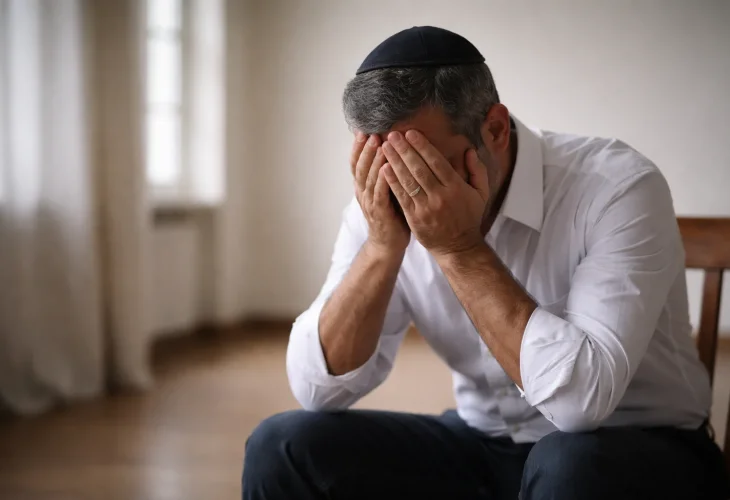
Twenty-two years ago, David Hatuel’s life was shattered in a moment of unimaginable violence. In a brutal terror attack on the Kisufim Road, he lost his wife, Tali, who was eight months pregnant, and their four young daughters. In a single instant, a man preparing to welcome a son after four daughters found himself alone, his entire world suddenly gone.
Yet from the depths of that devastating loss, Hatuel chose a path of faith, rebuilding his life while preserving the memory of his family and turning grief into acts of kindness and renewal.
The Day Everything Changed
The tragedy occurred on the 11th of Iyar, twenty-two years ago. Tali Hatuel and her daughters left their home in Gush Katif and began driving toward Ashkelon, where they planned to meet David at a polling station to vote in the Likud referendum concerning the disengagement plan.
As their car traveled along the road between Gush Katif and the Kisufim crossing, terrorists opened fire.
Tali, who was eight months pregnant, and her daughters were murdered at point blank range.
Speaking at an event organized by the Katif Heritage Center in Nitzan, Hatuel described that moment with painful clarity.
“On the 11th of Iyar, I experienced the greatest tragedy here among the people of Israel,” he said. “I lost my wife Talia, who was in her eighth month of pregnancy, together with my four daughters. Hila was ten, Hadar nine, Roni six, and Meirav only two. They were traveling from Moshav Katif to Ashkelon to meet me when despicable murderers killed them on the Kisufim Road.”
Choosing Faith
Despite the unimaginable loss, Hatuel says he made a conscious decision about how to respond.
“I chose a path of faith,” he said, his words sending chills through the room. “I do not understand the ways of Hashem, and I believe there is a purpose to it even if it is beyond our understanding.”
During those dark days he turned repeatedly to prayer.
“I kept asking Hashem to give me strength.”
He also found support in the people around him.
“My extended family and the Katif community embraced me. They gave me strength, stood beside me, encouraged me, and helped me begin to build a new life.”
Rebuilding a Family
Over time Hatuel remarried and began rebuilding the life that had been torn apart.
Today he is the father of six children.
But alongside rebuilding his personal life, he devoted himself to preserving the memory of Tali and their daughters.
“Since their murders, we have created many memorials for Tali and the girls,” he explained. “We established a beit midrash in their memory and dedicated several Sifrei Torah.”
The family also founded a nonprofit organization called Tali B’Yad Ramah, whose name is formed from the initials of the girls’ names: Roni, Meirav, Hila, and Hadar.
The organization supports couples struggling with infertility.
“In a place where lives were cut short,” Hatuel explains, “we try to help bring new life into the world.”
Recently, another meaningful milestone took place.
“We dedicated a synagogue called Tal Orot in their memory,” he said. “It was a very emotional moment.”
Finding Strength in Community
In previous interviews Hatuel has spoken openly about the struggle to move forward after such devastating loss.
“There were moments that felt like complete despair,” he admitted. “Moments when I thought there was no way a person could come out normal after a tragedy like this.”
Yet faith and community helped guide him forward.
“Baruch Hashem, through faith, through prayer, and through the support of my family and the community where I live, I found strength.”
He notes that the support came not only from relatives and neighbors, but also from people who had experienced tragedy themselves.
“During the shiva many people came to comfort me,” he recalled. “But the most meaningful visits were from people who had experienced bereavement themselves. Widowers, widows, bereaved parents.”
Listening to their stories changed something inside him.
“When I saw them years later living meaningful lives, it gave me a spark of hope. Maybe, after all, it is possible to go on.”
Returning to Life
Another source of strength was returning to the work he had dedicated his life to.
Hatuel has spent decades in education, leading schools and working with students.
“Returning to education was life giving,” he says. “Without a doubt.”
Today he continues to honor the memory of Tali and their daughters not only through memorial projects, but through the life he has rebuilt.
A life rooted in faith, community, and the quiet determination to transform loss into hope.

