

World News
Australia Grants Visas to 5 Iranian Women’s Team Players After Anthem Refusal
Athletes were moved to a safe location after declining to sing Iran’s national anthem and facing criticism at home
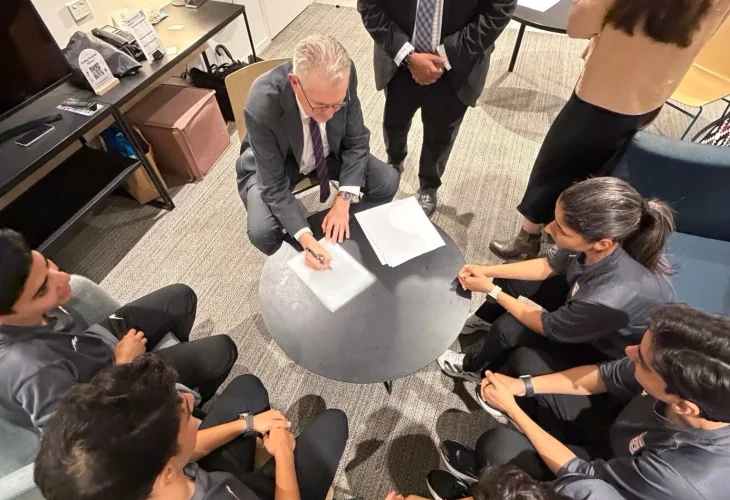 Anthony Albanese granting asylum to 5 players (Screenshot/X/@Tony_Burke)
Five members of Iran’s women’s football team have been granted humanitarian visas in Australia after refusing to sing the Iranian national anthem during a match at the Women’s Asian Cup. Australian Immigration Minister Tony Burke said the players were moved to a safe location by police before their applications were approved early Tuesday.
The decision followed growing concerns that the athletes could face punishment if they returned to Iran after declining to sing the anthem ahead of their match against South Korea last week. The gesture drew sharp criticism from conservative commentators in Iran, including accusations that the team had behaved like “wartime traitors.”
Burke said the process unfolded over several days after officials learned that several players wanted to remain in Australia following the team’s elimination from the tournament. “They want to be clear they are not political activists. They are athletes who want to be safe,” Burke said.
The five players were later identified as Fatemeh Pasandideh, Zahra Ghanbari, Zahra Sarbali, Atefeh Ramazanzadeh, and Mona Hamoudi. According to Burke, the visas were finalized shortly after 1:30 a.m. Tuesday local time.
The group left their hotel on Monday and was escorted by police to a secure location. Shortly after their departure, several team minders were seen searching the hotel for them, but they had already been moved.
Other members of the Iranian squad were taken to Gold Coast Airport and are expected to travel to Sydney later Tuesday. Australian officials said the remaining players are also welcome to stay if they choose.
“Australia has taken the Iranian women's soccer team into our hearts. These women are tremendously popular in Australia,” Burke said. “But we realise they are in a terribly difficult situation with the decisions that they're making.”
Many players face the prospect of leaving relatives behind in Iran, raising fears of possible repercussions for family members if they choose not to return.
The situation drew large demonstrations from members of Australia’s Iranian community during the tournament. On Sunday evening, hundreds of supporters surrounded the team bus outside a stadium on Australia’s Gold Coast, chanting “Save our girls” due to fears the players could face punishment if they returned to Iran. Some activists attempted to block the bus by lying on the ground in front of it.
Naz Safavi, who attended all three of Iran’s matches, said the players were under pressure. “They can't speak freely because they are threatened,” she said.
The episode also drew international political attention. On Monday, U.S. President Donald Trump urged Australia to grant asylum to the players. “Australia should give asylum to the women. The US will take them if you won't,” Trump wrote on his Truth Social platform. About an hour later, Trump posted again saying he had spoken with Australian Prime Minister Anthony Albanese and that “five have already been taken care of.”
Iranian opposition outlet Iran International reported Tuesday that another member of the team, Mohadeseh Zolfi, had also requested and received asylum in Australia. Australian officials had not immediately confirmed the report.
Despite the growing pressure campaign, the team’s manager Marziyeh Jafari told reporters after the tournament that she wanted to return home. “We are impatiently waiting to return. Personally, I would like to return to my country as soon as possible and be with my compatriots and family,” she said.
It remains unclear whether the remaining players will follow their teammates in seeking protection or return to Iran.
Questions & Answers
+Why is refusing to sing a national anthem considered controversial in Iran?
+What happens to asylum seekers after receiving humanitarian protection in Australia?

