

Magazine
From Regret to Redemption: The Yeshuah That Came After Ten Years
After ten years of waiting for a shidduch, one unexpected encounter and a moment of sincere forgiveness changed everything.
- Naama Green
- | Updated
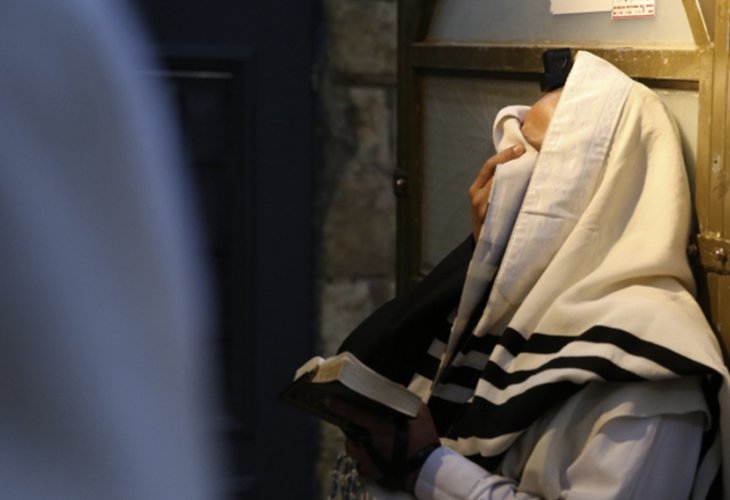 Illustrative photo: Shutterstock
“When I divorced, just one year after the wedding, my ex-wife and I signed a special clause in the agreement,” Shimon begins his personal story, later published by Rabbi David Kalatzkin in the newsletter Mishnata Shel Torah. “We committed to keep quiet and not feed the curiosity of the community.”
Six months after the divorce, his former wife remarried with dignity.
“I was still waiting for my match.”
At first, Shimon tried to remain patient. But as the years passed, the waiting became more painful.
“During those difficult years, the restraint I had placed on my mouth slowly weakened. When speaking with shadchanim I allowed myself to talk about my ex-wife’s parents and their family. I thought that if I explained the background, it might help advance a possible shidduch.”
Looking back, he says with regret, “How low I sank.”
The yetzer hara, he explains, gave him a whole set of justifications.
“I told myself that the agreement to remain silent was only meant to prevent harm to each other. Now that she had already been married for years, what damage could it cause? Maybe speaking would help me move forward. I convinced myself it was part of my hishtadlut to bring a yeshuah closer.”
But despite all the explanations and arguments, nothing changed.
“I talked and talked, but no answer came.”
Discovering Sha'ar HaBitachon
One day Shimon met a friend from yeshiva who was also single and still waiting for his match.
“We decided to learn together Sha'ar HaBitachon from Chovot HaLevavot.”
The effect was immediate.
“As we learned, I felt as if oxygen was flowing into my body, my mind, and my soul.”
One passage in particular struck him deeply. In the fourth chapter, Rabbeinu Bahya writes that when a person faces enemies or opposition, he should recognize that Hashem may be using those circumstances for his benefit.
“I studied that passage again and again,” Shimon says. “Hundreds of times.”
Gradually, something changed within him.
“It strengthened me to stop completely from any forbidden talk about my ex-wife’s family. I realized that speaking about them was not the path to salvation. My yeshuah would not come from that.”
Years continued to pass.
Shimon prayed at the graves of tzaddikim, cried before Hashem, and worked on strengthening his faith. Meanwhile, his six younger siblings married one after another.
“I stepped aside so they could marry first,” he says. “And I kept waiting. Ten years.”
A Special Connection
One place held a particularly special place in his heart.
The tomb of Rabbi Shimon bar Yochai in Meron.
“My name is Shimon. I was born on Lag BaOmer, and since childhood I have gone to Meron every year on the night of the hilula.”
That year, however, something unusual happened.
During the bonfire lighting on Lag BaOmer eve, Shimon suffered a painful injury to his leg.
“I immediately understood that I would not be able to travel to Meron with the crowds and the long walk.”
He hoped that by morning the pain would ease. It did not.
“In the past I would have been extremely upset to miss Meron on such an important day. But when you truly learn Sha'ar HaBitachon, you stop asking why things happen. If Hashem wants it this way, then it must be for the good.”
He still had a bus ticket he had purchased earlier. Wondering what to do with it, he offered it to a man sitting in the synagogue.
“Would you like to go to Meron in my place and pray for me?” he asked.
The man declined.
“On Lag BaOmer I always go to the tomb of Shimon HaTzaddik,” he replied.
Shimon suggested an exchange.
“You go to Meron and I will go to Shimon HaTzaddik in your place.”
The man agreed.
A Moment of Awakening
The cave at the tomb of Shimon HaTzaddik was filled with joy and singing.
Shimon stepped inside and poured out his heart.
“I cried to Hashem for a yeshuah and recited chapters of Tehillim through tears.”
At one point he paused and noticed a small booklet on the nearby table containing teachings of Rabbi Shimon bar Yochai.
The first passage he opened shook him deeply.
“Rabbi Shimon bar Yochai said: It is better for a person to throw himself into a fiery furnace than to publicly shame another.”
Shimon trembled.
“I felt as if Rabbi Shimon himself was speaking directly to me. I remembered every word I had spoken about my former in-laws. How much unnecessary harm I had caused.”
He felt a powerful urge to make things right, but the thought filled him with embarrassment.
“How could I face them?”
The Unexpected Encounter
Shimon stepped outside the cave and watched the dancing crowds.
Suddenly he froze.
“In front of me I saw my former father-in-law dancing.”
On his shoulders sat a small boy celebrating his first haircut. Beside him stood his son-in-law holding another child.
“They were twins.”
Shimon wanted to slip away unnoticed, but at that moment his former father-in-law turned toward him.
With a warm smile he blessed him.
“May everything turn out for the good. Only with joy.”
Gathering courage, Shimon approached him.
“Please forgive me,” he said. “I hurt your honor.”
The man answered kindly.
“It is all right. You are forgiven. Be happy. A yeshuah is near.”
Shimon asked him to convey his apology to his former wife and her mother as well. Immediately, still carrying the child on his shoulders, the man went over to the women’s section and returned a moment later.
“They forgive you,” he said. “Forgiven, forgiven, forgiven.”
The Yeshuah
With tears still on his face, Shimon returned to prayer. He recited additional chapters of Tehillim and a psalm of thanksgiving.
As he left the site, he unexpectedly ran into a friend from yeshiva.
During their brief conversation the friend was surprised to learn that Shimon was still unmarried.
“I have been involved in shidduchim for years,” the friend said. “Maybe I can help.”
He took down Shimon’s details and soon suggested a possible match.
Three weeks later, Shimon was already standing under the chuppah.
“The yeshuah of Hashem comes in the blink of an eye,” he says.
“In the merit of Rabbi Shimon bar Yochai, in the merit of Shimon HaTzaddik, and in the merit of Sha'ar HaBitachon.”

