

Challah
How to Separate Challah: Laws, Blessings, and Guidelines
A clear guide to the mitzvah of hafrashat challah. Learn the required flour amounts, when to say the blessing, how to burn the challah, and common halachic cases
- Shuli Shmueli
- | Updated
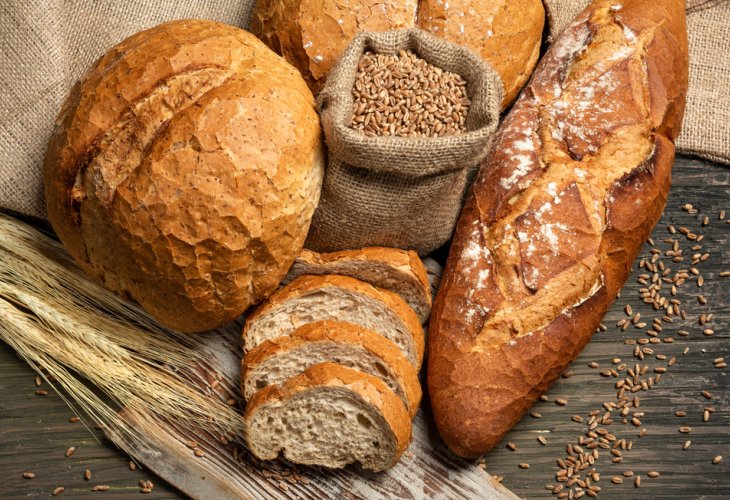 (Photo: shutterstock)
The mitzvah of separating challah is one of the special commandments connected to preparing bread. It reminds us that even our most basic physical nourishment comes from Hashem and must be sanctified. The following guide explains the key laws and practical details of this mitzvah in clear terms.
How Much Dough Must Be Separated?
The Torah states: “The first of your dough” (reishit arisoteichem). According to Torah law, there is no fixed minimum amount that must be separated. Even a very small piece fulfills the obligation, as long as the entire dough is not designated as challah.
However, the Sages established standard measurements. From regular dough one should separate one twenty fourth of the dough. A bakery that bakes for sale separates one forty eighth.
Today, since challah cannot be eaten by kohanim due to ritual impurity and is burned anyway, it is sufficient to separate even the smallest amount. There is no need to be stringent and separate one forty eighth. Only one piece of challah is separated today, which is then burned.
Nevertheless, it is proper to be stringent once a year and separate the traditional measure of one twenty fourth, in accordance with the opinion of the Arizal. Some Ashkenazim have the custom to separate an amount equal to the size of an olive.
What Should Be Done with the Separated Challah?
After separating the challah, the piece should be burned in fire. Ideally it should not be thrown directly into the garbage, because challah has a level of sanctity and should not be treated disrespectfully.
Some authorities recommend burning the challah separately, such as on a gas flame, rather than as part of heating the oven, in order to avoid deriving benefit from it. For this reason some people place the challah in the oven before baking. Others permit this practice and are lenient.
If burning the challah is not possible for any reason, the piece should be wrapped well in paper and then discarded. After the challah has already been burned, it may also be thrown away since the mitzvah has already been fulfilled.
From What Amount of Flour Is Challah Separated with a Blessing?
Challah is separated with a blessing when the dough contains at least 1560 grams of flour.
If the dough contains less than this amount, there is no obligation. As an act of piety, however, many people separate challah without a blessing when the dough contains approximately 1.2 to 1.5 kilograms of flour.
Combining Different Types of Grain
The five types of grain are wheat, barley, spelt, oats, and rye. These grains combine with one another to create an obligation of challah.
If a dough contains a mixture of flour from different grains, and none of them alone reaches the required amount, they still combine to complete the required measure. This applies when the flours are mixed together before kneading.
If separate doughs are prepared from different grains and each one individually does not contain the required amount, they generally do not combine unless they are fully mixed into one dough. In such a case challah should be separated without a blessing.
When Separate Doughs Touch Each Other
Sometimes two separate doughs are prepared, and each dough individually is too small to require challah.
If the owners intend to keep the doughs separate, for example if one dough is sweet and the other salty, or if they belong to two different people, the doughs do not combine and there is no obligation to separate challah.
If the owners do not mind if the doughs touch and the doughs actually cling together so that when they are separated some dough pulls from one to the other, they may combine and become obligated in challah. If they merely touch without sticking, that contact alone does not create an obligation.
Dough Intended for Different Flavors
If a large dough contains enough flour to require challah but is intentionally divided into separate portions to create different flavors, such as sweet dough and spiced dough, the dough is technically exempt from challah.
Nevertheless, it is proper to be stringent and separate a small amount of challah without a blessing.
The Proper Time to Separate Challah
Ideally challah should be separated after the kneading is complete, when the dough has become one unified mass.
The best time to perform the separation is after kneading but before baking. If one forgot and the bread has already been baked, challah can still be separated from the baked loaves.
In such a case all the loaves should be placed together in one basket or container, or covered with a cloth, and challah should be separated with a blessing. If the dough already contained the required amount during kneading, there is no need for this combination step.
The Procedure for Separating Challah
Some women have the custom to give a few coins to charity before separating challah, before lighting Shabbat candles, and before immersion for a mitzvah. The acronym for these three mitzvot is Chana, which stands for challah, niddah, and hadlakat ner (lighting candles).
Before separating challah, the blessing is recited.
Among Sephardim the blessing is: Blessed are You, Hashem our God, King of the universe, Who has sanctified us with His commandments and commanded us to separate challah as terumah.
Among Ashkenazim the blessing is: Blessed are You, Hashem our God, King of the universe, Who has sanctified us with His commandments and commanded us to separate challah.
Some Ashkenazim say “to separate challah from the dough.”
Immediately after the blessing a small piece of dough is removed and set aside. Many people then say: “This is challah.”
Must One Perform the Mitzvah if Bread Is Always Purchased?
Even someone who normally buys bread from a bakery and does not bake at home should try to fulfill the mitzvah of separating challah at least once a year.
At the very least it is recommended to do so during the Ten Days of Repentance between Rosh Hashanah and Yom Kippur, in order to increase one’s merits during those special days.
Can Children Separate Challah?
A boy or girl below bar or bat mitzvah age should not separate challah.
If a boy older than twelve years and one day, or a girl older than eleven years and one day, separates challah, the separation is effective after the fact. If they are younger than this, the separation is not valid.
Although children should be educated in mitzvot, the actual separation should be done by someone who has reached the appropriate age.
Dough Intended for Frying
The obligation of challah applies primarily to dough that is intended for baking.
If dough is prepared for frying, such as for sufganiyot, or for boiling in water such as noodles, it is technically exempt. However, because the dough is thick, many authorities recommend separating challah without a blessing.
If some of the dough will eventually be baked, then challah should be separated with a blessing.
Dough Made with Milk Instead of Water
If dough is kneaded with one of the seven liquids that render food susceptible to ritual impurity, including wine, honey, oil, milk, dew, or water, the dough requires challah with a blessing.
Therefore dough made with milk, even without any water, requires the separation of challah with a blessing.
If the dough is kneaded only with eggs or fruit juice and contains no water, challah should be separated without a blessing.
Dough Made with Fruit Juice
Ideally dough should not be kneaded entirely with fruit juice such as orange juice without any water.
If it was done, and the dough contains enough flour to require challah, challah should be separated without a blessing. Another option is to prepare a smaller quantity that is below the required measure.
It is best to add a small amount of water to the dough so that the obligation of challah will clearly apply and the separation can be performed with a blessing.
The reason for this preference is that pure challah may not be burned, and it cannot be eaten either because we are considered ritually impure today. By mixing one of the seven liquids such as water into the dough, the challah can be separated properly and then burned according to the mitzvah.
The mitzvah of separating challah connects the everyday act of baking bread with holiness and gratitude. By observing these laws carefully, one transforms the preparation of food into a meaningful spiritual act.

