

Challah
How the Mitzvah of Challah Brings Blessing to the Home
Explore the meaning of challah, its connection to creation, and how this powerful mitzvah allows Jewish women to bring blessing and holiness into the world
- Rabbanit Chagit Shira
- | Updated
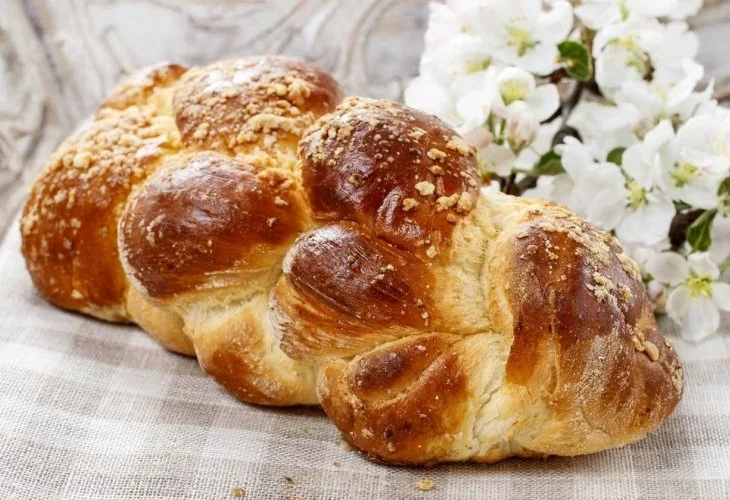
What would you say to a once in a lifetime opportunity to enter the control room of the world?
A place from which you can influence the entire world not as a visitor but as the one operating the controls. It could be the opportunity of a lifetime. You could finally fulfill your desire to make the world a better place and bring special blessings to yourself and your family.
Would you accept such an invitation?
If your answer is yes, then you are welcome. Here you will find the key to that control room together with a special invitation from the Creator of the world. The control room of the world is waiting for you. You have the opportunity to repair mistakes from the past, transform the present, and draw abundant blessings into the future.
The entry requirement for this influential role is surprisingly simple: flour and water.
Replacing the Birth Pains of Redemption With Dough
There are moments that are both painful and sweet. A new soul is about to enter the world. As the great moment approaches, the contractions intensify. The pain grows stronger. It presses and strains, yet it is filled with anticipation.
Our world is now in a similar state. The pains of redemption, like the pains of childbirth, are not easy. They grow stronger as time goes on. Enemies threaten us from outside while divisions within our people challenge us from within. Economic pressures weigh heavily upon us, and the tasks of building peaceful homes and raising children seem more complex with every generation.
Soon, very soon, the world will be filled with light and the Master of the universe will reveal His presence. Yet the pains that precede that moment of the final contractions of exile, can feel overwhelming.
But remember, we, the women of Israel, were given access to the control room.
We have the ability to protect the world and help ease the pains that accompany the coming of redemption. The Creator has given us a remarkable ability to replace the pains of redemption with something else entirely: strands of dough.
Yes, the dough that you knead, shape, and bake can become the instrument through which the world is spared some of those painful contractions.
Everything depends on the mitzvah of separating challah and on the prayers we offer while performing it. Through this mitzvah we can literally influence the condition of the world.
We take flour and water, yeast and sugar, and mix them together. We knead the dough and form it into bread. Then we separate a small portion and recite a blessing. Every step of this mitzvah holds deep meaning, and each stage carries its own spiritual significance.
What Is Challah?
Long before modern bakeries existed, a hardworking woman would bake bread each morning for her family in just the amount needed for that day. Only on Friday did she prepare a larger quantity of dough so that the bread would suffice for the meals of Shabbat.
At that point the dough reached the amount that requires the mitzvah of separating challah. From this custom developed the association between Friday baking and the term challah. Over time the word challah became the common name for the bread eaten on Shabbat.
Originally, however, the word challah referred to the small portion of dough that is separated from the rest.
When the Holy Temple stood in Jerusalem, the priests devoted themselves to the sacred service and did not have the time to provide for their own livelihood. For this reason they were given twenty four priestly gifts. One of these gifts was the portion of dough known as challah, lovingly given by Jewish women.
As the Torah states: “When you come to the land to which I bring you, the first of your dough you shall set aside as a gift.”
This is the source of the name challah.
In addition to being a mitzvah especially associated with women, it was also one of the first commandments given to the Jewish people when they entered the Land of Israel. For that reason it is especially beloved.
Declaring That God Is the Source of Everything
Before we speak about the ability of the mitzvah of challah to influence the world, we should remember that this mitzvah is one of the reasons the world was created.
The story of creation in the Torah begins with the word “Bereishit,” meaning “in the beginning.” The mitzvah of challah is also described with the word “first,” as the Torah says: “the first of your dough.”
Our sages teach that the world was created for the sake of three things: challah, tithes, and the first fruits.
Every time we separate challah we activate the very merit for which the world itself was created.
This action also reminds us who truly sustains the world.
Consider how wheat reaches us. A farmer plows the field, plants the seeds, tends the crop, and harvests the grain. After all that effort he sets aside a portion as a sacred gift. The meaning of that act is clear: my strength and my wisdom did not produce this alone. The harvest is ultimately a blessing from God.
In many areas of life we are commanded to dedicate the first portion to God. This includes the redemption of the firstborn, the firstborn animal, the first fruits, and the mitzvah of challah.
By offering the first portion of our work we remind ourselves that everything we possess ultimately comes from the Creator.
Separating challah awakens that awareness within our hearts.
Restoring Holiness to Humanity
The mitzvah of challah also connects to the very nature of human beings.
Humanity resembles challah in the dough. The comparison exists both in form and in meaning. A person was created from earth mixed with water, just as dough is made from flour mixed with water.
There is also a deeper connection. Just as challah is the small, sacred portion separated from the dough, the human being is the sacred element separated from the physical world.
When God created the world, everything was ordinary. On the sixth day He elevated one small part above the rest of humanity. Human beings became the crown of creation, entrusted with the mission of bringing holiness into the world.
Yet on the very day humanity was created, Adam and Eve ate from the Tree of Knowledge. According to the sages, that tree was associated with wheat. In doing so, the holiness of humanity became mixed with the ordinary world.
The role of the Jewish woman through the mitzvah of separating challah is to restore that holiness. By separating the sacred portion from the dough, she symbolically repairs the original spiritual confusion and restores clarity to the world.
Through this mitzvah Jewish women everywhere bring more holiness into creation.
Bringing Blessing Into the Home
Until now we have spoken about influencing the world. But the impact of this mitzvah also reaches much closer to home.
Through separating challah, a woman can bring blessing into her own household.
The prophet Yechezkel writes: “The first of your dough you shall give to the priest so that a blessing may rest upon your home.”
Our sages explain that when challah is given, blessing enters the house. When it is neglected, blessing is diminished.
Blessing is truly everything.
We may desire many things in life including a good marriage, children, financial stability, health, a comfortable home, and meaningful work. Yet even when people possess all these things they are not always happy.
Some people have children but also great sorrow. Some have wealth but constant worry. Others own beautiful homes yet feel no peace within them.
What makes the difference?
Blessing. Every aspect of life needs blessing in order to bring joy.
The mitzvah of separating challah draws that blessing into our homes. Through it we can bring goodness, success, and salvation into our families.
The power of this mitzvah is connected to our desire. Technically the obligation to separate challah can be fulfilled even once a year. But the word challah is also connected to hope and longing. The more we perform the mitzvah, especially before Shabbat, the more opportunities we create to draw blessing into our lives.
When you knead dough with your hands, those hands become channels through which blessing flows from heaven.
The next time you enter the kitchen and begin kneading dough, remember what is really happening. At that moment, you are entering the control room of the world. Through your hands you are drawing blessing for yourself, for your family, for the Jewish people, and for the entire world.
What an extraordinary privilege.

