

Wonders of Creation
Beyond Birds: The Surprising World of Animal Migration
Across oceans, rivers, and continents, some animals make incredible journeys just to return home.
- Debbie Reichman
- | Updated
 (Photo: shutterstock)
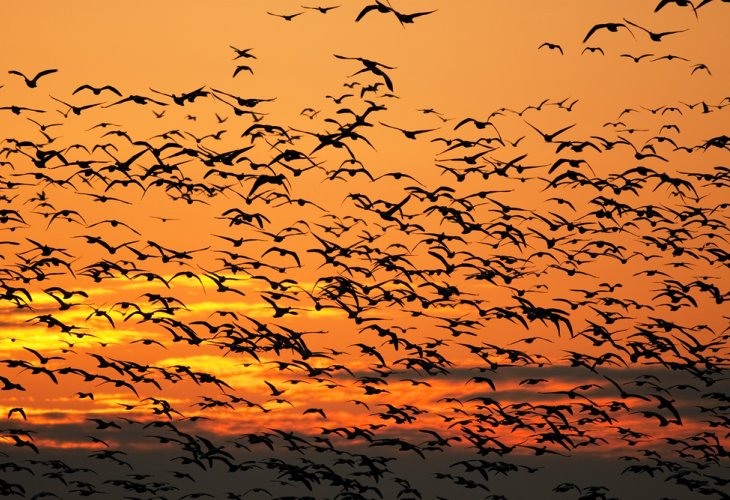
We’ve all heard of migrating birds. Many species travel from the chilly regions of Europe and North Africa to the warmer tropics of Africa and South America as winter approaches. When spring arrives, they return to the cooler regions. This seasonal journey helps them find food and live in a milder climate.
But birds are far from the only creatures that migrate. Animal migration is a widespread phenomenon that includes many different kinds of animals such as mammals, birds, fish, and even insects. Most migrations are driven by the need to find food or to move to a more suitable climate. Some animals head to warmer areas during winter and return to cooler regions during summer.
Migration for Survival and Reproduction
In some cases migration is connected to reproduction. Certain animals travel great distances in order to breed and complete their life cycle.
Salmon are among the most famous examples. These fish undertake long journeys through rivers and oceans in order to return to their spawning grounds. The monarch butterfly also performs an extraordinary migration that spans thousands of miles across North America.
What many people do not realize is that in some species the animals that begin the journey are not the ones who return to the starting point. Instead, their offspring make the return trip.
Salmon and monarch butterflies often complete their life cycle far from where their journey began. The next generation eventually travels back to the original location, even though those young animals have never seen that place before.
The Remarkable Journey of the Eel
Eels provide another fascinating example of migration, one that includes a return to the place where they were born.
These long, slender fish hatch in the salty waters of the Sargasso Sea in the Atlantic Ocean. From there they begin an incredible migration, drifting with ocean currents across the Atlantic until they reach the freshwater rivers of Europe.
In these rivers the eels live for about seven years, sometimes even longer. As their life cycle nears completion they begin an astonishing return journey.
The eels leave the rivers and swim thousands of miles back across the ocean to the very waters where they were born. There they reproduce and lay their eggs, beginning the cycle again.
Sea Turtles: Returning to the Beach of Birth
Sea turtles also demonstrate an extraordinary migratory instinct.
After hatching on sandy beaches, the tiny turtles make a desperate dash toward the ocean and disappear into the vast sea. For years they roam across enormous stretches of ocean, feeding and growing far from their birthplace.
But when they reach adulthood something remarkable happens. Female sea turtles return to the exact beach where they were born. Sometimes this journey spans thousands of miles. When they arrive they crawl onto the shore at night and lay their eggs in the sand, continuing the ancient cycle.
Scientists believe sea turtles may use the Earth’s magnetic field as a kind of natural map that allows them to locate the beach where their life began.
Bluefin Tuna: Crossing Oceans to Return Home
Another example of this phenomenon can be seen in the Atlantic bluefin tuna.
These powerful fish spend much of their lives roaming vast areas of the Atlantic Ocean while searching for food. They may travel thousands of kilometers during their lifetime.
Yet when it is time to reproduce they return to the same region where they themselves were born. Some tuna hatch in the Mediterranean Sea while others are born in the Gulf of Mexico. Although they mingle together across the open Atlantic during their lives, most return to their original spawning grounds when the time comes to lay eggs.
This instinctive behavior is known as natal homing, the ability of animals to return to the place of their birth in order to reproduce.
The Mystery of Nature’s Navigation
From birds flying across continents to fish crossing oceans, animal migration remains one of the most fascinating mysteries in nature. Creatures such as salmon, eels, sea turtles, and tuna travel enormous distances, often finding their way back to the exact place where their lives began.
Scientists believe these animals rely on a combination of natural guides such as the Earth’s magnetic field, ocean currents, the smell of water, and even the position of the sun and stars. Yet many aspects of these incredible journeys remain unexplained.
What is clear is that migration is not random wandering. It is a precise and purposeful journey repeated generation after generation. These remarkable travelers remind us that the natural world is full of hidden patterns and instincts that continue to inspire wonder and curiosity.

