

Wonders of Creation
Why Are Most People Right-Handed?: The Science of Hand Dominance
Most of us instinctively use our right hand. But why does this preference exist, and why are left-handers so rare?
- Debbie Reichman
- | Updated
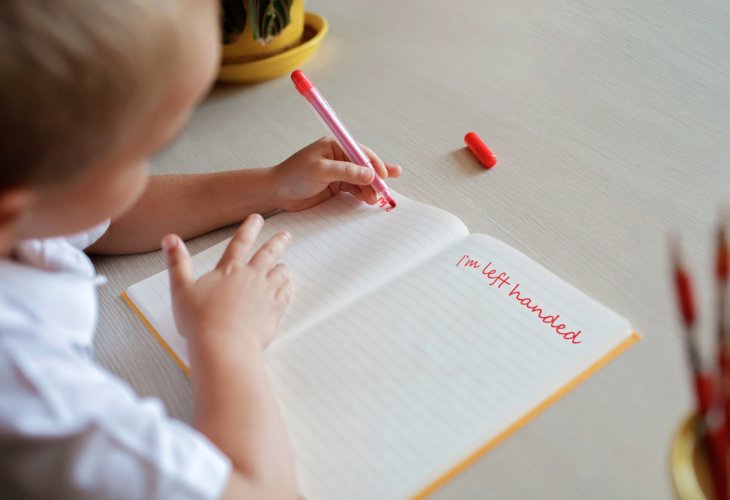 (Photo: shutterstock)
Most people in the world are right-handed. We write with our right hand, cut with our right hand, and naturally perform many everyday tasks with it. Yet about ten percent of the world’s population prefers to use the left hand. These people are commonly known as left-handers.
When Does Hand Preference Begin?
In early infancy, most babies use both hands equally as they explore the world around them. As children grow, however, a clear preference gradually appears. By around the age of two, many children begin to show signs that they favor one hand over the other.
By the time they reach the age of five, this preference is usually well established. At that stage children typically draw, write, and perform most tasks with their dominant hand.
A small number of people are able to use both hands equally well. This rare ability is known as ambidexterity.
Why Are Some People Left-Handed?
Scientists have long tried to understand why people develop a preference for one side of the body. Many theories focus on the development of the brain during infancy, particularly the way the two hemispheres of the brain control different sides of the body.
Despite decades of research, there is still no single clear explanation for why some people become left-handed while most become right-handed.
Interestingly, left-handed people are often associated with certain traits such as creativity, imagination, and strong abstract thinking. While these connections are still debated, many artists, musicians, and innovators throughout history have been left-handed.
Living in a Right-Handed World
Because the majority of people are right-handed, many everyday tools and devices are designed with right-handed use in mind. As a result, left-handed individuals sometimes find common objects less convenient to use, from scissors and notebooks to kitchen tools and desks.
Over time, however, awareness of this difference has led to the creation of products specifically designed for left-handed users.
Left-Handedness in Jewish Law
Left-handedness also receives special attention in Jewish law. One well-known example relates to the mitzvah of tefillin.
Most people place tefillin on their left arm, which is usually the weaker arm. A left-handed person, however, places the tefillin on the right arm, since for them that is the weaker arm.
A similar idea appears in the custom of tying shoelaces. In general, the left shoe is tied first and then the right. Left-handed individuals reverse the order and begin with the right shoe.
Side Preference in Animals
Humans are not the only creatures with a preference for one side of the body. Many animals also show what scientists call lateral preference.
However, among most animals the split between right-sided and left-sided preference is much closer to fifty percent each. In humans, by contrast, a large majority of people favor the right hand.
This makes human handedness one of the many intriguing mysteries of biology, reminding us that even the simplest habits, such as which hand we use to write, may have deeper origins in the workings of the brain and body.

