

Torah Personalities
Rabbi Uri Zohar: From Israeli Film Star to Torah Giant
Once a leading figure in Israeli cinema, Uri Zohar left fame behind to embrace Torah, becoming one of the most inspiring voices of spiritual return
- Naama Green
- | Updated
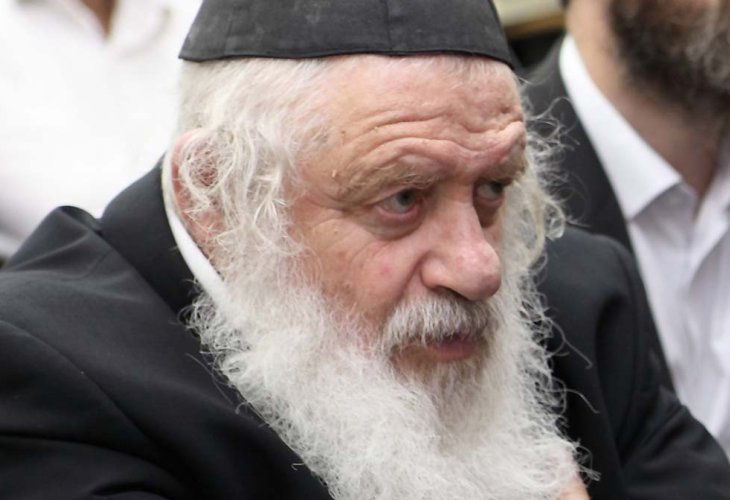 Rabbi Uri Zohar (Photo: Yaakov Nahumi / Flash 90)
Rabbi Uri Zohar was one of the most remarkable figures of spiritual transformation in modern Jewish history.
His life story stands as one of the most dramatic spiritual journeys of the modern era — a transformation that reshaped not only his own life but the lives of countless others.
A Leading Figure in Israeli Culture
Before embracing a life of Torah, Uri Zohar was one of the most prominent personalities in Israeli cultural life. He was widely recognized as a gifted actor, comedian, stand-up performer, screenwriter, and film director who helped shape the entertainment landscape of Israel.
At the height of his career he was considered a defining voice in Israeli cinema and the artistic scene. Fame, creativity, and public admiration surrounded him.
In the late 1970s however, everything changed. Zohar made a life-altering decision to leave the world of entertainment and return to a life of Torah observance.
He began studying at Ohr Somayach Yeshiva, an institution known for welcoming seekers exploring Jewish learning. Later he continued his studies at Aderet Eliyahu Yeshiva in the Old City of Jerusalem under the guidance of the distinguished sage Yitzhak Shlomo Zilberman, and in time he even delivered Torah lectures there himself.
The Moment That Changed His Life
Rabbi Zohar often described the turning point that led him to reevaluate his entire worldview.
“For forty years I lived in Israel,” he once recalled. “I spoke Hebrew, I called myself a Jew, and I even circumcised my sons — but I had no idea what a Torah scholar was. I did not even know such a thing existed.”
When he first encountered Rabbi Zilberman, he felt he was meeting true Torah wisdom for the first time.
“The wisdom that came from him was unlike anything we had ever seen,” Zohar said. “All of us from the film world were fascinated. We asked questions, we argued, and he answered every single one.”
Then the rabbi said a sentence that shook him deeply: “My young friend, I can prove to you that there is a Creator who gave the Torah at Mount Sinai.”
Those words sparked a profound inner awakening.
“If there is a Creator,” Zohar reflected, “then there is judgment and purpose in life. We did not create ourselves. We are not simply matter that somehow produced intelligence and wanders through the world declaring ‘I, I, I.’”
“If there is a Creator, then He created us, breathed a soul into us, and one day He will ask us what we did with our lives. That question changes everything.”
Leaving Fame Behind
After his spiritual awakening, Rabbi Zohar stepped away almost entirely from his former career and public life. He chose a path of humility, Torah study, and quiet devotion.
He settled in the ultra-Orthodox neighborhood of Mattersdorf in Jerusalem and immersed himself in a life of learning and spiritual growth.
Although he generally avoided speaking about his earlier fame, he occasionally stepped forward to help others discover their own connection to Judaism. He delivered Torah lectures, hosted radio programs encouraging parents to enroll their children in religious schools, and participated in outreach efforts aimed at strengthening Jewish identity.
Reflecting on his transformation, he once told a group of young listeners: “I came from a world where materially I lacked nothing. We were part of the cultural elite, expected to break every convention. There were no boundaries.”
“Today you see me differently. I have no car, no scooter, no bicycle — nothing. But I have everything.”
“There is no one happier than me,” he added. “True happiness is knowing that God is present right here, that His eyes are open to every person and His providence guides every moment.”
A Message of Faith and Personal Connection
Rabbi Zohar often shared a simple but profound spiritual insight.
“I will reveal a great secret,” he once told an audience. “If you speak to the Holy One, blessed be He, He answers. If you have eyes to see and ears to hear, you will notice how God guides your life — not necessarily where you wish to go, but where it is truly good for you.”
“There is no father who loves his child more than God loves every one of us.”
Bringing Others Closer
After his return to Torah observance, the great Torah leader Elazar Shach encouraged Rabbi Zohar to devote himself to bringing other Jews closer to their spiritual heritage.
He became deeply involved with the organization Lev L'Achim, helping many families enroll their children in religious schools and guiding those taking their first steps toward a Torah-centered life.
Over the years he also became a trusted mentor to parents who had recently embraced religious observance. Through lectures, counseling, and personal guidance, he helped families navigate the challenges of raising children in a new spiritual environment.
A Philosophy of Love in Education
One of Rabbi Zohar’s most influential teachings concerned parenting and education and he often spoke candidly about the challenges he faced while raising his own children.
“Each one of them gave us a real education,” he once admitted with humility. “We went through difficult situations, and I made every mistake possible — shouting, arguments, everything.”
Eventually, however, he reached an important realization.
“I suddenly understood that the children are not to blame. I learned to love them exactly where they are, without placing religious demands on them.”
He summarized his approach to parenting in a single powerful principle: “First give them the message: ‘I love you. I am your father.’”
Only through unconditional love, he believed, can children grow into lives of faith and commitment.
Concern for the Next Generation
Having experienced both the secular cultural world and the world of Torah, Rabbi Zohar spoke with deep concern about the spiritual challenges facing young people today. He warned about the influence of modern media and the ease with which harmful content can reach children.
“If someone had told me forty years ago that ten-year-old children would carry the greatest impurity in the world in their pockets at the press of a button, I would never have believed it,” he once said.
“How can a child grow up like that? How can he build a healthy life, a loving home, and a strong relationship?”
Yet even in expressing these concerns, Rabbi Zohar never lost sight of the inner potential of every Jew. “Remember,” he would say, “that within the soul of every Jew rests the Divine Presence.”
A Life Transformed
In a past interview, Rabbi Zohar was asked what might have happened if he had never returned to a life of Torah.
“It would have ended very badly,” he answered honestly.
“Where would I have dreamed of the relationship with my children that I have today? Perhaps I would have continued making films, but real family life would not have existed.”
When a reporter noted that there was no television in his home, he smiled and replied: “It broke twenty-five years ago. The repairman never came.”
And when asked whether he might ever return to his former secular life, his answer was immediate and emphatic: “Never. Never in my life would I leave the Torah.”
Through his extraordinary journey from cultural celebrity to devoted Torah scholar, Rabbi Uri Zohar left behind a legacy of faith, humility, and inspiration that will continue to guide and uplift generations to come.

