

Passover
Pesach Prep Made Clear: How to Kasher Your Kitchen Properly
Not sure what needs kashering for Pesach and what only needs cleaning? This guide breaks down the rules for utensils, appliances, and kitchen surfaces.
- Rabbi Yaron Ashkenazi
- | Updated
 (Photo: Shutterstock)
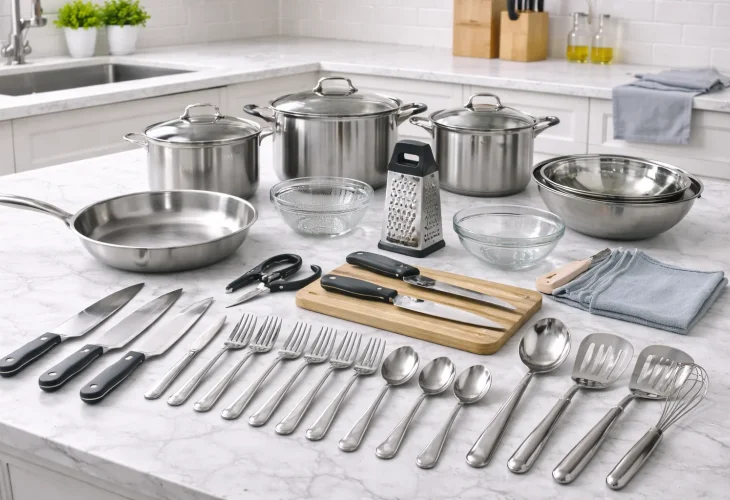
As Pesach approaches, one of the central tasks in preparing the kitchen is kashering utensils that were used with chametz during the year. Utensils absorb the flavor of the food cooked or heated in them, and before they can be used on Pesach, that absorbed chametz must be removed according to halacha. The method of kashering depends on how the utensil was used during the year. The following guide outlines the common types of utensils and appliances and how they should be koshered for Pesach.
Hag'alah (Koshering Utensils by Boiling)
There are several important rules to know before koshering utensils through hag'alah.
Clean the utensil thoroughly so that no residue remains. Sometimes, after heavy use, tiny black or brown spots bond to the surface and cannot be removed. In that case, the utensil cannot be koshered and should not be used for Pesach.
Parts attached to the utensil, such as pot handles or lid handles, do not need to be removed because they are considered part of the same utensil. However, the screws and joints should be cleaned carefully to make sure no chametz or rust is trapped there.
If koshering meat and dairy utensils in the same pot of water, add a spoiling agent such as dish soap to the water before immersing them.
Wait until the water reaches a rolling boil. Then immerse the utensil and keep it in the water until the boiling resumes.
Remove the utensil and rinse it immediately in cold water.
These guidelines apply to someone who cannot reach a communal kashering station and must kasher utensils at home. Because hag'alah contains many details, it is usually preferable to go to a supervised kashering station. If you must kasher utensils at home, it is advisable to consult a rabbi or halachic hotline for guidance.
Kitchen Cabinets
A thorough cleaning is sufficient. Cabinets do not need to be lined.
Sink, Porcelain, Faucet, and Strainer
During the year boiling water is often poured into the sink, for example when draining pasta into a strainer. Therefore the sink is koshered by pouring boiling water from a keli rishon, such as a pot that was on the fire or an electric kettle. It is best to pour boiling water three times.
Kitchen porcelain does not require hag'alah because most of its use is with cold water. Cleaning with soap and water is sufficient.
The faucet only requires a thorough cleaning with soap and water. Faucet handles should also be cleaned well.
The sink strainer should be cleaned thoroughly and it is good practice to pour boiling water from a keli rishon over it.
Before pouring boiling water into the sink, dry it completely. Start at the bottom of the sink and the drain opening, and only afterward move up the sink walls and the countertop if the countertop is also being koshered.
Stovetops
Gas Stovetops
The bottom surface should be cleaned thoroughly and covered with heavy aluminum foil. There is no need to pour boiling water on it.
There is also no need to open the casing to reach under the burners and wires. Since a person's hand does not normally reach there, we rely on the bitul chametz performed after bedikat chametz and on Erev Pesach.
The grates should ideally be koshered by hag'alah. Alternatively, boiling water can be poured over them and they can then be covered with aluminum foil.
The burners themselves do not require hag'alah. Since they sit directly over the flame, they do not absorb chametz.
Ceramic (Halogen) Cooktops
These surfaces are generally considered glass, so rinsing them is sufficient. Someone who wishes to be stringent may run the burners empty.
According to Ashkenazic custom, it is proper to pass a boiling pot or a heated stone across the surface.
Induction Cooktops
For Sephardic practice they are treated like glass and rinsing is sufficient.
For Ashkenazic practice it is recommended to place a special silicone cover sold for Pesach use.
Utensils
Glass Utensils
For Sephardic practice, glass utensils do not absorb flavor and may be used after a thorough rinse with cold water, even if they were used for cooking or baking.
For Ashkenazic practice, glass is treated like earthenware and cannot be koshered. Separate glassware should be used for Pesach.
Corning, Pyrex, and Duralex have the same status as glass.
Earthenware and Porcelain
These materials cannot be koshered. In cases of significant financial loss, a rabbi should be consulted.
Metal, Wood, Stone, Bone, Plastic, Nylon, and Bakelite
These materials can be koshered through hag'alah.
Baby Bottles
Pouring boiling water over them is sufficient, and this also koshers the rubber teat.
Pots and Frying Pans
Regular pots and frying pans can be koshered through hag'alah.
Pressure Cooker
A pressure cooker requires hag'alah, including the rubber gasket.
Nonstick Teflon Pan
For Sephardic practice, if the pan is normally used with oil it may be koshered through hag'alah. If it is typically used without oil it cannot be koshered.
For Ashkenazic practice plastic coatings are treated like earthenware and a new pan should be used for Pesach.
Glass Pots and Baking Dishes
These follow the same rules as glass utensils.
Grills
Grill Pan (Plancha)
Because this pan is used for dry heat, it requires intense libun. Since most modern pans cannot withstand such heat, they generally cannot be koshered and a new pan should be used for Pesach.
Charcoal Grill
After a thorough cleaning, fill the grill with coals and ignite them. This performs libun on the base. The grate should be replaced.
Gas Grill
Clean the grill and grate thoroughly and run it on the highest heat for about thirty minutes. Even so, it is best to replace the grate for Pesach.
Electric Grill
An electric grill cannot be koshered because proper libun cannot be achieved.
Liver Grate
A grate used exclusively for broiling liver does not require koshering.
Flatware, Plates, and Cups
Metal flatware that absorbed heat as a keli sheni can be koshered by pouring boiling water over it.
Plates made of earthenware or porcelain cannot be koshered. Plastic and glassware follow the rules explained above.
Appliances
Espresso Machine
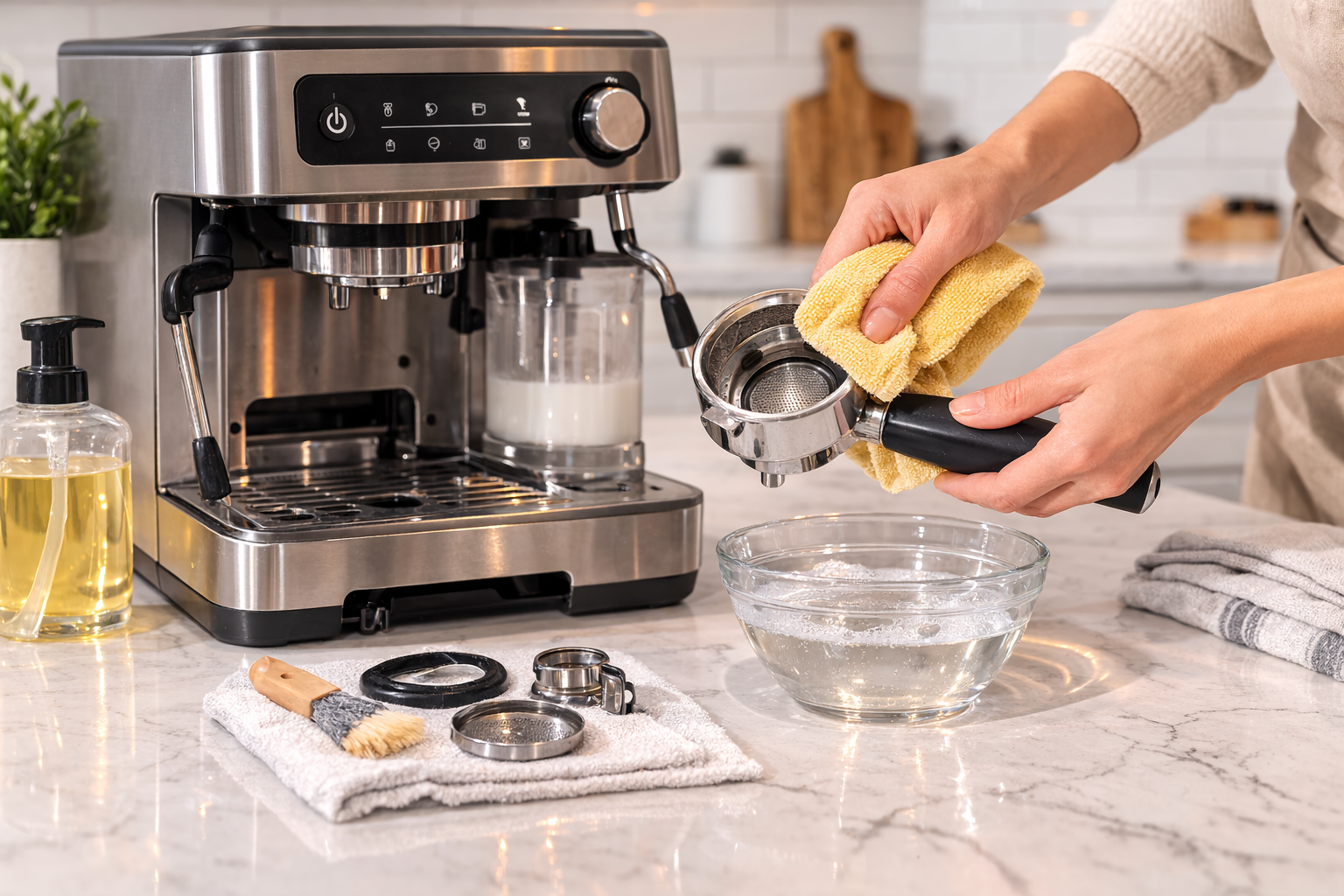
Because some capsules may contain chametz mixtures, parts involved in brewing and the milk frother should undergo hag'alah. The rest of the machine only requires thorough cleaning.
Blender, Food Processor, and Meat Grinder
If chametz was not processed together with something sharp or hot, cleaning is sufficient. If chametz was ground with sharp foods or while hot, hag'alah in boiling water is required.
Shabbat Hot Water Urn
If the urn is used only to heat water and nothing is warmed on top of it, rinsing it with cold water is sufficient.
However, some people warm bread or pastries on top. If the lid has holes where crumbs may fall inside, the urn cannot be koshered.
If the lid has no holes, the urn may be koshered by filling it completely with water and boiling it until the water overflows the rim. The lid should be immersed in boiling water.
Sandwich Toaster
This appliance requires intense libun and therefore cannot be koshered. A separate one should be used for Pesach.
Toaster Oven
Clean it thoroughly with oven cleaner and run it on the highest heat for about an hour. The trays cannot be koshered and should be replaced.
Microwave
Clean the microwave thoroughly. Place a cup of water with a small amount of soap inside and run the microwave until the water boils and steam fills the interior.
Microwaves that also function as ovens should be koshered like an oven.
Dishwasher
Clean the dishwasher thoroughly so no food residue remains anywhere in the machine or on the racks. Then run it empty with detergent on a full hot cycle.
Refrigerator and Freezer
A thorough wipe down is sufficient. There is no need to open sealed plastic housings where crumbs might be trapped since they cannot be reached and any crumbs there are insignificant.
Electric Kettle
Since it is used only for boiling water, rinsing it with cold water is sufficient.
Plata
Ideally pour boiling water over it from a keli rishon. Since many people place bread directly on it during the year, it is best to cover it with heavy aluminum foil for Pesach.
Table
If food is normally eaten directly on the table without a tablecloth, pour boiling water over it. If this may damage the table, simply cover it with a tablecloth for the duration of the holiday.
Countertop
Older countertops on which hot pots are placed should have boiling water poured over them.
Modern engineered stone countertops are usually used with trivets and rarely have hot pots placed directly on them. Therefore thorough cleaning is generally sufficient.
According to Sephardic practice there is no need to cover the countertop, while Ashkenazic custom is to cover countertops and sinks.
Oven
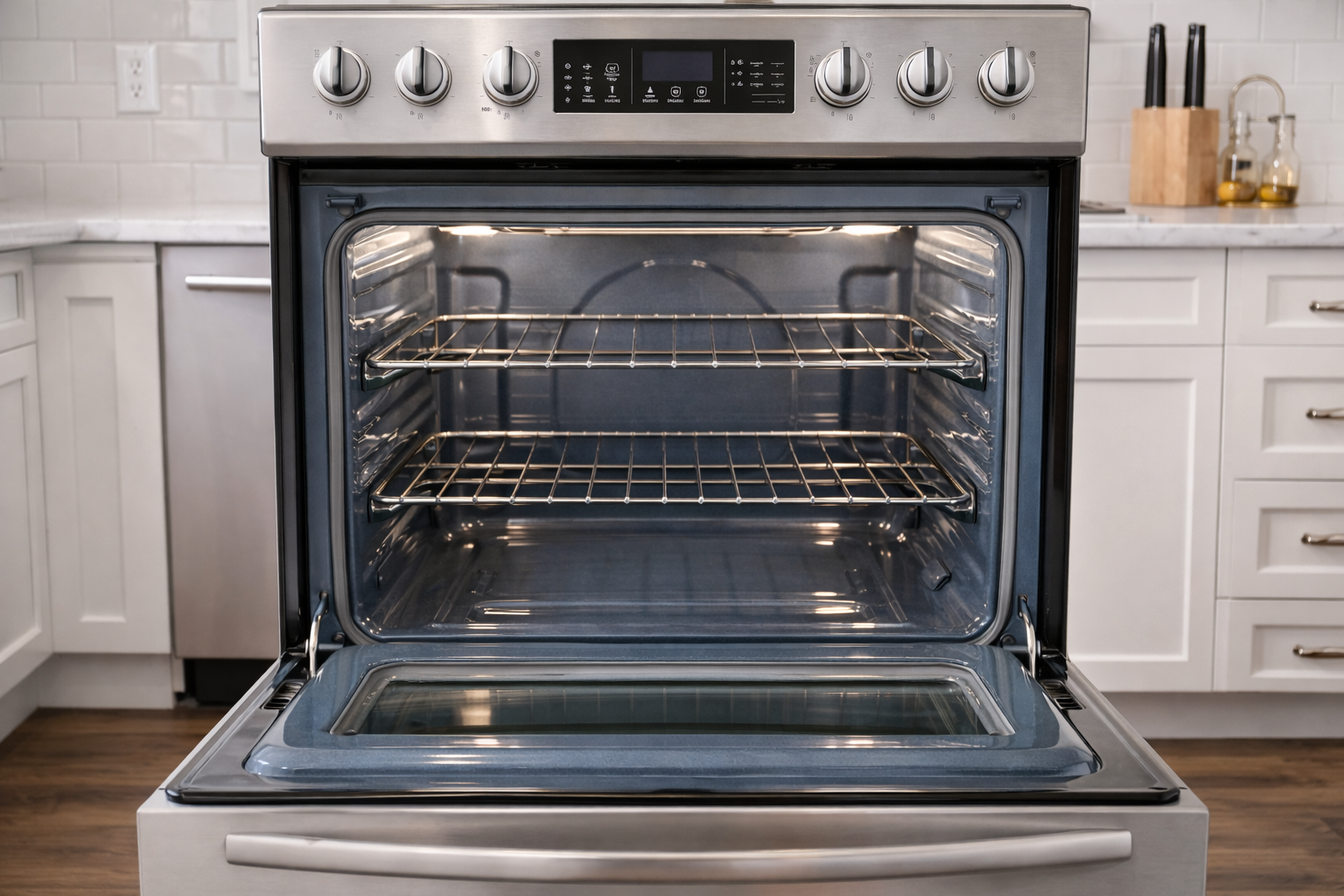
Wait twenty four hours after the last use with chametz. Then clean the oven thoroughly and run it on the highest heat for about an hour.
Baking trays cannot be koshered because they would require intense libun. They should be replaced.
The convection turbo fan cannot be koshered and should not be used on Pesach.
Self-Cleaning Ovens
Pyrolytic self-cleaning ovens reach extremely high temperatures above four hundred degrees Celsius. Running the self cleaning cycle with the trays inside kosheres both the oven and the trays. After the cycle, wipe down the oven and it is ready for Pesach.
Final Thoughts
Preparing the kitchen for Pesach may seem overwhelming at first, but understanding the basic principles of kashering makes the process much more manageable. By cleaning thoroughly and applying the correct method based on how each utensil or appliance was used, many items in the kitchen can be properly prepared for the holiday. With careful planning and attention to these guidelines, the kitchen can be made fully ready for Pesach, allowing the focus to shift to the joy and meaning of the upcoming festival.

