

Torah Personalities
Rabbi Mordechai Elyahu: A Legacy of Love and Kindness
Remarkable stories reveal the wisdom, humility, and heartfelt devotion of the former Rishon LeZion who carried the entire nation in his heart
- Yonatan HaLevi
- | Updated
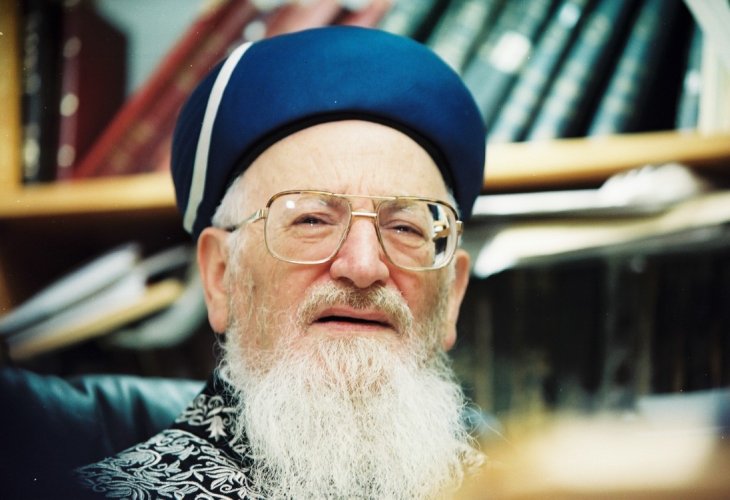 Rabbi Mordechai Elyahu zt"l (Photo: Flash 90)
Rabbi Mordechai Eliyahu (21 Adar I 5689 – 25 Sivan 5770 | 1929–2010) served as Rishon LeZion, a leading halachic authority, and a renowned Kabbalist. To many, he was more than a rabbi or judge of Jewish law — he was known as “the father of Israel,” a spiritual leader who carried the hopes, struggles, and prayers of the Jewish people within his compassionate heart.
Those who encountered him recall not only his towering scholarship but also his warmth, humility, and boundless concern for every Jew. The following stories offer a glimpse into the remarkable personality and spiritual sensitivity that defined Rabbi Mordechai Eliyahu.
The Green Tefillin
During one of his visits to Russia, Rabbi Eliyahu noticed a Jewish man wearing an unusual pair of green tefillin.
Intrigued, the rabbi gently asked the man where he had obtained them. The man explained that after discovering his Jewish heritage, he began attending synagogue. Observing that everyone else was wearing tefillin, he decided to create his own pair.
Using green asbestos material, he crafted the boxes himself and carved the Hebrew letters onto them. Inside, he placed parchments that he had photographed from a mezuzah belonging to a friend.
Rabbi Eliyahu listened attentively and then asked if he could receive those tefillin and provide the man with a proper pair in their place.
The man hesitated. “Does that mean my tefillin are not kosher?” he asked.
Rabbi Eliyahu answered with deep sensitivity:
“Hashem has probably never rejoiced over any tefillin in the world as much as He rejoices over yours.”
He explained that he wished to keep the handmade tefillin while giving the man a new, fully kosher pair to wear. In this way, the man would begin fulfilling the mitzvah correctly, without feeling embarrassed or diminished. Instead, he left filled with joy and pride.
Halachic Precision in the Midst of War
During Israel’s War of Independence, Rabbi Eliyahu studied with the distinguished sage Chacham Tzadkah HaZaken.
One day, a man arrived at the synagogue carrying pigeons and asked Chacham Tzadkah to perform shechitah. As the slaughter was taking place in the courtyard, the sound of a shell whistling through the air was suddenly heard, followed by a nearby explosion.
Chacham Tzadkah immediately sighed and expressed concern that the slaughter might be invalid. The shock of the explosion, he reasoned, might have caused even a momentary pause in the cutting, which would render the shechitah unfit.
Rabbi Eliyahu quickly reassured him:
“I anticipated that concern,” he said. “I watched carefully and saw that there was no interruption.”
Still cautious, Chacham Tzadkah requested that another pigeon be brought to remove any doubt.
“But where will I find a pigeon now?” Rabbi Eliyahu wondered.
Yet as soon as he stepped outside, a pigeon seller appeared and offered him birds for sale.
The story illustrates Rabbi Eliyahu’s remarkable ability to remain attentive to halachic detail even amid the chaos of wartime.
Divine Providence Before a Wedding
On another occasion, a groom approached Rabbi Eliyahu with a troubling concern. Shortly before the wedding, a halachic problem arose that rendered part of the prepared food questionable. The groom’s father, however, insisted that everything was perfectly kosher.
The young man feared that the disagreement could lead to serious tension.
Rabbi Eliyahu calmly reassured him: “Do not worry. Everything will work out.”
The following morning, the groom’s father discovered that the questionable food had accidentally been left outside the refrigerator overnight. It had spoiled and could not be served.
As a result, the wedding proceeded with only kosher food — and no conflict or embarrassment arose.
Carrying the Jewish People on His Heart
Rabbi Eliyahu had a deep affection for the passage beginning with the words “Tanya, Amar Rabbi Yishmael…”, which describes a powerful encounter between Rabbi Yishmael the High Priest and the Divine Presence.
In that passage, Rabbi Yishmael offers a prayer: “May it be Your will that Your mercy overcome Your anger, that Your compassion prevail over Your attributes of strict judgment, and that You deal with Your children with mercy.”
These words reflected the essence of Rabbi Eliyahu’s life mission. He constantly prayed that God relate to His people with compassion and kindness.
Those close to him sensed that he willingly accepted personal hardship and spiritual responsibility on behalf of the Jewish people, echoing King David’s words: “These sheep — what have they done? Let Your hand be upon me and my father’s house.”
Indeed, Rabbi Eliyahu carried the struggles and hopes of the entire nation within his heart.
A Rabbi for All of Israel
Rabbi Eliyahu did not see himself as belonging to a particular community or faction. He believed his role was to serve all of Israel.
In one of the first Torah lectures broadcast by satellite, he quoted the verse: “The voice of your watchmen — they lift their voices together in song.”
Drawing from interpretations of the Talmud, Tosafot, the Zohar, the Ben Ish Chai, the Baal Shem Tov, and the Vilna Gaon, he concluded with a powerful message: “We belong to everyone — and to no single group.”
Comforting a Child Before a Dangerous Operation
One mother shared a deeply moving experience.
“My son needed to undergo a complicated brain operation,” she recalled. “We tried to appear calm, but he sensed our anxiety and became very frightened.”
The family decided to visit Rabbi Eliyahu for a blessing.
When they arrived, the rabbi himself opened the door and warmly invited them inside. After hearing their story, he spent nearly an hour speaking with the child — telling stories from his own childhood and engaging him like an old friend.
The parents watched in amazement as one of the great spiritual leaders of the generation devoted so much time to calming their son.
Before leaving, the mother quietly asked, “The doctors say the surgery is dangerous. What can we do?”
Rabbi Eliyahu responded with unwavering confidence: “‘He sends His word and heals them.’ The doctors will do their work — and we will do ours.”
The surgery later concluded successfully.
Four Words That Brought Healing
Another story concerns a five-year-old boy who suffered from a severe eye infection that would not respond to treatment.
When his younger brother turned three, their father brought both children to Rabbi Eliyahu’s home for the traditional chalakah haircut.
After blessing the younger child, the father asked the rabbi to bless Yosef Chaim so that his eye would heal.
Rabbi Eliyahu looked deeply into the boy’s eyes, smiled gently, and said just four words: “Ki ayin b’ayin yir’u.” (“For they shall see eye to eye.”)
The next day, the kindergarten teacher asked the boy’s mother in astonishment: “What medicine did you give him? The infection is completely gone.”
The Child Who Began to Speak
Another parent told of a three-year-old son who had not yet begun speaking. Despite visits to many specialists, no solution had been found.
The father brought the child to Rabbi Eliyahu and said boldly: “Rabbi, my son is not leaving here until he learns to speak.”
Rabbi Eliyahu smiled, gently placed his finger on the child’s lips, and recited the verse: “Hashem, open my lips, and my mouth will declare Your praise.”
Soon afterward, the child began to speak.
The Power of Silence and Forgiveness
One man once came to Rabbi Eliyahu devastated after being publicly humiliated. Harsh pamphlets attacking him had been posted throughout the city, and his shame was unbearable.
Rabbi Eliyahu listened carefully and then advised him: “Remain silent. Do not respond to those who insult you.”
He then added that if the man could overcome his natural desire for revenge, he would merit a great blessing — a son.
Perplexed, the man asked how such a blessing was connected to his suffering.
Rabbi Eliyahu explained through a verse from Tehillim: “He remembered us in our lowliness.”
“When a person endures humiliation,” he said, “God remembers him with blessing.”
In time, the man indeed merited a son.
A Legacy of Compassion and Faith
Through stories like these, Rabbi Mordechai Eliyahu’s character becomes vividly clear. His life combined Torah greatness with profound humility, spiritual insight with practical wisdom, and leadership with genuine love for every Jew.
Whether resolving halachic questions, comforting families in distress, or strengthening faith, he carried the entire Jewish people within his heart.
For countless individuals who encountered him, he was not only a rabbi, but truly a father to Israel.

