

Shabbat
Can You Water Plants on Shabbat? Gardening and Halacha Explained
Gardens, planters, and water drainage can raise surprising halachic questions. Here is what you need to know about plants on Shabbat.
- Rabbi Ofir Yitzhak Malka
- | Updated
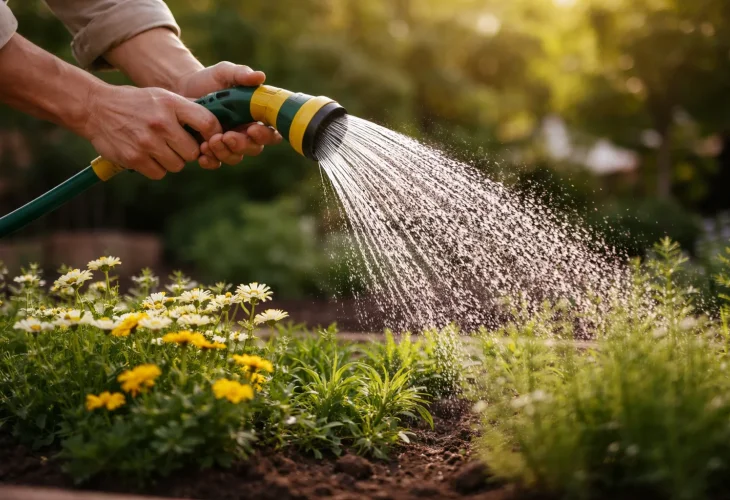
Many everyday household situations can raise unexpected halachic questions on Shabbat, especially when it comes to plants, watering, and gardening. Air conditioner drainage, household faucets, planters, and even aromatic herbs placed in water may involve the melacha of sowing or actions connected to it. Understanding the principles behind these laws can help avoid unintended violations while maintaining the peaceful atmosphere of Shabbat.
Concern of Watering from Air Conditioner Drainage
Is leaving draining air conditioner water in the garden a Shabbat concern because it waters plants?
Watering seeds is considered part of the melacha of sowing because it helps them grow. It may also fall under plowing since moistening the soil prepares the ground for growth (Mishnah Berurah 336:26; see also Shaar HaTziyun, note 18).
However, the Shulchan Aruch (172:5) rules that it is permissible to open water close to dusk from the edge of a spring that flows into a garden for irrigation, even though it will continue flowing throughout Shabbat. The act itself was done before Shabbat, and the water continues naturally afterward.
This principle applies even more clearly to water draining from an air conditioner, since the water flow does not involve a deliberate act by hand during Shabbat. Therefore, directing the hose from the air conditioner toward the garden before Shabbat is permitted.
Opening a Faucet That Drains Into the Garden
May a person open a faucet in the house on Shabbat if the water eventually drains into the garden?
Pouring water directly onto seeds is forbidden because of the melacha of sowing. However, when water is opened at the sink and later flows into the garden through pipes or hoses, some authorities such as Rabbi Shlomo Zalman Auerbach and Rabbi Ovadiah Yosef write (Shemirat Shabbat Kehilchata 12:19) that this is considered grama, indirect causation. Nevertheless, they maintain that it should still be prohibited because it may lead to an indirect violation of a biblical prohibition.
If the water flows into a neighbor’s garden, however, there may be room for leniency. In such a case, the watering is a psik reisha that is not beneficial to the person opening the faucet, which reduces the prohibition to a rabbinical level (see 336:18). Since indirect rabbinical actions may sometimes be permitted, leniency may apply.
If the water flows directly from the sink into the garden, or if the hose is short and effectively waters the garden immediately, it is considered a direct action and remains prohibited (Shemirat Shabbat Kehilchata, ibid).
If the garden was already watered before Shabbat, or rainfall left the soil sufficiently moist, some authorities permit opening the faucet since no further benefit is gained from the water (see Kaf HaChaim 336:29 citing P’tach HaDvir).
Other authorities disagree entirely and argue that this situation is not considered indirect at all. Since garden irrigation normally occurs through hoses and pipes, they view it as direct watering and therefore prohibited (Menuchah Nekunah, melacha of sowing, note 44; see also Ben Ish Chai, Year 1, Parashat Vayigash).
Moving a Planter on Shabbat
If a planter falls from a window sill onto the floor on Shabbat, may it be returned?
The Mishnah Berurah (336, Shaar HaTziyun 38) raises doubt whether a planter is considered muktzeh. Because of this uncertainty, it is preferable to move it using one’s foot or another unusual method. The Mishnah Berurah (338:13, based on Shulchan Aruch 311:8) explains that moving muktzeh with one’s body rather than with one’s hands may sometimes be permitted.
Those who permit moving it normally rely on the opinion that a planter is primarily decorative and therefore not considered muktzeh at all (Or LeTzion, Part 2, 26:9).
If the planter fell into a place where the space is needed, it may certainly be moved since this is considered moving it for the sake of its location (338:6).
In such a case there is also no concern of sowing. The Shulchan Aruch (336:8) prohibits moving a planter only when the action changes its relationship to the ground in a way that increases or decreases nutrient absorption. Returning it to its place indoors does not create such a change, as explained by Or LeTzion.
Some authorities are stricter and maintain that even in paved homes one should avoid raising or lowering planters because it could theoretically affect absorption.
Moving and Dragging a Non Drained Planter
May a planter without drainage holes be lifted or dragged on Shabbat?
The Shulchan Aruch (336:8) rules that one should not lift such a planter even if it has no drainage holes. According to the explanation given there, moisture and nutrients may still pass through materials such as wood or clay. Lowering the planter onto the ground may enhance absorption, while lifting it may reduce it. Both situations fall under rabbinical restrictions connected to sowing.
When the planter stands on a paved surface, however, many authorities permit lifting or lowering it since the pavement prevents absorption from the ground (Chazon Ovadia, Shabbat vol. 1; Or LeTzion 2:26:9; responsa of Rabbi Shmuel Auerbach).
Rabbi Zilber also wrote that the Chazon Ish might agree regarding modern flooring.
Nevertheless, according to the opinion of the Chazon Ish, even on paved ground one should not move planters because they may still draw nutrients through the floor (Shevet Halevi 6:167).
If the bottom of the planter is made of plastic, which does not allow absorption from below, many authorities permit moving it from place to place. This view is cited in the name of Rabbi Nissim Karelitz (Hilchot Sadeh p.21) and Rabbi Shlomo Zalman Auerbach.
If the bottom is made of glass or metal, everyone agrees that it does not absorb from the ground and may therefore be moved.
Dragging a non drained planter across the floor is permitted because this action does not change its absorption in any way. It neither increases nor decreases the plant’s nourishment. This reasoning is supported by the Rambam as explained in Beit Yosef and later authorities such as Chut Shani.
It should be remembered that a planter is considered an item designated for prohibition and may only be moved for its own need or for the need of the place where it sits (Shaar HaTziyun 336:38).
Putting Aromatic Leaves in Water
May aromatic leaves be placed in water on Shabbat to prevent them from drying out?
The Shulchan Aruch (321:11) rules that it is permissible to keep detached plants from wilting. Similarly, the Rema (336:11) writes that flowers may be placed in water so that they do not dry out, as long as they are not the type that continue opening from the moisture, such as roses.
However, herbs such as Yemeni basil that can take root when placed in water should not be placed in water because this involves the melacha of sowing. Even though rooting does not occur immediately on Shabbat, the Mishnah Berurah (336:51) explains that placing seeds or plants into water when they will later sprout already constitutes a biblical prohibition.
Even without intention to root them, this case is considered a psik reisha. Although the result is not desired, it still remains prohibited.
Fresh myrtle branches may also continue to grow slightly when placed in water (Chut Shani 1:10:3).
Even if one intends to remove the leaves after Shabbat, there is concern that they may be forgotten. However, if basil is placed in water in a synagogue on Friday night where the custom is for congregants to take the leaves and none will remain after Shabbat, the Mishnah Berurah allows it.
If the leaves have already rooted in water, they may not be removed on Shabbat because doing so would involve the prohibition of pulling out a growing plant (Shemirat Shabbat Kehilchata quoting Rabbi Shmuel Auerbach).
With herbs that do not grow further in water, however, it is permitted both to place them in water and to remove them.
Passing Under a Hanging Planter
Is it permitted to walk under a planter hanging from the ceiling, or under planters attached to a window sill?
It is permitted to walk under a hanging planter. Since the ground below is paved, most authorities hold that there is no absorption from the planter to the earth beneath it.
The Shulchan Aruch (336:8) prohibits moving a drained planter from a high place to the ground because this increases its absorption from the soil. According to the Rambam this may even be a biblical issue, although the Shulchan Aruch rules it as rabbinical (see Shaar HaTziyun 37).
However, this concern applies only when the planter is placed onto natural ground. When the surface is paved, absorption does not occur and there is no prohibition.
Similarly, if someone is walking down the street and passes beneath planters hanging from windows, there is no prohibition. The person has no intention to affect the plants, and the action is too remote from any possible effect on absorption.
Even if the planters hang over unpaved ground, walking beneath them remains permissible because the act does not directly influence the plant’s growth or nourishment.
Understanding these principles allows us to approach everyday situations with clarity, ensuring that even ordinary household actions remain in harmony with the sanctity of Shabbat.

