

Wonders of Creation
Earthquakes: What's Really Happening Beneath Our Feet?
Discover how tectonic plates move, why earthquakes occur, and how powerful quakes have shaped history in Israel and around the world.
- Debbie Reichman
- | Updated
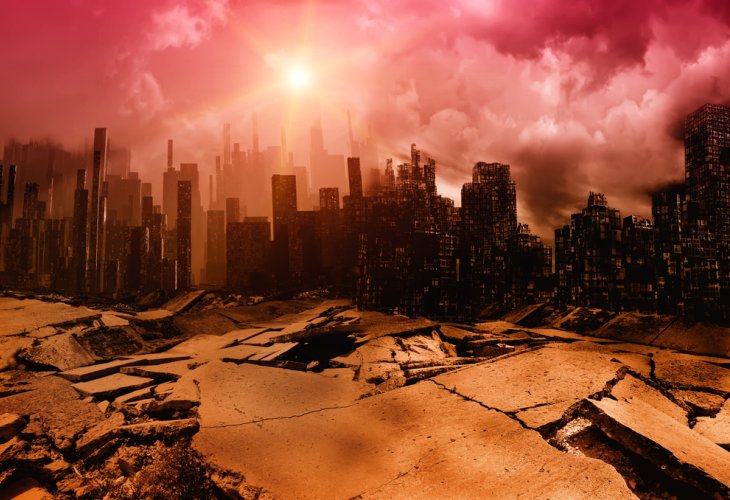 (Photo credit: shutterstock)
Have you ever felt as if the ground beneath your feet was shifting? Sometimes this phrase is only a metaphor describing worry or uncertainty. At other times, however, the ground truly does move. That is the moment when we experience an earthquake.
To understand earthquakes and why they occur, it is important to look at the structure of our planet.
Earth’s Moving Plates
The outer layer of the Earth is not one solid piece. Instead, it is divided into large sections called tectonic plates. These enormous plates form the planet’s surface and carry continents and oceans with them. Scientists identify several major tectonic plates that shape different regions of the Earth.
These plates are constantly moving, although their motion is usually so slow that people do not notice it. Over long periods of time, however, the movement becomes significant. Plates may slide beneath one another, collide head on, separate and form new crust, often deep under the ocean, or grind past each other along their edges.
When two plates push, pull, or scrape against each other and suddenly release built up pressure, the energy travels through the ground as waves. This sudden release of energy is what we experience as an earthquake.
How Earthquakes Are Measured
The strength of an earthquake is measured using the Richter scale, a system developed to estimate the amount of energy released during the event. Instruments at geophysical institutes record the vibrations in the ground and determine the earthquake’s magnitude.
The stronger the movement of the earth, the higher the number on the Richter scale. Low numbers represent mild tremors that may barely be felt, while higher numbers indicate powerful earthquakes capable of causing significant destruction.
Earthquakes and Tsunamis
When an earthquake occurs beneath the ocean floor, it can disturb massive amounts of water and create enormous waves known as tsunamis. These waves can travel across entire oceans at extremely high speeds, sometimes reaching up to 1000 kilometers per hour.
When tsunamis approach the coastline, they rise dramatically in height and can cause severe flooding and destruction in coastal areas.
Interestingly, many animals appear to sense earthquakes and tsunamis before they occur. Observations after several tsunami disasters revealed that although many people lost their lives, wildlife that roamed freely in the affected areas often escaped to safer ground before the waves arrived.
Earthquakes in Israel
Small earthquakes occur in many parts of the world from time to time. Israel also experiences occasional tremors, although most of them are relatively mild and cause little or no damage.
Nevertheless, history records several powerful earthquakes in the region. One of the most devastating took place in 1837 in the city of Safed, where a massive quake destroyed much of the city and claimed thousands of lives. Another major earthquake struck the area of the Dead Sea in 1927, causing heavy damage in cities such as Jerusalem, Jericho, Tiberias, and Nablus.
Earthquakes remind us that the ground beneath our feet is not as still as it may seem. Deep below the surface, powerful forces are constantly shaping and reshaping the planet we live on.

