

Magazine
The Land He Refused to Touch: Rav Shteinman’s Lesson in Integrity
Why did Rav Shteinman zt"l refuse to benefit from land that was clearly his? The answer reflects his incredible sensitivity to financial integrity.
- Naama Green
- | Updated
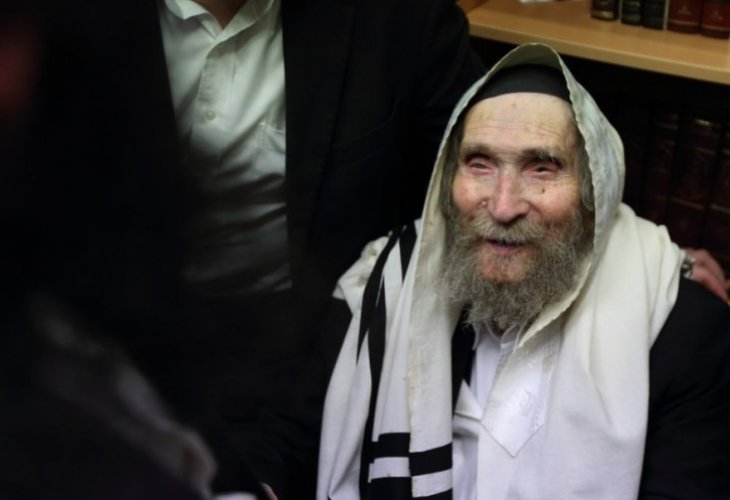 Rabbi Aharon Yehuda Leib Shteinman, of blessed memory (Photo: Yaakov Nahumi / Flash 90)
To the great sage Rabbi Aharon Yehuda Leib Shteinman, of blessed memory, there once belonged a small plot of land in Herzliya. In clause 14 of his will he wrote: “All property that belongs to me, apart from the plot in Herzliya, I transferred to my wife via a kinyan sudar.”
About forty years after writing the will, the land was eventually sold through an agent. The money received from the sale was entrusted to a talmid chacham with instructions to distribute it as tzedakah to avreichim in Bnei Brak.
Why did he own the land at all? When was it purchased? For what purpose? And why did he refuse to make use of it for so many years?
The book Chakima D’Yehudai tells the full story.
The Early Years in Israel
In the summer of 1945, Rabbi Shteinman and his wife arrived in the Land of Israel and were housed in the Atlit detention camp. From there they began searching for their few surviving relatives.
Among them were the Rebbetzin’s sister, Mrs. Rachel Orgel, and her husband Reb Natan. The young couple moved in with them in Petach Tikva.
The Shteinmans rented a small storage room that had been converted into a makeshift apartment at 24 PICA Street. After several weeks Rabbi Shteinman joined the kollel Torat Eretz Yisrael in Petach Tikva. Later he moved to Kfar Saba, where he served as rosh yeshiva.
Soon afterward the Rebbetzin’s mother, the righteous Mrs. Sarah Kornfeld, also immigrated to the Land of Israel and initially lived with her daughter Mrs. Orgel.
In 1953 the Orgel family moved to the United States, and Mrs. Kornfeld moved into the Shteinman home. She lived with them for thirteen years in both Kfar Saba and later in Bnei Brak.
A Mother Honored With Devotion
Rebbetzin Shteinman cared for her mother with extraordinary dedication and love. Their apartment in Bnei Brak was small, only two and a half rooms. Yet the family arranged their space so that Savta Kornfeld could have half a room to herself. The parents shared another room, the two daughters shared the second bedroom, and the two sons slept in the hallway.
Rabbi Shamma Shteinman later recalled with emotion how his parents fulfilled the mitzvah of honoring a parent in the most exemplary way possible.
Several years before her passing, Mrs. Kornfeld received reparations money from Germany. She could not bring herself to use German money directly, so she decided to purchase a small parcel of land near Herzliya. In her mind it would remain as an asset for her descendants, the very people whom the Germans had attempted to destroy.
When the land was purchased, she registered it not in her own name but in the names of her daughter and son in law, the Shteinmans.
A Plot Rav Shteinman Refused to Use
After her passing, the land legally and halachically belonged to the Shteinman family. Nevertheless, Rav Shteinman refused to make use of it.
Over the years the plot brought with it many bureaucratic problems and financial demands. It could not be developed for construction or agriculture, and the authorities repeatedly sent tax notices and arnona demands.
The land was not particularly valuable, and Rav Shteinman wished to be rid of it. Yet he refused to sell or use it.
The reason was his deep concern for absolute honesty in financial matters.
Kosher Money From the Start
Rav Shteinman explained his concern. His mother in law had two daughters. By simple logic, he felt she should have divided the land between both of them. Perhaps she had registered it only in his and his wife’s names because she knew of their financial hardship at the time, while the other daughter had moved to the United States and was more financially secure.
Even though the gift had been legally and halachically valid, Rav Shteinman feared that perhaps it had not been given completely wholeheartedly.
“If so,” he said, “this is not money that is completely kosher from the start.”
Because of this concern he refused to benefit from the property in any way.
Years of Refusal
Members of the Orgel family eventually heard about the situation and sent word that they had no interest in the land and would never claim a share in it. It should belong entirely to the Shteinman family.
But Rav Shteinman responded that verbal statements were not a halachic transfer.
Later one of Reb Natan Orgel’s sons personally told him that the land belonged fully to Rav Shteinman and that the family willingly gave up any share.
Still, Rav Shteinman refused to touch it.
Year after year the property remained unused while taxes continued to accumulate. Even when his son suggested selling the land to stop the losses, Rav Shteinman insisted that no proper halachic transfer had been made.
Finally Resolved
Eventually Reb Moshe Shteinman personally visited the heirs and arranged a full halachic transfer with a kinyan sudar and all the required legal procedures.
When he returned and explained that everything had been completed properly, Rav Shteinman, already about ninety years old at the time, was filled with joy.
Only then did he agree to sell the land.
A God fearing businessman handled the transaction, and the plot was sold for about one hundred thousand shekels.
Immediately Rav Shteinman distributed the entire sum to charity.
A Life of Absolute Integrity
The happiness he felt was not because money had been gained, but because the matter had finally been resolved in complete accordance with Torah law.
The story of the Herzliya plot became one more example of Rav Shteinman’s extraordinary integrity. He kept far away from what he called the seventy gates of leniency, so that he would never come even close to entering a single gate of theft.
More than once he would raise his hand and say with deep joy:
“This hand has never stolen.”

