

Wonders of Creation
Fractals: The Hidden Patterns Repeating Throughout Nature
From snowflakes to coastlines, many natural shapes repeat themselves in fascinating ways. Discover the mathematical patterns hidden in the world around us.
- Debbie Reichman
- | Updated
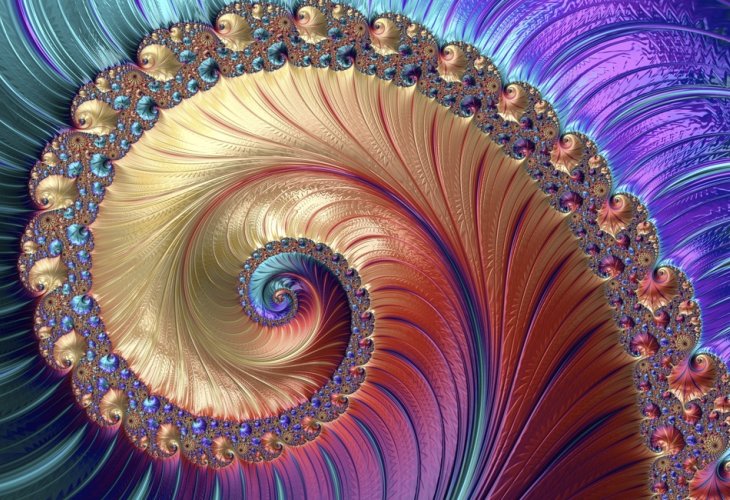 (Photo: shutterstock)
At first glance, many shapes in nature may seem random or irregular. But when scientists began studying these forms more closely, they discovered something remarkable. Many natural structures repeat the same pattern over and over, even as they grow larger or smaller. These repeating patterns are known as fractals.
Fractals are a concept from mathematics and physics, but they also appear widely in nature. They are used in fields such as computer graphics, engineering, and data analysis. A fractal is a geometric structure made up of smaller copies of itself. In other words, each part of the shape resembles the whole shape, just on a smaller scale.
The deeper you examine a fractal, the more this pattern of repetition appears.
The Mathematics Behind Fractals
The term “fractal” was introduced by the mathematician Benoit Mandelbrot, who studied complex geometric patterns that repeat themselves at different scales. One of the most famous fractals is the Mandelbrot set, which produces endlessly repeating patterns when examined more closely.
Other well known fractals include the Koch snowflake and the Sierpinski triangle. These shapes are created through a process known as recursion. In this process, a simple geometric form is repeatedly modified using the same rule again and again. Each step produces smaller versions of the same pattern, creating a structure that can continue indefinitely.
Through this method, mathematicians can generate incredibly complex shapes from very simple rules.
Fractals in the Natural World
Although fractals can be generated through mathematics and computers, they are far from being a purely human invention. In fact, many fractal patterns appear naturally throughout the world around us.
One familiar example is the snowflake. When viewed under a microscope, snowflakes display intricate geometric patterns made up of repeating structures that resemble one another.
Similar patterns appear in many plants. The florets of cauliflower and Romanesco broccoli show clear fractal structures, where each small section mirrors the larger shape of the vegetable. The veins of leaves, the branching of trees, and the patterns of roots underground often follow the same repeating principles.
Fractals can also be found in coral reefs, soap bubbles, ice crystals, and many other natural formations.
Fractals in the Human Body and the Landscape
Fractal patterns are not limited to plants and crystals. They also appear within the human body. The branching structure of blood vessels and the lungs follows fractal-like patterns that allow the body to efficiently distribute oxygen and nutrients.
Even entire landscapes can display fractal characteristics. If you photograph a coastline from high above, the outline of the shore often looks very similar to what you see when walking along the beach itself. The jagged patterns repeat at different scales.
The dramatic fjords of Norway are a striking example of this phenomenon, where the same types of shapes appear again and again across different sizes of cliffs and waterways.
Conclusion
Fractals reveal that the world around us is filled with repeating patterns and hidden structures. From microscopic snowflakes to vast coastlines, these shapes demonstrate how complex beauty can arise from simple rules. By studying fractals, scientists gain deeper insight into the natural order of the universe and the remarkable patterns that appear throughout creation.

