

Israel News
Israel Denies Report of Critical Interceptor Shortage
U.S. officials reportedly told Semafor Israel warned its interceptor stockpiles were running low, but Israeli security officials say defenses remain fully supplied
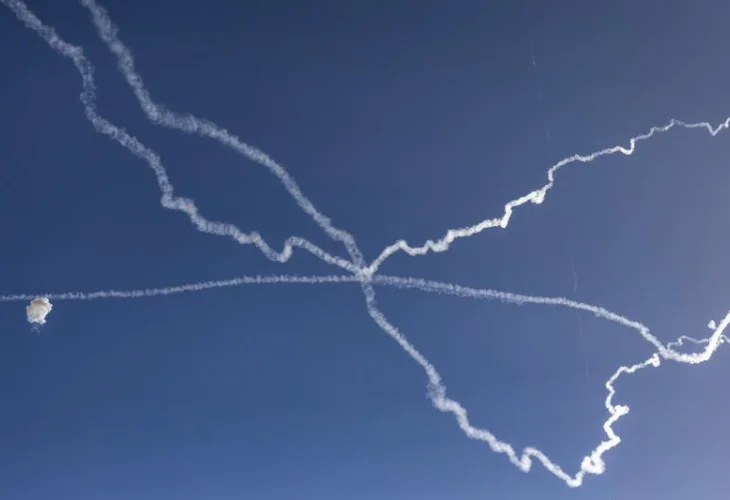 Yonatan Sindel/Flash90
Israel denied a report that it is running dangerously low on missile interceptors during its ongoing war with Iran, after U.S. officials told the news outlet Semafor that Israeli officials had warned Washington about a critical shortage.
Israeli security officials pushed back on the claim, saying the country’s air defense systems remain adequately supplied even as Iranian ballistic missile attacks continue. “We have enough interceptors for all defense systems, even over a long period of time,” security officials said.
The Semafor report, citing U.S. officials, said Israel informed Washington earlier this week that its supply of ballistic missile interceptors was becoming critically depleted as the conflict with Iran continues. The report said Israel had entered the war already low on interceptors after expending large numbers during previous exchanges with Iran.
One U.S. official told the outlet the situation was anticipated. “It’s something we expected and anticipated.”
According to the report, Iranian missiles have increasingly incorporated cluster munitions, which could complicate interception efforts and accelerate the use of interceptor stockpiles.
U.S. officials emphasized that American interceptor supplies remain sufficient. “We have all that we need to protect our bases and our personnel in the region and our interests,” one official said.
Pentagon spokesman Sean Parnell also said the U.S. military maintains full operational readiness. The Defense Department “has everything it needs to execute any mission at the time and place of Trump’s choosing,” he said.
The report also noted that it remains unclear whether the United States might transfer or sell interceptor missiles to Israel if Israeli supplies were strained, a step that could potentially affect American stockpiles.
Israeli officials, however, rejected the claim that interceptor shortages threaten the country’s defenses, saying air defense systems remain prepared for a prolonged conflict.
According to a report by the Israeli news site Walla, Israel’s air defense network relies on four primary layers designed to counter different threats. The upper layer is the Arrow-3 system, which intercepts ballistic missiles in space. Below it, Arrow-2 interceptors operate with support from U.S. THAAD batteries deployed in the region.
Walla reported that the next layer is David’s Sling, designed to intercept heavy rockets and short-range ballistic missiles, followed by the Iron Dome system that primarily targets shorter-range rockets. An additional system, the laser-based “Or Eitan,” is in the early stages of deployment and is intended to counter drones and rockets. Walla also noted that the United States closely tracks Israel’s interceptor usage because many of the systems are jointly developed and funded, giving Washington insight into missile defense operations.
The Walla report said Israeli defense industries have accelerated interceptor production since large Iranian missile barrages in recent years, with manufacturing lines operating around the clock to replenish stockpiles. Walla also reported that Israel Aerospace Industries has expanded production lines for Arrow interceptors to supply both the Israeli Air Force and Germany, which purchased the Arrow-3 system in a multibillion-dollar deal.
The Israeli government also approved an additional 2.6 billion shekels (about $700 million) in emergency defense funding to support urgent military purchases during the war.
Some Israeli journalists questioned the reliability of the Semafor report. Journalist Amit Segal noted that the claim originated from Semafor rather than from major wire services such as Reuters, while journalist Barak Batash said there is “quite a bit of fake information circulating around this report” and urged skepticism about its accuracy.
Questions & Answers
+What missile defense systems protect Israel from ballistic missiles?
+What is the difference between Iron Dome and Arrow missile defense systems?
+Does the United States help defend Israel against missile attacks?

