

Hanukkah
Lighting the Inner Flame: How to Recognize and Manage Emotional Triggers
A Chanukah-inspired perspective on self-awareness, emotional reactions, and learning how to respond with calm
- Inbal Elhayani
- | Updated
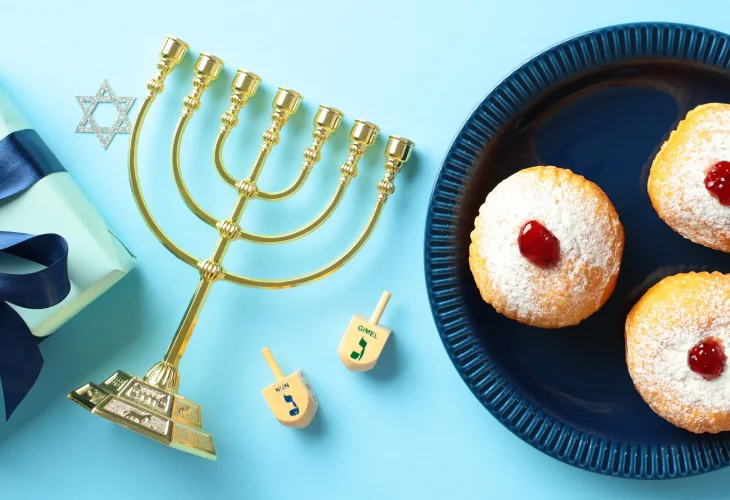 (Photo: shutterstock)
Perhaps the most symbolic and meaningful action we perform during Chanukah is the lighting of the candles. Over this mitzvah we recite the blessing: “to light the Chanukah candle.”
Shlomo HaMelech teaches in Mishlei, “The soul of a person is the lamp of God.” Our sages add a powerful insight: “As long as the candle is burning, it can still be repaired.”
Each of us is like a candle meant to bring light into the world. Yet before we can illuminate others, we must first allow our own inner flame to shine. A candle can light another only if it is already burning.
We approach the lighting of the Chanukah candles with joy. Yet none of us enjoys being “lit up” in another sense — when someone pushes our emotional buttons.
When Someone “Triggers” Us
Human interaction is an inseparable part of life. From infancy we communicate with those around us, first with our parents and family, and later with friends, colleagues, and the broader world. At the same time, each person also maintains a relationship with the Creator.
Human beings are social creatures. We grow and develop through relationships.
But communication becomes challenging when interactions grow tense or complicated. In such moments, people may withdraw in order to protect themselves, preferring solitude to the discomfort of difficult encounters.
Often we find ourselves in a conversation when another person says something that suddenly unsettles us. A simple word, tone, or gesture can cause us to lose our composure in an instant. This reaction is what we call a trigger — a moment when our nervous system is suddenly activated and our emotional “switches” turn on.
What Are Emotional Triggers?
Our remarkable brain records every experience together with the meanings we attach to it. It stores images, people, emotions, and conclusions in memory.
Over time, the brain links certain experiences with specific reactions. When a similar situation arises — or even something that resembles it, our brain automatically prepares the same emotional response.
This process is designed to protect us, especially if the original experience was painful. As a result, we may react automatically in situations where we would have preferred to respond calmly and thoughtfully.
A trigger is the moment when our system shifts from feeling safe to feeling threatened. When this happens, emotions rise quickly, and our interpretation of the situation shapes our reaction. Our body may also respond with physical sensations such as tension, rapid heartbeat, or sweating.
Often there is a wide gap between our reaction and what the other person actually intended. Yet once the trigger is activated, it becomes difficult to maintain calm and balance in the interaction.
When Being “Triggered” Puts Out Our Light
In these moments, the emotional “spark” we experience does not illuminate anything positive. Instead, it can extinguish patience, clarity, and compassion.
When someone unknowingly presses one of our emotional buttons, we may react automatically — with anger, frustration, or a desire to withdraw.
At times, we also trigger others. In that sense, we may be spreading a lot of “light” — but not the kind that warms or illuminates.
When Lighting the Flame Becomes a Mitzvah
Healthy relationships require awareness. To truly fulfill the commandment of loving our fellow, we must learn to recognize our emotional triggers and understand what lies behind them.
When we identify what activates us, we create a pause between stimulus and response. In that pause we remember that we are not our triggers. Greater self-awareness allows us to respond thoughtfully rather than automatically, so that instead of being controlled by our emotions, we begin to guide them.
This process reconnects us with our inner center and the light that exists within each of us.
Cultivating that inner light is not only a personal task, but also a responsibility toward others. When we illuminate ourselves, that light naturally spreads to those around us. Just as the Chanukah candles are lit inside the home but visible outside, our inner work radiates outward.
When we are overwhelmed by emotional triggers, we quickly lose touch with who we truly are. When however we recognize those triggers and pause before reacting, communication becomes more balanced.
Light flows from us to others, and back again. At that moment, lighting the flame truly becomes a mitzvah.
How to Recognize Your Emotional Triggers
The following simple reflection can help you identify the situations that activate you emotionally.
Think of a recent interaction that stirred a strong emotional reaction. Recall the person involved and the situation that occurred.
Notice the judgments or criticisms that arose within you. Choose one thought that especially triggered you — for example, “He doesn’t see me” or “She doesn’t appreciate me.” Rate its intensity on a scale from one to ten.
Repeat the statement and observe what happens in your body. Physical sensations often reveal emotional triggers.
Next, ask yourself how you would have wanted the other person to act. What inner need of yours would that have fulfilled?
Formulate a new sentence beginning with: “I feel good when…” or “I appreciate when…”
Repeat this sentence and notice the change in your body and emotions.
Finally, return to the original statement and rate its intensity again. If the intensity decreases, you have begun identifying the trigger and taking responsibility for it.
From that point forward, you are less likely to react automatically. Instead, you become a clearer vessel for your inner light — capable of illuminating both your own life and the lives of others.
May your days be filled with light, warmth, and clarity.

