

Torah Personalities
The Inspiring Woman Behind the Founding of Ponevezh Yeshiva
How did Ponevezh Yeshiva rise after the Holocaust? The answer begins with the extraordinary devotion of one mother.
- Yonatan HaLevi
- | Updated
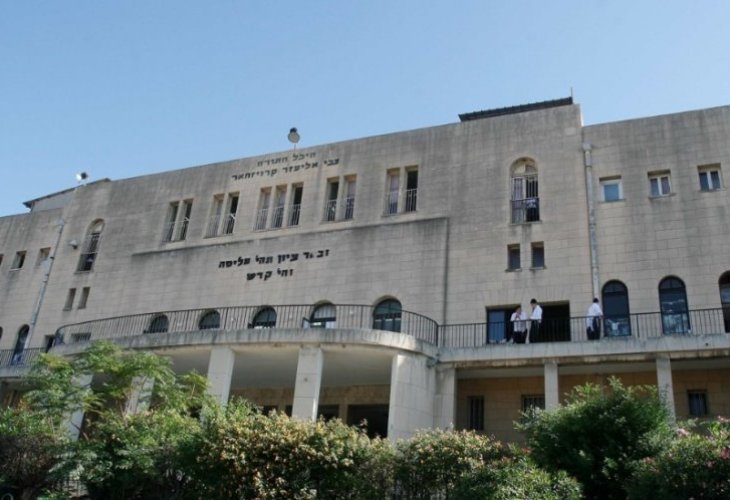 Ponevezh Yeshiva in Bnei Brak
The story of Ponevezh Yeshiva in Bnei Brak is one of the most powerful examples of rebuilding Torah after the devastation of the Holocaust. What began with only a handful of students eventually became one of the greatest centers of Torah learning in the world.
Rabbi Yisrael Meir Shushan recounts the remarkable story of how this historic yeshiva was founded by Rabbi Yosef Shlomo Kahaneman zt"l, known as the Ponevezher Rav. Through loss, determination, faith, and tears, a new empire of Torah rose from the ashes.
Rebuilding After the Holocaust
Rabbi Shushan describes the enormous personal loss Rabbi Kahaneman endured after World War II:
After the terrible Holocaust, Rabbi Yosef Shlomo Kahaneman, the rabbi of Ponevezh, was left alone and bereft, a widower and a grieving father. Only one son remained, Rabbi Avraham Kahaneman. Before the Holocaust, Rabbi Kahaneman led a flourishing yeshiva in Ponevezh with 300 students and a Beit Yaakov school that educated hundreds of girls. Everything was destroyed. Everything was consumed by fire. He arrived in the Land of Israel alone, over sixty years old, broken and devastated.
Despite this unimaginable loss, Rabbi Kahaneman refused to surrender. Instead, he began rebuilding.
The Humble Beginning of a Great Yeshiva
When Rabbi Kahaneman arrived in Israel, he founded Ponevezh Yeshiva, which would eventually become one of the great institutions of the Torah world.
In the month of Cheshvan in the year 5704, he gathered just seven students. Among them were Rabbi Gershon Edelstein and his brother Rabbi Yaakov Edelstein, along with Rabbi Chaim Friedlander and others.
The yeshiva began in the Leigman synagogue on Rabbi Akiva Street in Bnei Brak.
Rabbi Kahaneman also brought with him the outstanding Torah scholar Rabbi Shmuel Rozovsky, who became the leading teacher of the yeshiva and instilled a deep love for Torah in the students.
The boys studied with great dedication.
The Cornerstone Ceremony
Two weeks after the yeshiva opened, following Mincha prayers, Rabbi Kahaneman arrived at the Leigman synagogue. The cook had prepared a simple meal of soup and potatoes.
Rabbi Kahaneman told the boys:
Finish your lunch and come to the hill. Across Rabbi Akiva Street there is a dirt path, and there we will lay the cornerstone.
The small group walked to the hill where the future yeshiva would stand.
Tears That Built the Yeshiva
The cornerstone ceremony took place under the heavy shadow of the destruction of European Jewry.
When the boys arrived, the Chazon Ish was already waiting there along with a few other Jews. In total there were about fifteen people. Rabbi Kahaneman himself was fasting that day.
One of the students handed out prayer books, and the small gathering began reciting Tehillim.
But Rabbi Kahaneman could not say a single word.
He wept uncontrollably.
While the others continued reciting Tehillim, Rabbi Kahaneman stood crying. The Chazon Ish approached him and whispered quietly in Yiddish:
Cry, cry. Torah is not built with money. Only with tears.
Hearing these words, Rabbi Kahaneman cried even more intensely. Rabbi Yaakov Edelstein later described the moment as a dreadful and unforgettable scene.
When the Tehillim ended, they began the cornerstone ceremony. The Chazon Ish was given the honor of placing the cement in the foundation. Yet he too could not hold back his tears.
As the cement was poured, tears from both the Chazon Ish and Rabbi Kahaneman fell into the foundation.
The yeshiva was literally built with tears.
The True Cornerstone
That night, after the third evening study session around eleven o'clock, Rabbi Kahaneman entered the study hall full of emotion.
He announced to the students:
Dear boys, I have prepared a small meal in honor of the ceremony.
During the meal he told them something surprising.
You think the cornerstone was laid today. But the real cornerstone was laid fifty seven years ago when I was seven years old on my mother's back.
The students were stunned. They wondered how the cornerstone could have been laid decades earlier.
Rabbi Kahaneman then shared a childhood story that explained everything.
A Mother's Love for Torah
When Rabbi Kahaneman was seven years old, his family lived in the Lithuanian town of Kuhl not far from Vilna. There were four brothers in the home.
Each evening during dinner the children would tell their parents what they had learned that day in cheder.
One winter night a heavy snowstorm arrived. The snow reached nearly one and a half meters high. Their mother announced that the next day no one would go to cheder without a coat and boots.
But in the house there was only one coat and one pair of boots.
The brothers began arguing.
Shmarya, the twelve year old brother, said he must go because his rabbi would finally teach a passage of Tosafot from the text.
Zeevi, the eleven year old brother, insisted that he could not miss the new section of Gemara that his teacher would begin teaching.
The young Yosef Shlomo, who was studying Mishnayot, also insisted he wanted the boots.
Unable to decide, the parents chose to draw lots.
The boys prayed with great concentration after Birkat HaMazon and recited Shema before sleep, hoping they would win.
They went to sleep not knowing who would go to cheder the next day.
A Mother's Sacrifice
At five-thirty in the morning their mother woke up.
She realized that by five o'clock the beit midrash stove would already be burning and the room would be warm enough for the children.
She woke the eldest son, Shmarya.
Do you want to go to cheder?
Of course he answered excitedly.
But when he asked where the coat was, his mother explained her plan.
She would wear the coat and boots herself. She would wrap him in a blanket, carry him on her back, and bring him to the beit midrash together with two sandwiches for the day.
The usual walk took seven minutes. But through the deep snow it took her twenty-five minutes.
She carefully walked through the snow carrying her son, encouraging him to learn well.
After leaving him there, she returned home.
At six-thirty she woke Zeevi and repeated the journey.
At seven she woke the young Yosef Shlomo, wrapped him in a blanket, and carried him through the snow as well.
As she walked she sang joyfully, thanking Hashem that she merited to have children studying Torah.
The Promise
As a young boy riding on his mother's back, Rabbi Kahaneman became deeply moved.
He later recalled shouting into her ear:
Mother, today you are carrying us so we can learn Torah. When I grow up, I will carry many boys to the beit midrash so they can learn Torah.
The Source of His Strength
Rabbi Kahaneman concluded his story to the students with powerful words.
If today I am rebuilding everything from the beginning, it is not because of my teachers or supervisors. It is because of my mother, who planted in us a love for Torah.
The Message for Every Parent
Rabbi Shushan ended the story with an important lesson.
No one knows what kind of children are growing up in their homes. No one knows what future leader may emerge from their family.
Hashem wants parents to teach their children fear of Heaven, to say blessings with intention, to answer Amen, and to value Torah learning.
As the Torah says about Abraham:
For I have known him, that he will command his children and his household after him to keep the way of Hashem, to do righteousness and justice.
When parents invest in proper education and fear of Heaven, Hashem helps them succeed.
May we merit that our children and descendants grow strong in the courtyards of Hashem, and may we soon see the complete redemption, Amen.
Courtesy of the Darshu website.

