

Relationships
Closeness Without Losing Yourself: Finding Balance in a Relationship
Closeness without space can feel overwhelming, while space without closeness can feel lonely. The key to a healthy relationship is learning to balance both.
- Hannah Dayan
- | Updated
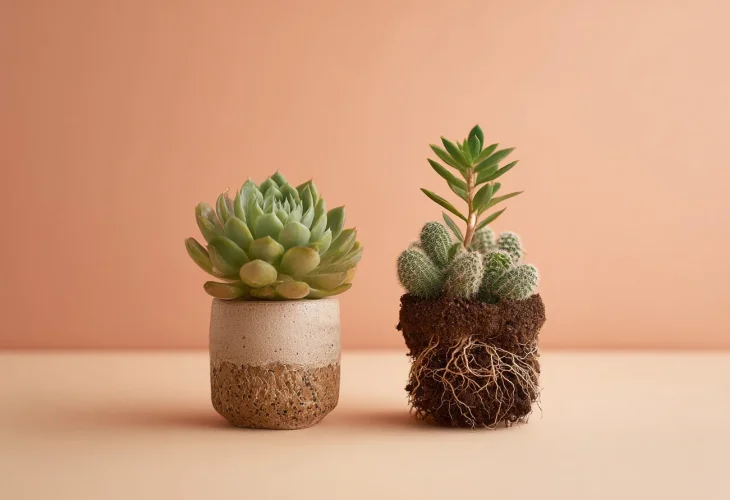
Many couples struggle with a quiet but powerful tension. One partner longs for closeness and emotional presence, while the other feels the need for space and independence. What often appears as a conflict between two people is actually a deeper misunderstanding about how relationships grow.
Learning to recognize and respect these different needs can transform frustration into cooperation and distance into connection.
Two Different Experiences of the Same Pain
"I feel that the closer I get to her, the more I lose a part of myself. It’s like if I really commit to this relationship, there will be nothing left of me," Nadav said.
Yifat responded immediately.
"I feel exactly the opposite. Every time he retreats into himself, he forgets there’s someone else here. I don’t want to cling to him. I just want to know he’s present."
I looked at both of them.
"It’s amazing how both of you are expressing the same pain, just in different languages. Many couples reach this exact crossroads. One partner’s need sounds like a threat to the other."
"Nadav needs space and quiet in order to feel like himself. Yifat needs emotional presence in order to feel connected."
"But what if your needs are not conflicting at all?" I suggested. "What if they actually complement each other?"
Reframing Distance
They both paused.
Yifat broke the silence.
"But how can it be complementary? Every time he disappears, I feel abandoned."
"That’s an important question," I said. "Let’s start by reframing what is happening. Instead of calling it disappearance, think of it as a different way for him to recharge. As long as he returns with renewed attention and energy, there is no contradiction."
Nadav nodded slowly.
"But I feel like I constantly have to justify myself. Like I don’t even have the right to just be."
"You don’t need to justify yourself," I replied. "You need to share."
The Difference Between Justifying and Sharing
"What do you mean by sharing?" Nadav asked.
"It can be very simple," I explained. "You might say, ‘When I get home from work, I need half an hour to myself to recharge. After that, I’m fully present with you.’"
Nadav turned toward Yifat.
"Would that help?"
She smiled slightly.
"Yes. If I simply know when you’ll be back emotionally, I won’t feel like I’m waiting in limbo."
Individuality and Partnership
Modern culture often glorifies individuality and separation. Personal independence is important, but when it becomes the only focus, relationships lose their movement.
If each person only guards their own boundaries, there is no real meeting point.
A relationship cannot function as two separate lives moving side by side. It must become a dynamic space where both partners bring themselves fully into the shared connection.
Is a Relationship About Compromise
Nadav asked an important question.
"So what you’re saying is that relationships are about compromise? That each person has to give something up?"
"Not exactly," I replied. "It’s about choice."
"When you choose to be present for your partner, even if it requires adjusting your personal plans, you are not losing yourself. You are expressing a deeper version of yourself within the relationship."
"That is the difference between compromise and partnership."
Recognizing Relationship Needs
Yifat leaned forward.
"So we need to learn when a need belongs to the relationship and not just to ourselves?"
"Exactly."
"If you have had a difficult day and you want to share your feelings with Nadav, that is not only a personal need. It is a need for connection. You are seeking closeness and partnership."
"When Nadav takes space, it does not necessarily mean he is escaping. But when that space becomes silence without return, it feels like abandonment."
Understanding the difference helps both partners respond with greater sensitivity.
Practical Steps for Everyday Life
"So what should we do in practice?" Nadav asked.
"You can begin with something simple," I suggested. "Create a small daily check in time. Even ten minutes is enough."
"During that time you can share how the day felt, what you need, and what you appreciate."
"You can also plan your rhythms in advance."
"Ask yourselves:
When do I need time to recharge so that I can be present?
When am I fully available for the relationship?"
"When these boundaries are discussed openly, arguments decrease. The relationship moves from reacting in the moment to acting with intention."
Bringing Your Whole Self Into the Relationship
At the end of the session, just before they left, I added one more thought.
"Do not give up your hobbies, independence, or personal space. Those things are important. But do not see them as separate from your relationship."
"Your identity should grow within the partnership, not beside it."
"When both partners bring their full selves into the relationship, it becomes a place of growth rather than a place of loss."
Nadav smiled for the first time that evening.
"I thought giving my time meant losing something. Now I see that by choosing you, I am actually rediscovering myself."
Yifat smiled back.
"And when you rediscover yourself, I have someone to meet."
Hannah Dayan, Relationship Counselor

