

World News
Saudi Crown Prince Urged Trump to Hit Iran Hard as Gulf States Stay Out of War
Report says Mohammed bin Salman encouraged continued U.S. strikes on Iran even as Gulf states avoid a direct public role in the conflict
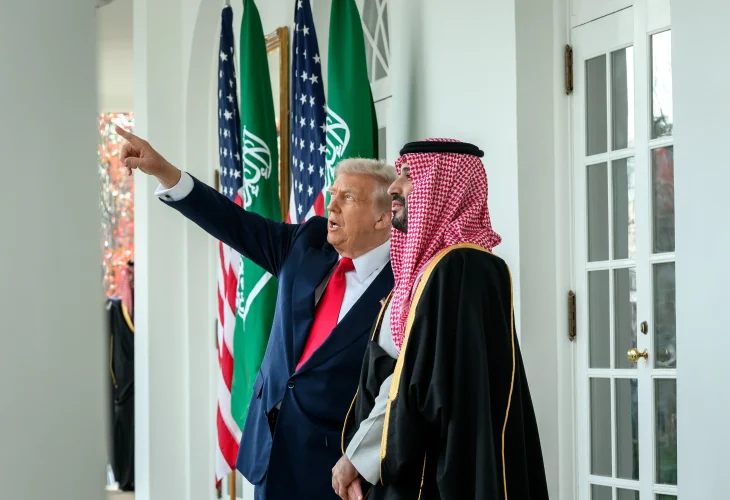 Mohammed bin Salman and Donald Trump (Shutterstock)
Saudi Crown Prince Mohammed bin Salman has urged U.S. President Donald Trump to continue striking Iran forcefully during the ongoing war, according to a report published Sunday by The New York Times citing White House officials.
The report highlights a gap between Saudi Arabia’s private message and the public stance of Gulf states, which have so far avoided taking an open military role in the war as it enters its third week.
According to The New York Times, the Saudi crown prince advised Trump to “keep hitting the Iranians hard,” reflecting long-standing concerns among Gulf Arab leaders about Iran’s regional influence and military power.
The remark echoes advice reportedly given by the late Saudi King Abdullah, who ruled the kingdom from 2005 to 2015 and urged the United States to “cut off the head of the snake” in reference to Iran. The comment became public in 2010 after leaked diplomatic cables revealed private discussions between Gulf leaders and U.S. officials about Iran’s nuclear program.
Saudi Arabia has long viewed Iran as its primary regional rival, accusing Tehran of supporting armed groups and expanding its influence across the Middle East. Saudi officials have frequently pointed to Iran’s backing of Hezbollah in Lebanon and the Houthi movement in Yemen as examples of Tehran’s regional strategy.
At the same time, Gulf states have maintained a more cautious public stance as the war unfolds. The Gulf Cooperation Council, which includes Saudi Arabia, the United Arab Emirates, Bahrain, Kuwait, Oman and Qatar, has focused publicly on regional stability and defense rather than joining the fighting.
In statements reported by Al-Arabiya following talks between Saudi Crown Prince bin Salman and UAE President Mohammed bin Zayed last week, Gulf leaders warned that “the continuation of Iran's unjust attacks on the Gulf Cooperation Council countries represents a dangerous escalation that threatens the region's security and stability.” They added that GCC countries would continue efforts to defend their territories and support regional security
Despite these warnings, Gulf states have not launched publicly acknowledged strikes against Iran during the conflict. According to sources from Gulf countries, concerns about “the day after” the war are one reason regional governments have avoided a direct military response. Officials fear that openly attacking Iran could trigger wider retaliation and expand the range of targets for Iranian missile and drone strikes across the region.
For Gulf states, the war presents a complex strategic calculation. Many regional governments view Iran as their most serious security threat but remain wary of becoming direct participants in a conflict that could expose their own cities, energy infrastructure and economies to further retaliation. The result has been a careful balancing act: supporting efforts to weaken Iran while avoiding a public role in the fighting itself.
Questions & Answers
+What is the Gulf Cooperation Council (GCC)?
+What is the relationship between Saudi Arabia and the United States?
+Does Saudi Arabia have diplomatic relations with Israel?

