

Magazine
Torah and Therapy: Healing the Soul Through Jewish Wisdom
Discover how Torah wisdom helps people heal emotional struggles, strengthen relationships, and rebuild their lives through powerful faith-based therapy.
- Avner Shaki
- | Updated
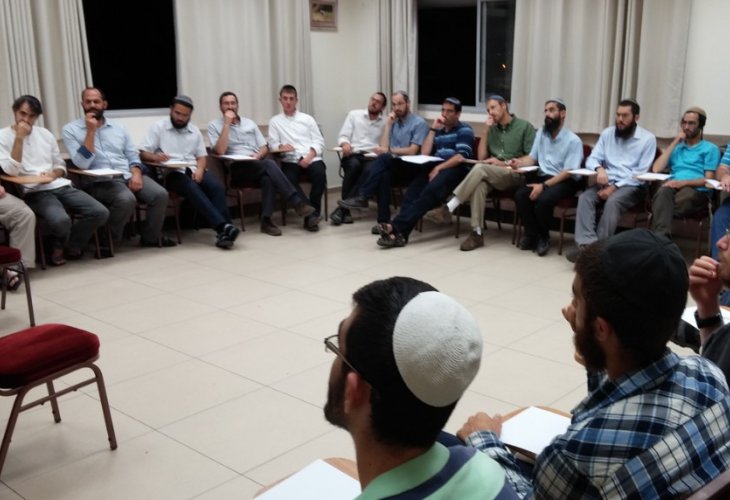
One of the most significant developments of our generation, many would say the most important, is the return of the Torah to every area of life. The presence of the Shechinah is slowly but surely returning to many parts of our daily experience. In recent years, the field of mental health through a Jewish lens has grown dramatically.
More and more people believe that it makes little sense for the Torah, which is described as broader than the sea, not to provide guidance for life’s greatest emotional and personal challenges. Many feel that it is our responsibility to continue studying the Torah deeply until we uncover those answers.
With this idea in mind, I met with Or Harnik, director of the School for Personal Empowerment and Therapist Training at Torat HaChaim. The school focuses on teaching approaches to emotional healing that are grounded in the wisdom of the Torah.
The campus, located in the Tzvi Meitar House in the town of Yad Binyamin, is warm and spacious. The commitment to halacha is clear throughout the school, including a complete separation between men and women.
A Personal Journey Toward Torah
Or himself is a baal teshuvah, like many of the alumni and students at the school he leads.
“I’m originally from the town of Nataf near Mevaseret Zion,” Or says. “I grew up in what people would call a good home, secular and very left leaning. How secular? Let’s just say there was bread in the house on Pesach.”
During his army service in the Nahal brigade, his core group was assigned a year of service in Nitzan, where they worked with teens from secular communities among the evacuees of Gush Katif.
“Even so, something drew me toward the religious teens,” he recalls. “After a lot of effort I managed to be placed as a youth counselor for the religious communities.”
A Shabbat That Changed Everything
I asked Or what ultimately brought him closer to Hashem.
“There were a few moments that began the process,” he says. “One of them happened on a Shabbat in Nitzan. I was invited for the Friday night meal with a religious family in town. They lived in a temporary prefab home in a neglected area that did not look inviting from the outside. But when I stepped inside, the house was filled with light in a way I had never experienced.”
“There were many children and very little space, yet none of that seemed to bother them. On the contrary, the atmosphere was powerful and united. It pulled me in. I felt there was something much deeper in the Torah than slogans. You could see people truly living what they believed.”
Over time, Or began sitting in the youth kollel with the teens he worked with, listening to Torah classes. Afterward he would stay with the head rabbi to ask difficult questions.
“The entire environment radiated authenticity. For the first time I saw teens who might struggle in school but who would sit late at night learning Torah with seriousness and love.”
“I was not in crisis,” he adds, “but the conversations were honest and thoughtful. As it became clear to me that the Torah is true, I began getting closer and realized this was the right path for me.”
From this experience he learned an important lesson.
“The more honest a person is with themselves, and the more courage they have to ask questions and seek answers, the happier and more stable their life becomes. That idea also stands at the heart of our school’s method.”
A Torah Based Approach to Emotional Healing
I asked Or what makes the school’s approach unique.
“Our school was founded ten years ago by Rabbi Shmuel Tal, head of the Torat HaChaim network,” he explains. “It developed in response to a growing grassroots need for a truly Torah based response to the emotional challenges people face.”
“There is a large community of people who want professional and effective help for emotional struggles through a lens of faith. For a person who believes in Torah, that is the most natural place to look for guidance.”
“At its core, psychology is not merely secular wisdom about which our sages said, ‘Wisdom among the nations believe.’ It also touches areas that belong to Torah itself, about which the sages said, ‘Torah among the nations do not believe.’ That is why great sages throughout the generations have guided and shaped this field.”
“The Torah does not only teach the laws of Shabbat. It touches every part of life. It is a Torah of life, especially when it comes to healing the soul and refining character. Even in the most complex cases, the Torah is the light at the end of the tunnel.”
Because of this belief, the school teaches students to work with its central therapeutic approach known as the method of hitbonenut.
Understanding the Method of Hitbonenut
I asked Or to explain this method.
“Hitbonenut, as the Ramchal teaches, means stepping out of the race of life in order to examine your actions and your life. A person asks themselves whether their current path truly reflects how they want to live.”
“From there, a person begins thinking about how they can grow and refine their character.”
Or explains that every human being naturally interprets events around them.
“A small child whose father frequently yells at him does not only observe what happened. He also creates an explanation. One child might think the father yelled because he is mean. Another might think it happened because he himself is not capable. A third might assume the father simply woke up in a bad mood.”
Over time these interpretations become deep beliefs about the world and about oneself.
“A child who believes his father yelled because he is not capable may later choose a job that fits that belief or give up easily when challenges arise.”
This can lead to a destructive cycle.
“The process of hitbonenut helps a person reach deep inner listening. They identify the beliefs that are influencing their lives, detach from those beliefs, and replace them with healthier and more truthful perspectives.”
Training Therapists Through Personal Growth
I asked what type of training students receive at the school.
“A central part of the training is deep personal work,” Or explains. “Students learn to become aware of their own inner world and to understand how real inner change occurs.”
Nearly half of the study hours are dedicated to workshops where students explore their own emotional experiences.
“We do not certify students unless we see that they have undergone meaningful personal growth themselves,” he says. “This follows the guidance of the Torah and simple logic. In order to understand others, you must first understand yourself.”
“If someone struggles with anger or insecurity and has not worked through it, they will not be able to guide others facing the same struggle.”
Alongside the personal work, students also receive extensive theoretical training.
“They study the structure of the soul, learn organized treatment methods, and understand the roots of emotional difficulties. Just as a physician studies the human body, therapists must learn the structure of the human psyche.”
The Treatment Center
I asked about the Treatment Center connected to the school.
“Rabbi Tal also founded a Treatment Center that uses our method, and we work closely together,” Or explains. “Today the center includes dozens of professional male and female therapists and receives hundreds of inquiries every year.”
Rabbi Tal remains deeply involved, providing both professional guidance and Torah direction.
The center treats a wide range of emotional challenges including personal growth, shalom bayit, parenting struggles, depression, anxiety, and more. Throughout the entire process, strict confidentiality is maintained.
A Story of Healing
Working as a therapist often means hearing painful stories. I asked Or where he finds the strength to continue.
“I truly believe that the Torah contains the answers to the deep emotional struggles of our generation,” he says. “There is tremendous satisfaction in seeing that belief become reality when people transform their lives.”
He shared one example while maintaining complete anonymity.
A man once came for treatment because his wife insisted something was wrong in their marriage. During dating he had appeared quiet and attentive, but after the wedding she realized he struggled to communicate and could not maintain a simple conversation.
“She would ask him one thing and he would respond with something completely different,” Or explains. “Eventually she wanted a divorce.”
Through therapy it became clear that the man had experienced severe trauma in the past and had developed a subconscious habit of forgetting.
“In the middle of conversations he would lose track of what he was saying. Because he was embarrassed, he tried to continue speaking even though he no longer remembered what had been said.”
Through the therapeutic process he eventually faced his past and processed the trauma.
“Gradually his natural memory returned. Conversations with him became normal and pleasant. Thank God, the destructive pattern disappeared.”
For Or, moments like these are deeply meaningful.
“Seeing someone who has suffered so much rebuild their life, strengthen their home, and regain hope through the wisdom of the Torah is incredibly powerful.”
Seeing Challenges as a Mission
As we walked through the school, I noticed an atmosphere of optimism.
Or explains that this outlook is central to their approach.
“We believe that clients should not feel ashamed or broken because of the challenges they face. Even if someone is dealing with something very difficult, it does not mean they are defective. On the contrary, they are heroes who have received a mission from Hashem.”
Judaism teaches that challenges are not random.
“Every challenge a person receives is meant to help them grow. From that perspective we maintain a deeply optimistic outlook. Thank God, most challenges can be addressed and healed.”
With help from Heaven, many people are able to rebuild their lives.
“They regain their marriages, their relationships, their livelihood, their calm, their faith, their trust in Hashem, and the light in their eyes. That is what motivates us to continue investing our hearts in this important work.”

