

Hanukkah
Why Does a Dreidel Spin? The Science Behind the Chanukah Game
Discover the physics that keeps the dreidel balanced on its tiny tip, and why it eventually falls
- Debbie Reichman
- | Updated
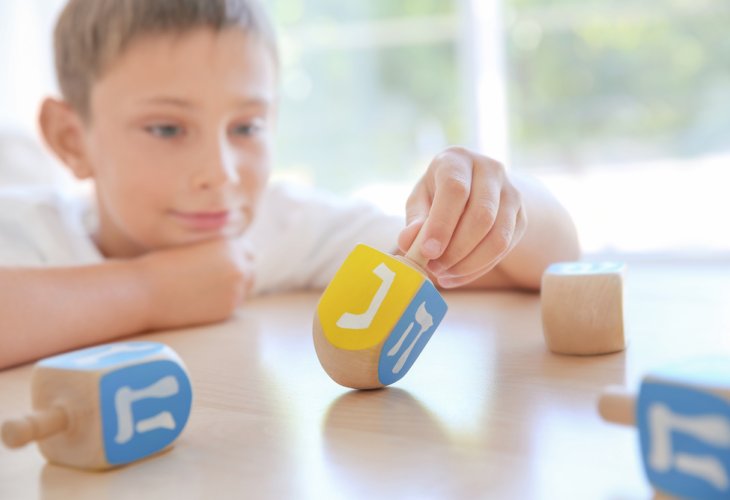 (Photo: shutterstock)
Chanukah is here, and children — along with plenty of adults, are once again enjoying the game of dreidel.
According to tradition, during the time when the Greeks forbade Jews from studying Torah, Jews would gather secretly to learn. If Greek soldiers approached, they would quickly hide their books and pretend to be playing with spinning tops instead.
Today we play with dreidels and remember the miracle of Chanukah through the letters written on them:
נ – Nes (miracle)
ג – Gadol (great)
ה – Haya (happened)
פ – Po (here)
Together they form the phrase “A great miracle happened here.” Outside Israel, the last letter is ש – Sham (there), meaning “A great miracle happened there.”
Have you ever wondered how the dreidel actually manages to spin?
Why Doesn’t the Dreidel Fall?
If you place a dreidel upright on its tiny tip while it is not moving, it will fall over immediately. The point is simply too small to support it.
Why does it manage to stay upright when it spins?
The answer lies in one of the laws of motion discovered by Isaac Newton.
Newton explained that every object tends to remain in its current state unless a force changes it. In simple terms:
An object at rest will stay at rest unless something moves it.
An object in motion will continue moving unless something stops it.
When we give the dreidel its initial spin, we apply a force that sets it rotating. Even if the dreidel tilts slightly to one side — which would normally cause it to fall, the spinning motion keeps it moving. As it rotates, each side constantly replaces the one beneath it, and the motion helps maintain its balance on the tiny point.
At first glance, it might seem as if the dreidel should spin forever.
Why the Dreidel Eventually Falls
In reality, other forces are constantly acting on the spinning dreidel. Two main forces gradually slow it down:
Friction with the surface – the tip of the dreidel rubs against the table or floor.
Air resistance – the spinning motion pushes against the air around it.
Because of these forces, the dreidel slowly loses the rotational energy that keeps it balanced. As the spinning energy decreases and friction continues to act on it, the dreidel begins to wobble more and more.
Eventually, it slows down enough that it can no longer stay upright, and it falls.
Interestingly, certain features help a dreidel spin longer. A wider body and a sharper tip usually allow it to spin for a longer time before falling.
Once the dreidel stops spinning, there is only one thing left to check: Which letter did it land on?

