

Wonders of Creation
Bruce Lipton and the Biology of Belief: Do Our Thoughts Control Our Health?
Understanding the debate over genetics, epigenetics, and the powerful connection between mind and body
- Yosef Yaavetz
- | Updated
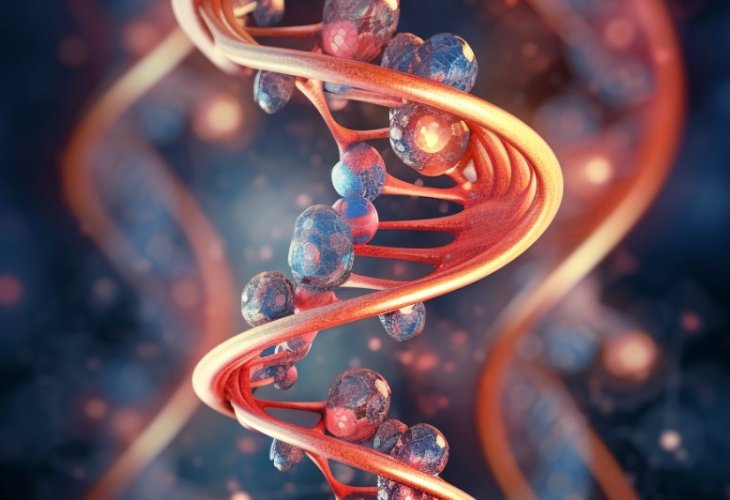
Professor Bruce Lipton is a biologist who studies human cells. He was a successful lecturer at the University of Wisconsin School of Medicine, where for many years he taught about “cell development through evolutionary theory.”
At a certain point, something changed. Lipton felt that he was misleading both himself and his students, and he could no longer continue what he saw as a false path. In a dramatic moment, he threw his cellphone out the window, smashed the sign outside his office that read “Professor Bruce H. Lipton, Department of Anatomy,” and left his secure academic position.
A New Direction
After leaving academia, Lipton began traveling around the world, giving lectures about his insights into cell development, a field in which he had deep expertise and years of teaching experience.
During a lecture at Stanford University, he declared: “I question Charles Darwin’s theory. I question the basic assumption of biologists that genes control life and determine its course.”
His statements were met with strong opposition. The audience reacted with anger, and members of the academic community responded, in his words, “like religious zealots.”
Lipton was not discouraged. He continued his work and published articles supporting his ideas. He also wrote a well known book titled The Biology of Belief, which was later translated into Hebrew.
His Core Idea
In simple terms, Lipton’s approach can be summarized as follows:
Living organisms do not simply “evolve” in the way commonly described. Rather, they were created with remarkable potential abilities. Proteins, which are influenced by a person’s actions and inner state, regulate how that potential is expressed in the DNA.
According to this view, a person’s beliefs and behaviors have a direct impact on their physical condition.
Although DNA is often presented as the central explanation for life, Lipton points out that it may not be sufficient on its own.
He writes: “Geneticists were no less shocked than at the discovery of Copernicus when, instead of the expected more than 120,000 genes, they found that the human genome contains only about 25,000 genes. More than 80 percent of the DNA required according to previous assumptions simply does not exist.”
This raises the possibility that DNA alone cannot fully explain the complexity of life.
According to Lipton, additional mechanisms are at work. Proteins, influenced by a person’s mental and emotional state, play a major role in regulating biological activity. These processes affect not only how the body functions but also overall health and illness.
The Role of Belief
Through his research, Lipton arrived at a broader conclusion. He teaches that achieving proper physical health involves not only biology, but also belief and a connection to deeper aspects of life.
In his view, a person’s inner world and spiritual outlook are directly connected to their physical well being.

