

Magazine
Against All Odds: Turning Disability Into a Life of Giving
Born with cerebral palsy, she chose a life of purpose over limitation, building a family, strengthening her faith, and helping others every day.
- Moriah Luz
- | Updated
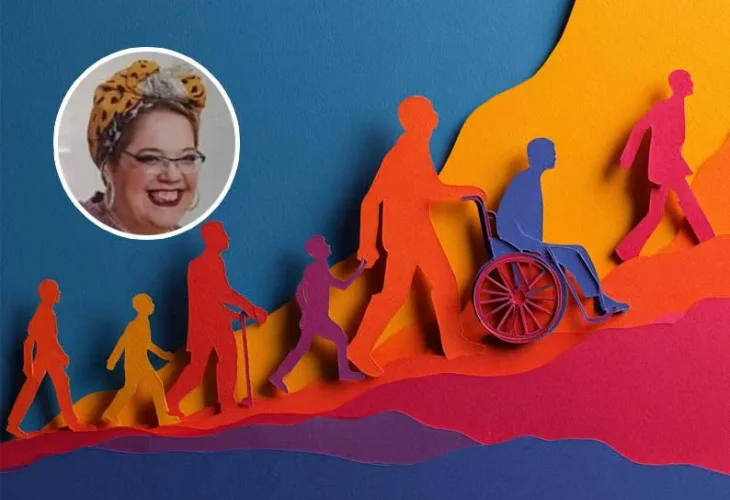 In the spotlight: Dafna Adrai (Photo: Sigal Krimulovski)
Scroll through Dafna Adrai’s social media page, and you’ll find a constant stream of requests. A family in need of a bed. Another looking for clothing. Someone else searching for appliances or financial help.
What many of her followers don’t realize is that behind this tireless work stands a woman who has lived her entire life with cerebral palsy.
Yet instead of focusing on her limitations, Dafna built a life centered on strength, faith, and giving.
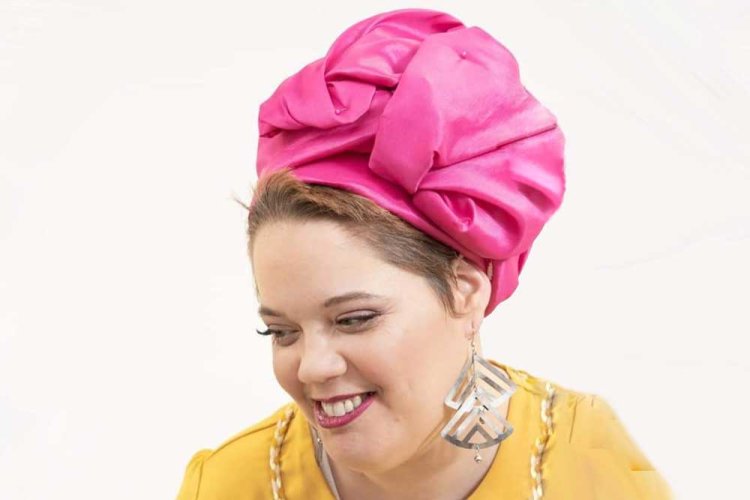 Dafna Adrai (Photo: Sigal Krimulovski)
“Thanks to Her, I Can Write Today”
Dafna, 44, from Haspin, is married to Elroi, who also has cerebral palsy. Together, they are raising two sets of twins.
“I was born in the seventh month,” she shares. “During birth, my brain went without oxygen for a few seconds.”
At first, nothing seemed unusual. But by six months, her grandmother, a nurse, noticed that Dafna wasn’t developing like other children. The diagnosis came quickly: cerebral palsy.
“The damage mainly affected my legs, and a little my arms,” she explains. “Doctors told my parents I likely wouldn’t walk like others and would need assistance.”
Despite that, Dafna emphasizes, “Cerebral palsy looks different for everyone. There are people who can’t speak or function independently. Thank God, I can speak, eat, and manage many things on my own.”
Her early years were spent in special education. But her father, a teacher for 35 years, believed she could do more.
“He saw that academically I wasn’t being challenged enough,” she recalls. “So my parents made a bold decision and moved me into a regular religious school.”
Learning wasn’t easy.
“My fine motor skills were very limited. My mother would sit with me and physically guide my hand to form letters.”
She smiles as she remembers.
“When we finished learning Aleph, I told her, ‘If Aleph is this hard, how will I ever get to Bet?’ But with effort, I succeeded. Thanks to her, I can write today, even by hand.”
Breaking Barriers
Socially, she describes her school years as mostly positive.
“There were challenges, but overall, I felt accepted.”
She later attended high school and completed national service in Kiryat Gat, where she worked with families in need.
One moment from that time stayed with her forever.
After being assigned to a family, she introduced herself and left. As she walked out, she overheard the mother say, “I don’t want her to come here. Her situation is too hard.”
The words were painful.
“I felt like I came to give, and they didn’t want me.”
But instead of walking away, Dafna chose to stay.
“I told myself that Hashem sent me there for a reason. Not everything is meant to be easy.”
A friend strengthened her resolve.
“They told me: ‘They’re only seeing your crutches. They don’t see who you are. That’s their loss.’”
Turning Difference Into Strength
Months later, something shifted.
Ahead of Purim, her friends came up with a creative idea. They decorated her crutches as colorful giraffes named Jif and Jifa.
“I walked proudly with them,” Dafna recalls with a smile. “Suddenly, all the kids ran toward me. Everyone wanted to be close, to help, to play.”
What once created distance became a bridge.
Building a Family Against the Odds
Dafna met her husband through a match.
On their first date, she arrived an hour and a half late. Elroi spoke at length, unsure how the meeting would go.
But something clicked.
On a later date, he noticed her walking without crutches, supporting herself along the wall.
“He told himself, ‘I want to marry a woman like this, nothing stops her.’”
After eight dates, they got engaged.
Their wedding in Jerusalem drew far more guests than expected.
“About 800 were invited, but 1,200 showed up. People came just to celebrate with us.”
A Double Blessing
After several years, they were blessed with twin boys. Four years later, another set of twins followed.
“Hashem gave us tremendous abundance,” she says.
Raising children while both parents live with cerebral palsy came with challenges.
They brought in a caregiver for physical support, but Dafna admits the emotional struggle was just as real.
“I wondered how my children would see me. Would they know I’m their mother if someone else helps with physical care?”
Over time, a natural balance formed.
“The children came to us for emotional connection, for conversation, warmth, and guidance. The caregiver helped more with the physical aspects.”
A Life of Giving
Alongside raising her family, Dafna built a life dedicated to helping others.
For over a decade, she has led charitable efforts supporting families across Israel.
Her approach is bold and determined.
When asked to raise a modest donation for a project, she went straight to the CEO of a major supermarket chain—and succeeded in securing a large, long-term contribution.
“I realized something important,” she says. “When it’s not about you, things open up.”
Her husband once told her, “Take the ‘I’ out of it. It’s not about you, it’s about helping others.”
That mindset became her guiding principle.
Where Does the Strength Come From?
“I believe everything comes from Hashem,” Dafna says simply. “When you let Hashem into your life, you begin to see blessings.”
Her days are filled with requests. A bed for one family. Clothing for another. Support for those struggling quietly.
And still, she continues.
“Doing kindness gives strength,” she says. “The Jewish people are incredible. When there’s a need, people come together.”
A Life That Redefines Limitations
Dafna’s story is not just about overcoming physical challenges.
It is about redefining what strength looks like.
It is about choosing faith over frustration.
Giving over limitation.
Purpose over difficulty.
And perhaps most powerfully, it is about seeing life not through what is missing, but through what can still be given.

