

World News
Israel Strikes Iran’s South Pars Gas Field in Major Escalation
First reported Israeli strike on Iranian gas infrastructure targets world’s largest field, as Tehran threatens Gulf energy sites and oil prices surge
- Brian Racer
- | Updated
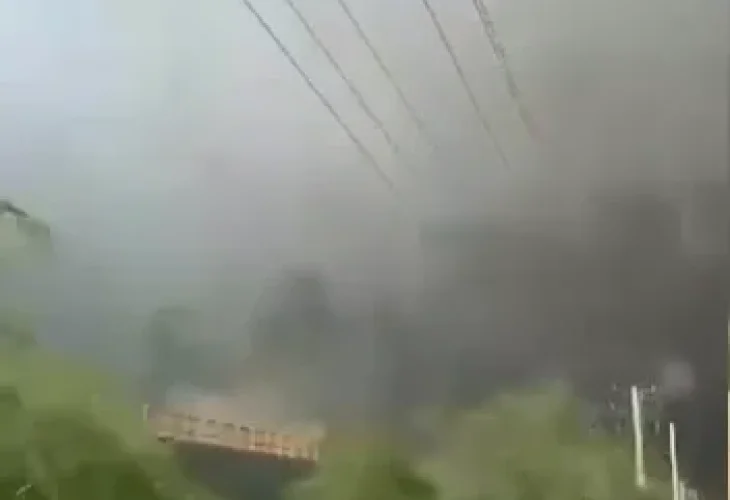 Smoke from Israeli Strikes (27a)
Israel carried out an airstrike Wednesday on gas-processing infrastructure at Iran’s massive South Pars field near the southern city of Asaluyeh. Iranian media reported multiple explosions at the complex around 14:00 local time after parts of the field’s gas pipelines and processing facilities were struck. The site is part of the world’s largest natural gas field, which Iran shares with Qatar.
The strike appears to mark the first significant Israeli attack on Iran’s natural-gas infrastructure since the war between the two countries intensified. Israeli security officials framed the operation as part of a broader effort to expand pressure on Tehran beyond military targets and into the economic backbone of the Iranian regime.
Images circulating on Iranian media showed flames and thick smoke rising from industrial structures as firefighting and rescue crews were dispatched to the area. Workers were evacuated from sections of the facility while emergency teams attempted to contain fires.
South Pars is considered one of the most strategically important assets in Iran’s economy. The field holds an estimated 51 trillion cubic meters of natural gas, making it a central pillar of Iran’s energy production and export capabilities.
Shortly after reports of the strike emerged, Iran’s state broadcaster issued a rare public warning aimed at energy facilities across the Gulf. The statement called on civilians and workers near oil and gas sites in Saudi Arabia, the United Arab Emirates, and Qatar to evacuate immediately.
“These facilities have become direct and legitimate targets and will be struck in the coming hours,” the announcement said. The warning added that Gulf governments “bear full responsibility for all the consequences” of their involvement in the conflict.
Iranian state-linked outlets also described the strike as a turning point in the confrontation with Israel and the United States. “With the enemy missiles hitting the Asaluyeh refinery, the war has moved from limited clashes to a full-scale economic war,” Iran’s Fars News Agency wrote, suggesting that energy infrastructure across the region could become a central battlefield.
Israeli leaders had signaled earlier in the day that the campaign against Iran was expanding. Defense Minister Israel Katz said Israel’s operations were intensifying and hinted at additional strikes. “The intensity of the strikes in Iran is increasing. Even today there will be significant surprises across all arenas that will escalate the war we are fighting,” Katz said.
Axios reported that the strike on the gas facility was coordinated with and approved by the Trump administration, a U.S. defense official confirmed.
U.S. President Donald Trump reacted to the development with a statement on his Truth Social platform. “Remember, for all of those absolute ‘fools’ out there, Iran is considered, by everyone, to be the NUMBER ONE STATE SPONSOR OF TERROR. We are rapidly putting them out of business!” Trump wrote.
The attack drew immediate condemnation from Qatar, which shares the massive gas reservoir with Iran. “The Israeli targeting of facilities linked to Iran’s South Pars field is a dangerous and irresponsible step amid the current military escalation in the region,” Qatar’s foreign ministry spokesman Majed al-Ansari said.
Ansari also warned that attacks on energy infrastructure could have broader consequences beyond the battlefield. “Targeting energy infrastructure constitutes a threat to global energy security, as well as to the peoples of the region and its environment,” he said. Foreign ministers from Gulf states were scheduled to meet Wednesday in Riyadh to discuss the escalating conflict and its potential impact on regional energy markets.
Global markets reacted quickly to the reports of the strike. Oil prices surged above $108 per barrel on Wednesday, reflecting fears that attacks on energy infrastructure in the Gulf could disrupt supplies and widen the conflict across the region.

