

Happy Even Under Fire: Israelis Still Rank Among the World’s Happiest
Despite a grinding war and daily uncertainty, Israel placed No. 8 worldwide for overall happiness—down from No. 5 last year—and an eye-popping No. 3 among adults under 25, as tight-knit community and a sense of purpose help keep spirits high.
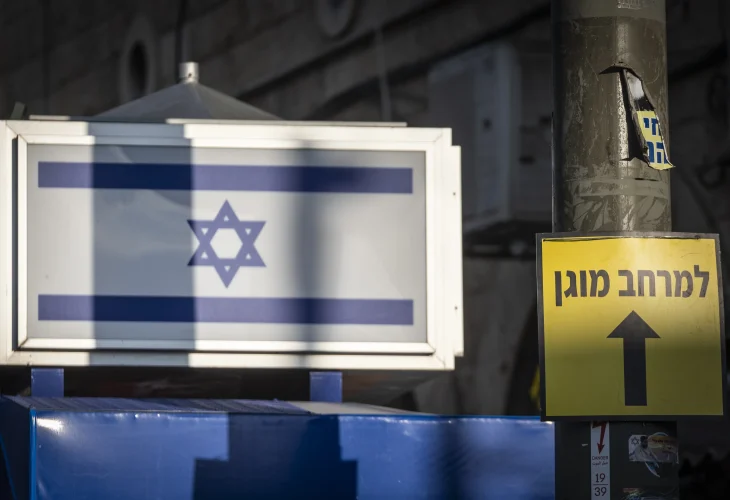 (Photo: Yonatan Sindel, Flash90)
Despite more than two years of intense security challenges, Israel continues to rank among the happiest countries in the world. According to the latest global happiness index, Israel placed eighth worldwide, alongside far more stable countries such as Finland, Iceland, and Denmark, which lead the list.
The ranking represents a slight drop from last year, when Israel stood fifth globally. Still, the data highlights the resilience of Israeli society even during a prolonged period of war and uncertainty.
One of the most striking findings relates to Israel’s younger generation. Israelis under the age of 25 rank third in the world for happiness, an outcome that surprised many observers given the country’s ongoing security reality.
“When you first see the ranking, you rub your eyes in disbelief because it seems implausible,” said Anat Fanti, a researcher in happiness policy at Bar-Ilan University. “But when you examine the metrics used to calculate the ranking, you see that there is actually a clear logic behind it.”
Fanti explained that the index measures overall life satisfaction, not momentary emotional states. The rankings are based on an annual survey of roughly 1,000 residents in each country, who are asked to rate their satisfaction with life on a scale from zero to ten.
“The measurement is conducted by the Gallup research institute, and the final ranking reflects the average results from the past three years,” she said.
Because the survey asks respondents to evaluate their lives as a whole, Fanti noted that Israel’s ranking reflects much more than the current war.
“Life satisfaction is a cognitive measure,” she explained. “People assess their lives overall. In Israel’s case, the high ranking reflects the entire experience of living here, not just the war.”
According to Fanti, several factors play a key role in Israel’s strong showing: social resilience, a deep sense of meaning and faith, and the powerful culture of mutual responsibility that characterizes Israeli society.
One particularly unique feature of life in Israel, she said, is the country’s remarkable sense of collective solidarity.
“What other country would develop a shelter scene and hold Purim parties inside protected spaces?” Fanti said. “And send rescue flights inward rather than outward? We’re crazy.”
Still, the report also reveals areas where Israel faces challenges. In economic terms, the country ranks 32nd in GDP, while life expectancy places Israel tenth globally. On measures of freedom of choice, however, Israel drops significantly to 88th place.
Perhaps most concerning is the level of trust in state institutions, where Israel ranks 107th out of 147 countries included in the index.
At the same time, Israeli society continues to demonstrate strong social bonds. In the category measuring social support, Israel ranks ninth worldwide, and in generosity the country stands 27th, a notable improvement compared with previous years.
Even that improvement, Fanti believes, does not fully reflect the scale of giving in Israeli society.
“Even this jump of twenty places upward still doesn’t reflect, in my view, the true level of giving here,” she said.
The report also recorded an increase in negative emotions among Israelis. Israel now ranks 39th on that measure, compared with 119th before the October 7 attacks, reflecting heightened levels of anxiety and distress since the war began.
But Fanti says the two realities—higher stress and high life satisfaction—can exist at the same time.
“I don’t see a contradiction,” she said. “You can love life in this special country—the family closeness, the mutual responsibility, the volunteering, the comradeship among fighters, the sense of home—and at the same time feel worry and anger.”
Her conclusion reflects a sentiment widely shared across Israeli society today.
“We’re Israelis,” she said. “We don’t do middle ground. And we’re happy even under fire.”

