

Raising Children
Bullied at School: Should Your Child Fight Back?
Discover a balanced approach to bullying, rooted in Jewish wisdom, strength, and self-respect.
- Rabbi Eyal Ungar
- | Updated
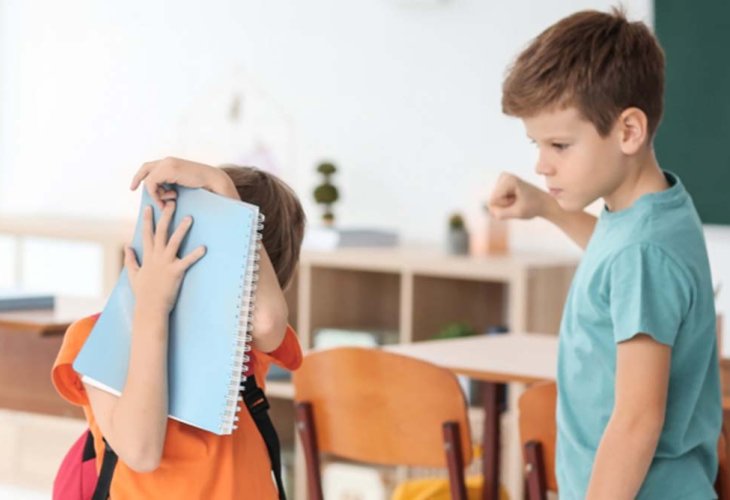 (Photo: Shutterstock)
When a child is teased, excluded, or even hit in school or preschool, many parents face the same question:
Should we teach them to stay quiet and absorb it, or to stand up and respond?
Understanding Bullying in Children
Bullying exists everywhere, among both boys and girls.
While boys may express it more physically, girls often use indirect forms such as exclusion, gossip, or social pressure. These forms can be just as painful, and sometimes even more damaging over time.
When a child is repeatedly humiliated or hurt, it can deeply affect how they see themselves. Over time, they may begin to feel unworthy or less important, which can harm their confidence and emotional development.
Why Some Children Become Targets
In many cases, children who are targeted are perceived as more vulnerable.
This does not mean something is wrong with them. It means they may need support, both from adults and in developing their own sense of strength.
Sometimes, adult intervention is necessary. But alongside that, children also need to learn an important message:
They are worthy of protecting themselves.
Kindness Versus Being Taken Advantage Of
One of the most important lessons to teach children is the difference between kindness and being taken advantage of.
Choosing to give, to be patient, or to let something go can be a beautiful expression of character.
But when a child is being pressured, humiliated, or hurt, this is no longer kindness. It is exploitation.
A child who allows themselves to be repeatedly hurt is not being noble. They are being harmed.
And unfortunately, when bullying is not addressed, it often continues and even intensifies.
What Jewish Wisdom Teaches
Jewish teachings place great value on kindness and restraint.
We are taught that the world is built on kindness, and that a person should learn to remain silent rather than respond with hurtful words.
At the same time, this only applies when the behavior comes from strength and choice.
Halacha is clear that a person is allowed to defend themselves.
Someone who protects themselves from harm is not considered vindictive. On the contrary, they are acting appropriately.
As taught in Sefer HaChinuch, a person is not required to suffer harm from others and may take action to protect themselves.
There are indeed individuals who reach the level of remaining silent even when insulted, but this is a high level that is not expected from everyone, especially not from children.
Teaching Children to Protect Themselves
In general, we teach children not to hit and not to respond with aggression. We encourage them to ignore minor incidents, to focus on positive interactions, and to act with kindness.
But when the behavior becomes repeated and harmful, it is no longer something to ignore.
At that point, it becomes the responsibility of parents to help their child learn how to protect themselves.
Practical Ways to Help Your Child
There are several ways parents can support a child who is being bullied:
Help them build a supportive circle of friends
Encourage social connection by inviting friends over
Teach them to speak clearly and assertively
Strengthen their confidence so they feel seen and present
Even expressing themselves, even if they do not get the result they want, can reduce the likelihood that they will be targeted again.
There Is No Shame in Self-Protection
If necessary, a child needs to know that they are allowed to defend themselves.
This is not the ideal situation. We would prefer a world where no child needs to face harm.
But until that becomes reality, children must be equipped with the tools to protect their dignity and well-being.
The Goal: Strength With Sensitivity
The goal is not to raise aggressive children.
It is to raise children who are kind, but not weak. Giving, but not vulnerable to harm. Sensitive, but also strong.
When children understand their own worth and know how to protect themselves, they are better prepared to navigate the world with confidence and balance.

