

Raising Children
Daily Conversations: How Your Words Shape Your Child’s Mind
Learn how everyday conversations shape your child’s thinking, emotions, and ability to understand the world
- Miriam Solomon
- | Updated
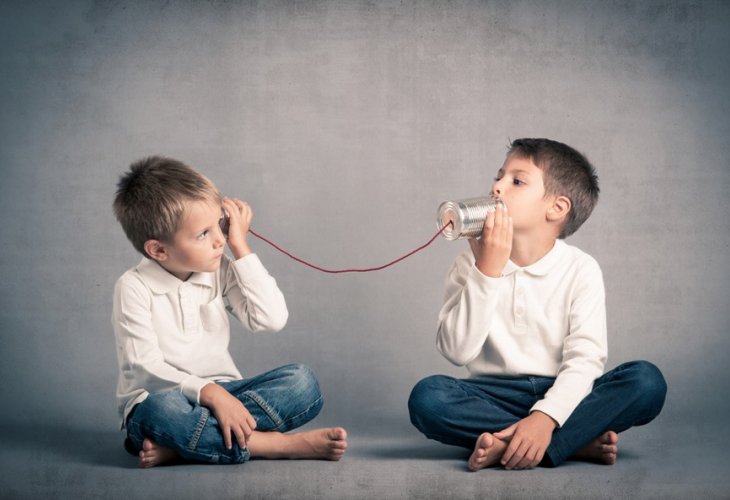 (Photo: Shutterstock)
Ever wondered what everyday conversations actually do inside the brain?
Research shows that putting thoughts into words strengthens memory, improves recall, and shapes emotional skills. The way we speak does not just communicate information. It organizes how the brain stores it.
Shira Safra, an educational counselor and emotional therapist, explains that language is the tool we use to connect not only with others, but also with reality and with ourselves.
When we can clearly define what is happening, we are better able to respond to it. Imagine seeing a dark spot on the floor. If you can name it, dirt, paper, or a bug, you immediately know how to react. Without clear language, confusion sets in, and with it, ineffective responses.
In other words, the way we describe reality shapes how we experience it.
How We Store Information Shapes How We Feel
The brain is naturally wired to notice danger. This is a survival mechanism that helps protect us. But in everyday life, it can lead us to focus more on what is wrong than on what is good.
If we do not actively organize our thoughts, many of our experiences are stored with negative labels. Over time, this can make life feel heavier, more stressful, and less hopeful.
But when we learn to organize information differently, we can change how we experience life.
The way we store emotional experiences also affects how we respond in the future. When we meet someone, our brain immediately searches for similar memories and reacts based on past feelings.
That is why two people can experience the same situation very differently. It all depends on how their brain has organized and stored past information.
Why Words Matter in Emotional Development
Shira shares an example from her clinical work.
A mother described feeling overwhelmed by her baby’s diaper rash and frustrated by her husband’s reaction. She used general words like “annoyed” but struggled to describe what she was actually feeling.
Together, they worked on separating the different parts of the situation. Her husband’s feelings were his own. The diaper rash was a common challenge. And her own emotions were more complex than just “annoyed.”
By learning to name her feelings more precisely, frustration, concern, compassion, she was able to organize her thoughts more clearly. Once the situation was sorted in her mind, she could move forward and look for solutions instead of staying stuck.
Clear language created emotional clarity.
The Role of Parents in Shaping a Child’s Inner World
Children are not born knowing how to organize emotional information. They learn it from the adults around them.
Parents, more than anyone else, shape how their children understand and interpret the world.
One of the most powerful tools parents have is simple conversation.
Talk with your children. Talk about what happened during the day, about feelings, about experiences, about the past and the future. Every conversation helps expand their vocabulary and gives them tools to understand reality more clearly.
It also helps to give conversations a simple structure. You can summarize or “title” what you discussed:
“Today we talked about how to handle disappointment,” or
“This was about taking responsibility.”
This helps the brain store the information in an organized way, making it easier to access later.
The Power of Listening and Reframing
Just as important as speaking is listening.
When your child shares something, give them your full attention. Then help them refine what they are saying by gently rephrasing it in a more accurate way.
If a child says, “I hate my teacher,” you might respond, “It sounds like you’re having a hard time getting along with her.”
If they say, “There’s nothing to eat,” you can say, “You’re not finding something you feel like eating.”
This kind of response does not dismiss their feelings. It helps them organize them.
When emotions are described more accurately, they feel more manageable.
A Small Change in Words, A Big Change in Thinking
The words we choose matter.
If we label a child as “aggressive,” it creates a fixed, negative identity. But if we describe the same child as “strong,” we open the door to growth and direction.
A small shift in language can completely change how a child sees themselves and their situation.
Building Stronger Minds Through Better Communication
The goal is not to speak more, but to speak more precisely.
When we pay attention to the words we use, we help our children build an organized inner world. We give them tools to understand themselves, respond to challenges, and grow emotionally.
This is one of the most meaningful ways to invest in a child.
Because the way we speak to them today becomes the way they will think tomorrow.

