

World News
Western Allies Condemn Iran’s Hormuz Blockade but Commit No Forces
Joint statement backs efforts to secure the vital oil chokepoint as Iranian attacks disrupt global shipping and energy markets
- Brian Racer
- | Updated
 (Shutterstock)
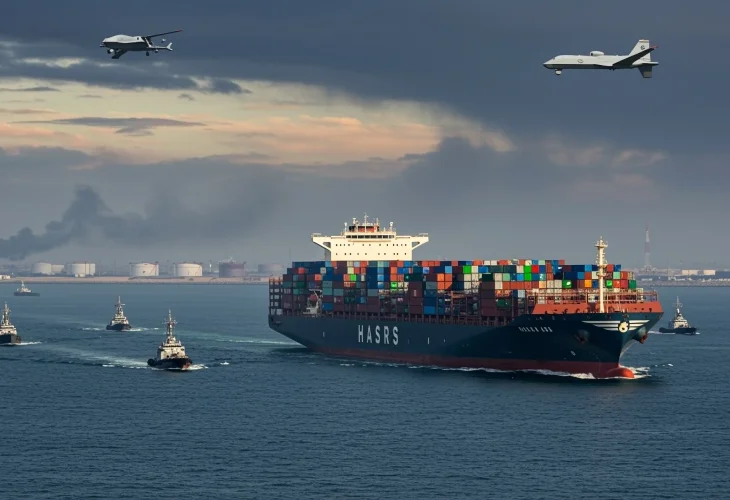
Western allies on Thursday condemned Iran’s disruption of shipping in the Strait of Hormuz but stopped short of committing military forces to reopen the vital maritime corridor.
In a joint statement, Britain, France, Germany, Italy, the Netherlands and Japan accused Tehran of attacking unarmed commercial vessels and civilian oil and gas infrastructure in the Gulf, warning that the assaults threaten global energy supply chains and international shipping.
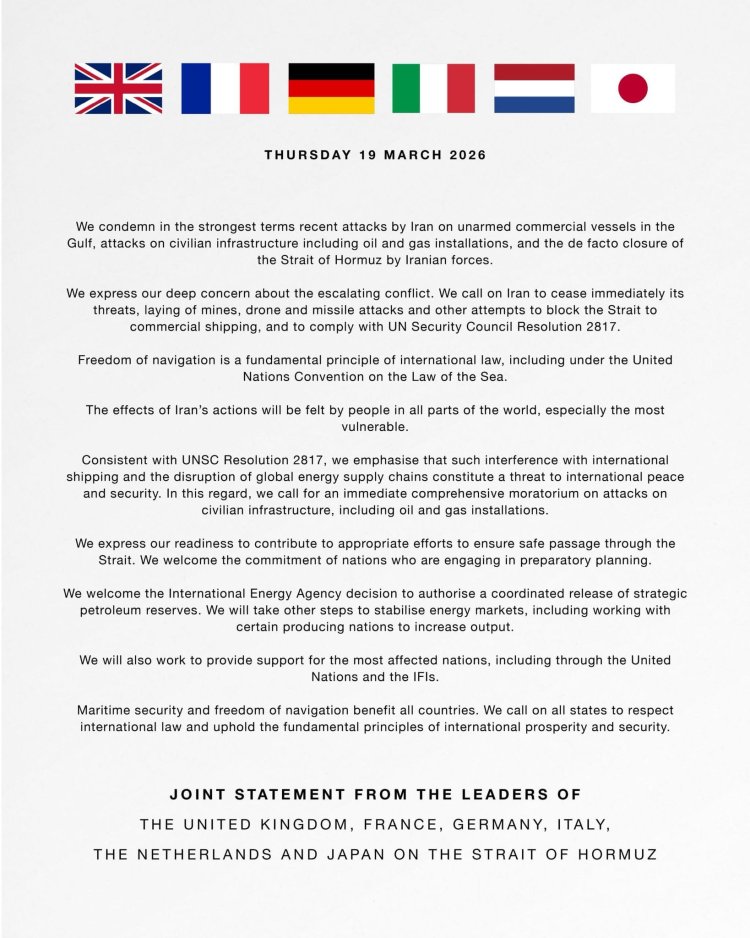
The governments called on Iran to immediately halt drone and missile attacks, mine-laying operations and other actions aimed at blocking the strait, emphasizing that freedom of navigation through the waterway is a fundamental principle of international law.
The countries also signaled willingness to contribute to what the statement described as “appropriate efforts to ensure safe passage through the Strait,” while supporting coordinated steps to stabilize energy markets, including the release of strategic petroleum reserves.
Yet several allies have made clear they are not prepared to commit military forces at this stage. France said that they will not take part in operations to reopen the Strait of Hormuz while hostilities continue, arguing that any maritime security mission should occur only after the fighting ends.
Spain announced it would not participate in any military mission in the strait, with government officials saying Madrid views the U.S.–Israeli war on Iran as illegal and warning that further military involvement would risk escalating the conflict.
Germany has also rejected sending naval forces for now. Chancellor Friedrich Merz said Berlin lacks the legal mandate under Germany’s Basic Law to deploy forces without authorization from institutions such as the United Nations, NATO or the European Union.
The diplomatic alignment nevertheless reflects growing international concern over the disruption of one of the world’s most important energy routes. The Strait of Hormuz carries roughly one-fifth of global oil shipments, making it a critical chokepoint for the global economy.
The crisis has already had significant humanitarian and commercial consequences. According to the International Maritime Organization, about 20,000 seafarers aboard nearly 2,000 vessels in the Gulf region have been affected by the disruption of shipping through the strait, with multiple vessel incidents reported since the conflict began.
The emerging coalition effort also follows mounting pressure from Washington for allies to help secure the waterway. During a meeting Thursday at the White House with Japan’s Prime Minister Sanae Takaichi, President Trump urged partners to contribute to efforts aimed at restoring maritime traffic through the strait. Days earlier, Trump had called publicly for other countries to take responsibility for protecting the route, saying nations that depend on Gulf oil should help keep it open. “The countries of the world that receive oil through the Hormuz Strait must take care of that passage, and we will help a lot,” he wrote in a post on Truth Social, adding that he expected “many countries” to send warships to keep the waterway “open and safe.”
Takaichi publicly aligned herself with the objective during the meeting but stopped short of promising naval participation, saying Japan would first evaluate what actions it could legally take under its constitutional limits on military deployments. “I am ready to reach out to many of the partners in the international community to reach our objectives together,” Takaichi said during the meeting.
Behind the diplomatic statements, discussions about possible maritime security operations are already underway. Britain has said it is working with allies on what officials described as a “viable collective plan” to reopen the strait, though no formal multinational escort mission has yet been announced.
Meanwhile, Tehran has shown no sign of backing down. Iranian officials have warned that ships transiting the waterway could be targeted and have discussed imposing new transit fees on vessels using the strait, suggesting an effort to reshape the rules governing one of the world’s most strategic maritime corridors.
Oil markets have already reacted sharply to the escalating crisis. Brent crude briefly climbed above $119 per barrel on Thursday due to fears that prolonged disruption in the strait could threaten global energy supplies.
The joint statement marks the first broad diplomatic alignment among U.S. allies responding to Iran’s blockade of the Strait of Hormuz. Whether that political support evolves into a full maritime coalition capable of escorting commercial vessels and reopening the waterway remains the central question facing governments as the conflict continues.

