

Israel News
How Iran Turned Hezbollah Into a Self-Sufficient Missile Force
Reuters details how the IRGC rebuilt, funded, and restructured Hezbollah after 2024 as Israel moves to dismantle that system across Lebanon
- Brian Racer
- | Updated
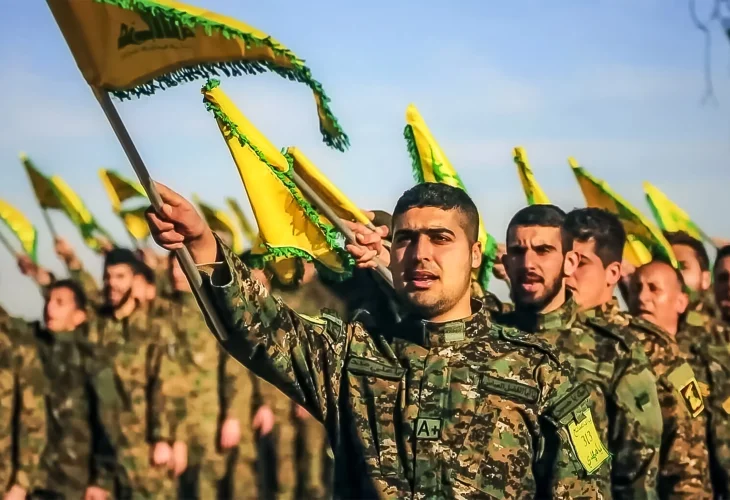 Shutterstock
Iran’s IRGC rebuilt Hezbollah after the November 2024 ceasefire, sending officers into Lebanon, restoring its command structure, and helping it develop local weapons production ahead of a new round of fighting, according to a Reuters report published Sunday.
The effort reflects the broader Iranian strategy to transform Hezbollah from a supply-dependent proxy into a self-sustaining military system inside Lebanon, capable of maintaining continuous rocket, missile, and drone fire even under sustained Israeli attack. Israeli assessments and Hebrew media reports add that this shift included local production capabilities and hardened infrastructure designed to support long-term operations.
The first stage of the rebuild focused on restructuring Hezbollah’s organization. After suffering heavy losses in the 2024 war, the group received direct support from roughly 100 IRGC officers who helped retrain fighters and rebuild its leadership framework, according to Reuters. Analysts say the group shifted from a traditional hierarchy to decentralized cells, described as “a far more flat system” built on a “mosaic defence,” making it more resilient to targeted strikes and leadership losses.
Iran also reinforced Hezbollah’s financial base. Reuters reported that the group has been operating on a monthly budget of about $50 million, most of it supplied by Tehran, allowing it to maintain salaries, rebuild units, and sustain long-term readiness without relying solely on vulnerable smuggling routes.
At the same time, production capabilities were moved inside Lebanon. Reuters reported that Hezbollah manufactured drones and missiles locally as part of its rearmament. Israeli assessments go further, describing efforts to establish independent production lines for precision weapons, including upgraded guidance systems, and to build fortified underground infrastructure designed to survive airstrikes. The shift reduces reliance on supply routes from Syria and allows Hezbollah to regenerate capabilities during active fighting.
The result, according to the report and Israeli assessments, is not just a rearmed group but an integrated war system. Reuters said IRGC officers were involved in planning coordinated attacks from Iran and Lebanon, a model first seen on March 11. Hezbollah media chief Youssef al-Zein said the group would “fight to the last breath,” signaling expectations of continued confrontation.
Israel has responded by expanding its military campaign beyond intercepting attacks to targeting the system itself. The IDF has widened its ground operations in southern Lebanon, with Division 36 joining Division 91 to deepen control of frontline areas and dismantle Hezbollah positions. A senior Israeli official said, “There will be no agreement because our minimum does not meet the maximum that the Lebanese government is capable of providing. At this time, the only change in Lebanon will come through military action, not diplomacy.”
At the same time, Israel has moved to disrupt Hezbollah’s internal logistics. In recent days, Israeli forces struck bridges over the Litani River, which defense officials say were used to move weapons and fighters between regions. The strikes are intended to isolate combat zones in southern Lebanon and prevent the movement of resources within the country.
The developments are unfolding alongside a gap between Lebanon’s official position and the situation on the ground. Lebanese leaders have said they intend to restrict Hezbollah’s military activity, while Israeli assessments indicate that Hezbollah fighters continue to move through the country with limited interference. Reuters also reported concerns over Iranian-linked personnel operating in Lebanon and recent departures of such figures.
Taken together, the findings suggest Iran has embedded a long-term military infrastructure inside Lebanon, designed to function even under sustained pressure. Israel’s current campaign appears aimed not only at degrading Hezbollah’s present capabilities, but at dismantling the system built to sustain the next war.

