

World News
Cornell President Rejects Student Push to Cut Technion Ties
University president blocks two student resolutions, warning measures against Israeli ties and speakers violate academic freedom
- Brian Racer
- | Updated
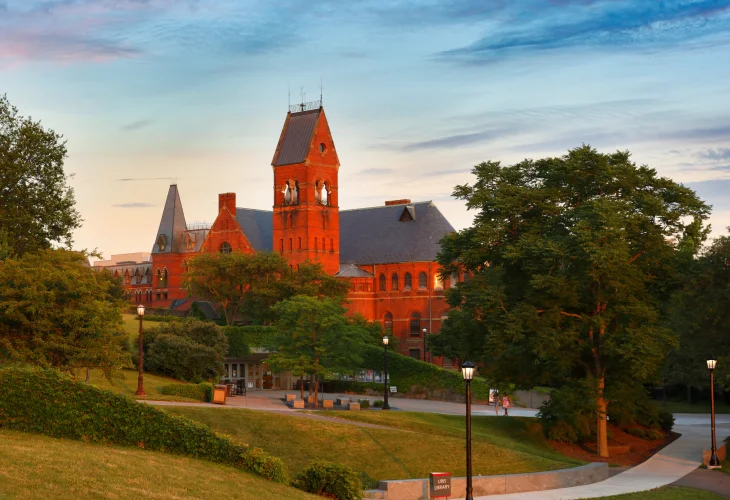 Shutterstock
Cornell University President Michael Kotlikoff rejected two anti-Israel resolutions passed by the student government earlier this month, pushing back against efforts to cut ties with Israel’s Technion and condemn a campus event featuring Israeli politician Tzipi Livni.
The resolutions, approved by the Student Assembly on March 12, are part of a broader wave of campus activism targeting Israel-related partnerships and speakers. Kotlikoff framed his decision as a defense of academic freedom and institutional principles, rather than a position on Israeli policy.
One resolution, which passed 17–5, called on Cornell to end its partnership with the Technion – Israel Institute of Technology, citing “serious ethical concerns” and alleged “complicity in genocide.” Kotlikoff rejected the measure, writing that it “fundamentally conflicts with Cornell’s principles of academic collaboration and our core commitment to academic freedom.”
Kotlikoff said ending the partnership “would not only hinder our research, teaching and public engagement; it would imperil our academic principles.” He added that the resolution was based on incorrect assumptions, noting that Cornell Tech operates as a three-way partnership between Cornell, the Technion, and New York City. That structure means Cornell cannot continue running the campus on its own without its Israeli partner.
He also said he was “deeply troubled” that the resolution singled out the Technion while Cornell maintains 159 partnerships in 59 countries and regions. “None of these publicly available facts are mentioned in the resolution; only our partnership with an Israeli institution is targeted for erasure. The political bias evident in this selective approach is deeply disturbing,” he wrote. “I reject it fully and forcefully.”
A second resolution, passed 19–2 with three abstentions, condemned the university for hosting Tzipi Livni at a campus event. Livni, a former Israeli foreign minister who has criticized Prime Minister Benjamin Netanyahu and supported a two-state solution, took part in a “Pathways to Peace” panel.
Kotlikoff rejected that measure as well, writing that it “unacceptably seeks to curtail freedom of speech on Cornell’s campus” and that the event “fell firmly within the bounds of protected speech.” He added that the resolution reflected a “regrettable attempt” to promote the idea that “there is virtue in silencing speech with which we disagree.”
The dispute follows tensions surrounding the March 2025 “Pathways to Peace” event, which was disrupted by protests and led to arrests and disciplinary proceedings against students and organizations involved. University officials later warned that some participants could face suspensions or other restrictions.
The latest clash comes as Cornell remains under federal scrutiny, with the Equal Employment Opportunity Commission conducting an ongoing inquiry into campus bias. Similar debates over Israel-related partnerships and campus speech have unfolded at universities across the United States, drawing criticism from Jewish groups and federal authorities.

