

Kabbalah and Mysticism
Nisan: A Month of Renewal and Redemption
Why Nisan marks the beginning of time, symbolizes redemption, and offers a powerful opportunity for personal and spiritual growth
- Yehosef Yaavetz
- | Updated
The month of Nisan stands at the head of the Torah’s calendar. The Torah defines it as the first month: “This month shall be for you the beginning of months; it shall be the first for you of the months of the year” (Shemot 12:2).
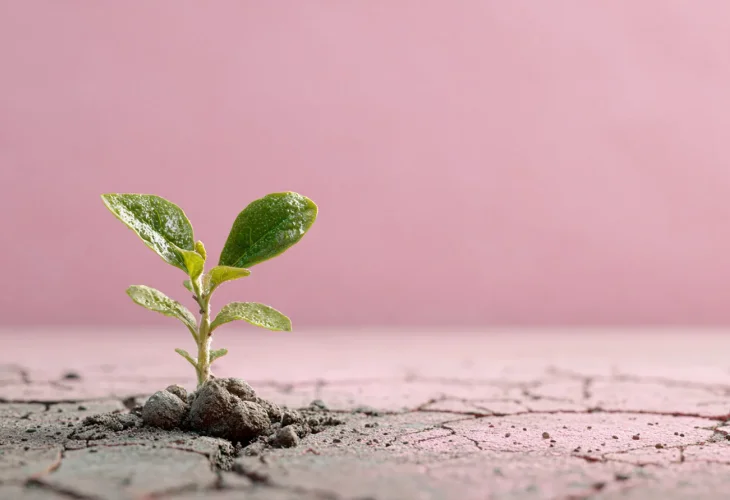
This verse was given on the eve of the Exodus from Egypt, and from that moment, Nisan became the starting point of Jewish time. It is the month when the earth renews itself — spring arrives, bringing blossoming and growth, and it is also the month in which a new chapter in Jewish history began. The Torah itself calls it “the month of spring.”
The natural awakening of the world reflects a deeper historical and spiritual renewal.
A Month of Redemption — Past and Future
Our Sages emphasized the unique nature of Nisan. The Talmud states: “In Nisan they were redeemed, and in Nisan they are destined to be redeemed” (Rosh Hashanah 11a).
Nisan is inherently a month of beginnings and redemption. It marks a starting point in the cycle of time — past, present, and future.
The Baal Shem Tov is quoted as teaching: “One who reads the Megillah backward has not fulfilled his obligation” — meaning, one who thinks these events only happened in the past has missed the point.
The events of redemption are not just history, but they are patterns that repeat themselves in different forms throughout time.
The Spiritual Structure of Nisan
The Sefer Yetzirah teaches: “He made the letter ‘Heh’ king over speech… and formed Aries (the lamb) in the world, Nisan in the year, and the right foot in the soul.”
Nisan is associated with speech, described here as the “right foot of the soul” — because speech moves ahead of a person, just as the right foot takes the first step. First a person expresses a desire, and then acts on it.
The mazal (zodiac sign) of Nisan is Aries (the lamb) — a creature that is just beginning to walk.
The letter Heh (ה) represents beginnings. In Hebrew, adding the letter Heh often transforms a word into an action, signifying the start of something. It is also one of the letters of God’s Name, revealed to Israel during the Exodus.
The Lamb, Freedom, and the Power of Speech
In the spring, lambs leave their mothers and go out into the fields. This is the season when they mature and begin to live independently, a symbol of freedom.
The lamb is also associated with soft sounds and early vocalization, symbolizing the beginning of speech, just as God began speaking to the Jewish people through Moshe during the Exodus.
One of the central mitzvot of Pesach is: “And you shall tell your child” (Ve’higadta le’vincha) — a commandment centered on speech.
Pesach is fundamentally about telling the story — expressing, articulating, and transmitting the experience of redemption.
The Korban Pesach: Elevating the Physical
The mitzvah of the Korban Pesach involves offering a lamb — “a lamb for each household.”
This act represents the sanctification of the physical world. The Egyptians worshipped the lamb as an idol, while we recognize it as a creation of God and offer it back to Him. Its blood is placed on the altar, and its meat is eaten as part of the sacred meal.
What was once idolatry becomes a vehicle for holiness, speech, and renewal.
The lamb has a unique trait in that it can push through narrow openings and find its way out. Halachically, this is why a sukkah must have walls that reach close to the ground, so a lamb cannot slip underneath.
This characteristic symbolizes freedom and redemption, and the ability to find an opening, even in constrained situations, and emerge into liberation.
Nisan and the Tribe of Kingship
According to Kabbalah, the months correspond to the tribes of Israel. Nisan is associated with the tribe of Yehuda, the tribe of kingship.
Just as a king leads from the front, Nisan leads the year. It is the first month and contains the first festival of Pesach.
During this time, Jews would ascend to Jerusalem for the pilgrimage festival, just as lambs go out into the fields for nourishment. We too, go to receive spiritual nourishment in the Beit HaMikdash.
The Attribute of Kindness and Expansion
Kabbalistically, Nisan is connected to the attribute of chesed (kindness) which is expansion and abundance.
Spring reflects this quality: the world turns green, fruits ripen, and sustenance becomes plentiful — especially wheat, the primary food of humanity. After the closed, dormant state of winter, spring opens the gates of abundance.
From Nisan until the end of Elul, the year is characterized by expansion and growth. From Tishrei onward, the second half of the year shifts toward judgment and inward reflection.
A Time for Personal and National Renewal
Nisan is not just a historical memory, but an opportunity.
It is a time for spiritual renewal, both for the Jewish people as a whole and for each individual in their personal life.
Just as nature awakens, so too can we find new beginnings, new clarity, and new freedom in our own journey.

