

Faith (Emunah)
Finding Your True Path Through Faith and Identity
How a timeless response to a student reveals the secret to inner peace, purpose, and the enduring strength of Jewish life
- Naama Green
- | Updated
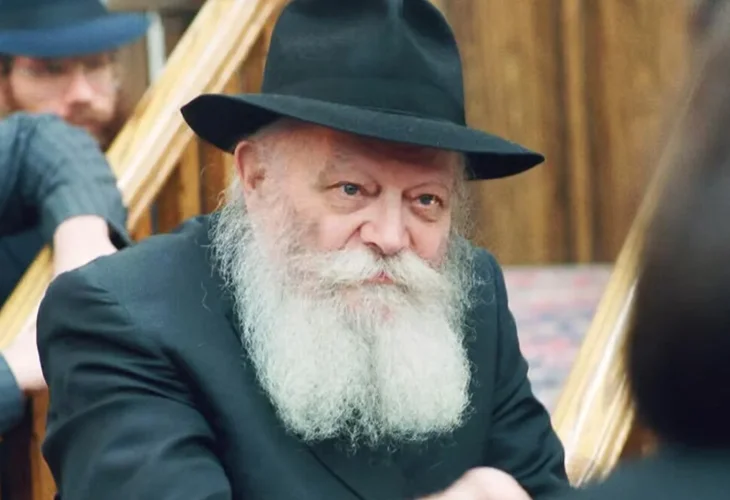
Yedidya Meir, on his radio program Kol Hai Radio, read a fascinating letter written by the Lubavitcher Rebbe to a university student just a few days before Chanukah in 1979.
“I don’t know what she asked him,” Meir began, “but from the response in the letter, you can understand the general direction. And the ideas are captivating. They’re also written in very simple and clear language. I think the letter is relevant not only to that student, but to many people.”
The Rebbe’s Response
In the letter, which was recently published in Kfar Chabad newspaper, the Rebbe wrote:
“Blessings and peace. In response to your letter of the 7th of Kislev, in which you describe your academic background, several significant events in your life, and ask how to utilize your abilities in order to find your proper place in life, I will begin with the following introduction:
You have the merit of living in a land that is universally recognized as the Holy Land. And you are a member of a people whom the Torah, also universally recognized as a holy book, defined as a holy nation.”
“This means that you live in the Holy Land, and you are part of a holy people. The implication is that a Jew can function at their best only when living a life that aligns with their true essence, namely, within an atmosphere of holiness as defined by the Torah. Only then can a person experience true satisfaction, inner peace, and the ability to deal with life’s challenges and find appropriate solutions.”
A Fish Out of Water
“Our Sages draw a comparison to a fish in water,” the Rebbe writes. “Just as a fish can function properly only in its natural environment, in water, so too with a Jewish man or woman.”
Extending this analogy further, the Rebbe explains that a fish does not need to intellectually understand the essential connection between its health and the water, or why it feels distress when removed from it.
Similarly, it is not necessary for a Jew to logically understand how and why their well-being is deeply connected to daily life and behavior according to Torah and mitzvot, whether they feel inclined toward it or not. Nor is there anything a person can do to change the inevitable consequences of weakening that vital connection, regardless of the cause.
A Scientific Perspective
The Rebbe adds: “Since you write that you are a student of philosophy with a scientific background, there is no need to elaborate extensively on the above. I will only add one more point, based on the general scientific approach to verification.
All exact sciences are based on experimentation. To validate results, experiments must be tested under varying conditions, and the more numerous and diverse the experiments, the more they confirm the phenomenon under study.”
Applying this principle to the Jewish people, the Rebbe writes that the Jewish nation has survived and flourished for thousands of years under vastly different and often extreme conditions, as every page of Jewish history demonstrates. Other nations, under similar circumstances, disappeared.
If we seek to identify the factor responsible for the enduring existence of the Jewish people, expressed in the phrase Am Yisrael Chai, we find that it is not territory, language, clothing, or any external factor, since all of these have changed over time.
The Unchanging Core
“The only constant factor throughout Jewish history,” writes the Rebbe, “is its religious way of life, daily living according to the laws of the Torah, such as observing Shabbat, keeping kosher, and fulfilling all the mitzvot, which have remained unchanged since the Torah was given at Mount Sinai, and to which Jews have remained devoted with dedication across all times and places.”
The Rebbe emphasizes: “There have been individuals and groups who deviated from the mainstream of Jewish life and sought new paths. However, history has shown that such individuals ultimately ended in one of two ways: either they returned to the traditional path of Torah and mitzvot, or they were lost to the Jewish people through assimilation into the environments they chose.”
Practical Guidance for Life
“In light of the above,” the Rebbe continues, “you should first and foremost conduct your life according to the Torah, the Torah of life, as detailed in the code of daily Jewish conduct, namely, the Shulchan Aruch.
Beyond this being an obligation in itself, aligning with God’s will will strengthen your inner peace and provide the objectivity needed to clearly see your path in life, including solutions to the problems you mentioned in your letter.”
Facing Social Pressure
“There may be people who, noticing your change in lifestyle, will ask what has changed, and given the current times and generation, they may even ask this mockingly, and in a very unscientific way.”
However, the Rebbe notes that this too is already addressed in the very beginning of the Shulchan Aruch, in its opening lines: “Do not be ashamed before those who mock you.”
A Chanukah Blessing
“May God grant that you have good news to share,” the Rebbe concludes, “especially as we approach the festival of Chanukah, celebrated by lighting the Chanukah candles in increasing numbers, symbolizing the pure light of Torah and mitzvot in the world, which would otherwise be dark.
With all that Chanukah represents, in those days and in our times, as you surely know.”

