

Faith (Emunah)
Then and Now: What the Six-Day War Teaches Us Today
From the Six-Day War to today’s battles, a powerful reminder that Israel’s strength is guided by something far greater.
- Naama Green
- | Updated
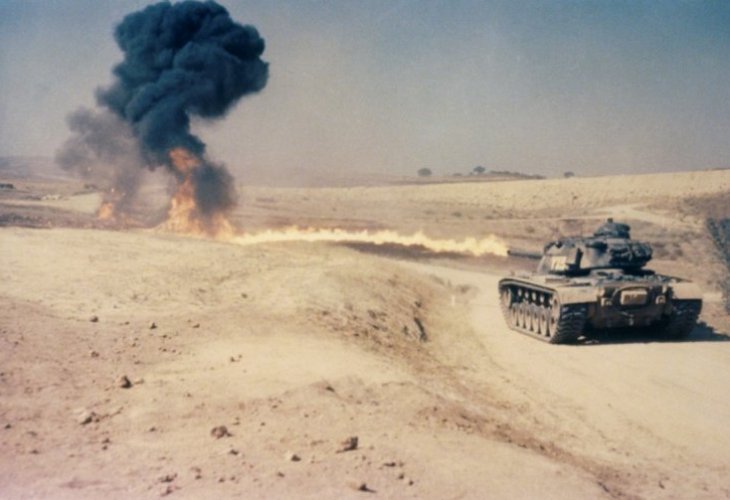
In days like these, when we once again find ourselves facing uncertainty, fear, and questions about what lies ahead, many people search for perspective. The feeling that history is repeating itself, that we are once again a small nation standing against overwhelming forces, is not new. More than five decades ago, during the Six-Day War, similar questions were asked. And the answers given then still carry powerful meaning today.
A Question That Has No Natural Answer
Moshe Keinan, a senior IDF officer, shares in his book a fascinating conversation with an officer from Singapore’s army.
During a training course, Keinan formed a close connection with a battalion commander named Lee. Lee had deep knowledge of military history and could analyze wars with precision, recalling details from battlefields across the world.
But when it came to Israel, he was at a loss.
“You know,” Lee told him, “we study wars to learn from them. Every battle can be analyzed. But I still don’t understand your wars.”
He began listing examples.
How could a handful of tanks stop an overwhelming enemy force?
How could a small nation defeat multiple countries in just six days?
How could so many attacks result in so little damage?
“What exactly am I supposed to learn from this?” he asked. “There is no logic here.”
An Answer Given Long Ago
Keinan explains that this question is not new. It was already asked thousands of years ago.
The Roman emperor Hadrian once expressed amazement at the survival of the Jewish people. He described Israel as a small sheep surrounded by seventy wolves.
Rabbi Yehoshua responded with a simple but powerful truth. The greatness is not in the sheep, but in the Shepherd who protects it.
This is the answer.
The battles of Israel are not guided by natural logic alone. They are guided by Hashem.
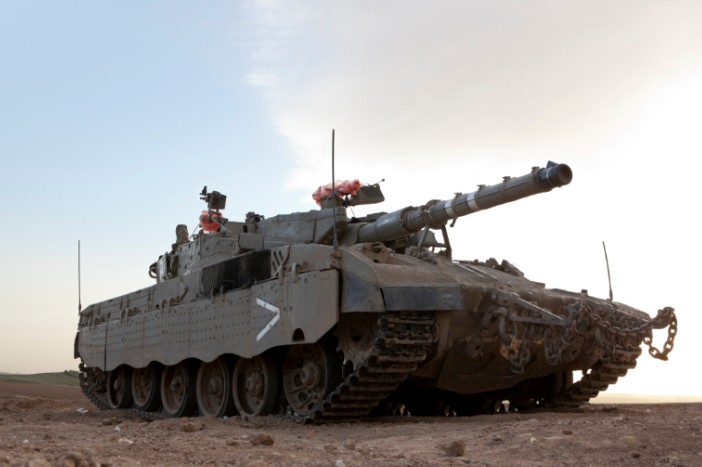
“The Finger of Hashem”
During the war, even senior military leaders recognized that something beyond strategy was taking place.
Maj. Gen. Ezer Weizman was once asked how Israeli pilots managed to attack for hours without the enemy coordinating a proper response.
He did not offer a tactical explanation.
He simply pointed upward and said, “The finger of Hashem.”
When Reality Defies Expectation
Col. Uri Ben-Ari described events that would have sounded impossible in any military academy.
Entire units moved rapidly across difficult terrain and entered battle immediately, achieving success that defied expectations.
In one striking moment, Israeli forces entered Shechem and were initially welcomed, as the local population mistook them for allied troops. Enemy tanks stood nearby, yet were not used.
Only later did it become clear how close the danger had been, and how unexpectedly it had been avoided.
Again and again, events unfolded in ways that could not be predicted.
When Fear Changes Everything
Across multiple locations, soldiers reported a similar phenomenon.
Despite having weapons and numerical advantage, enemy forces hesitated, withdrew, or surrendered.
Ben-Ari described how entire populations that had prepared for battle suddenly raised white flags. Weapons were hidden, and resistance faded.
The fear that fell upon them was not easily explained.
“From Heaven, Their Hands Were Tied”
One soldier, David, shared a moment that could have ended very differently.
After hearing gunfire, he entered an orchard alone and found himself surrounded by dozens of armed enemies. He was certain it was the end.
But instead of attacking, they surrendered.
“I did not fight, and I did not fall,” he said. “From Heaven, their hands were tied.”
A Moment Frozen in Fear
Another account tells of two lightly armed soldiers facing a fully loaded enemy vehicle.
With no real chance of survival, they prepared for the worst.
But the enemy did not fire.
Instead, they froze.
When asked later why they had not attacked, the Egyptian sergeant could not explain it.
“My hands froze,” he said. “I was paralyzed.”
Do We Believe in Hashem
The story comes full circle with another conversation between Keinan and the Singaporean officer.
During a break, Keinan made a blessing before eating. Lee watched with curiosity.
“You are talking to your food again,” he remarked.
Keinan explained that he was not speaking to the food, but thanking Hashem.
Lee was surprised.
“In other armies, I constantly hear about God,” he said. “But here, I have not heard it once. Do you really believe?”
That question lingered.
A Message for Today
Today, as we face new challenges and once again hear the sounds of war and uncertainty, that same question returns.
How do we understand what is happening around us?
The answer remains what it has always been.
Not everything can be explained through strategy, strength, or numbers alone.
There is a guiding hand behind it all.
Just as then, we are reminded that we are not alone, and that our strength does not come only from what we can see, but from the One who guards and leads us.
And perhaps now more than ever, the question is not only whether others see it, but whether we do.

