

Relationships
The Story You Tell Yourself: How It Affects Your Relationship
What if the problem isn’t your partner, but the story you believe about them? Learn how hidden perceptions shape connection and distance.
- Hannah Dayan
- | Updated
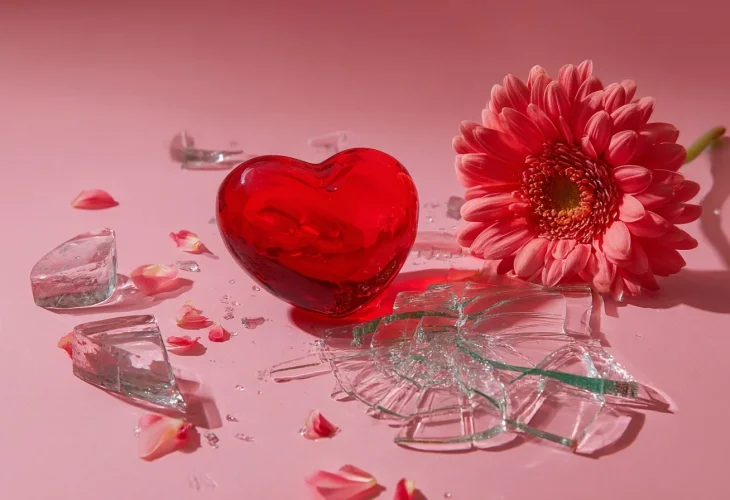
In many relationships, the greatest distance is not created by what actually happens, but by the story we tell ourselves about what is happening. When pain enters the picture, the mind works quickly to protect us. But sometimes, that protection becomes the very thing that keeps us stuck.
When Pain Turns Into a Story
“I’ve been feeling this for a long time,” Ethan said. “Shira doesn’t really love me.”
“Why do you feel that way?” I asked.
“I feel like I’m not important to her. She doesn’t care about me. She avoids me. I feel it all the time,” he replied.
“What leads you to that conclusion?” I gently asked, inviting him to look a little deeper.
“It’s just how it is,” he said. “She hurts me. I feel like I’m just something functional for her, nothing more.”
Shira, sitting beside him, couldn’t hold back her tears.
“You always see me this way,” she said quietly. “Like I’m your enemy.”
Shifting From Certainty to Curiosity
“Let’s pause for a moment,” I said.
“Ethan, I hear your pain. But let’s try something small. Instead of putting an exclamation point at the end of your statements, let’s put a question mark. Let’s look at this not as absolute truth, but as a story that may or may not be true.”
He shifted uncomfortably.
“What happens inside you when I say that?” I asked.
“It’s not a story,” he insisted. “This is our reality.”
What the Story Is Protecting
“There’s something threatening about calling it a story,” I reflected. “Let’s explore that together. If you stopped believing this about Shira, what might happen?”
He paused.
“I might get hurt again,” he said quietly.
And there it was.
The story was not just a belief. It was protection.
The Cost of Protection
“When you believe this story, what happens inside you?” I asked.
“I shut down,” Ethan said. “I disconnect. I don’t want to get close because I know it will hurt.”
“And if that story wasn’t there?” I asked.
“I would open up. I would connect.”
“So what is the role of this story?” I asked gently.
He looked up, beginning to understand.
“It keeps me from getting close,” he said. “But why would I do that?”
When the Past Controls the Present
“To protect yourself,” I explained. “At some point, you were hurt deeply. You learned that closeness can lead to pain. So you created a system to prevent that from happening again.”
That system worked once.
But now, it is preventing something else.
Connection.
Shira spoke up.
“I also have stories about him,” she said. “That he doesn’t want enough, or that he can’t.”
The Illusion That Feels Like Safety
“Often, our perceptions of our partner fall into those patterns,” I explained. “They don’t want, or they can’t, or both.”
“These stories feel real. They feel protective. They promise that if we hold onto them, we won’t be hurt again.”
“But what actually happens?” I asked.
“We still feel hurt,” Ethan said. “And alone.”
Exactly.
The protection becomes the pain.
Giving Reality a Chance
“So what do we do?” Ethan asked.
“We start by recognizing what is happening,” I said.
The story is not reality. It is a lens shaped by past experiences.
And then, we begin to practice something new.
A Different Way to Speak and Listen
“Ethan, you will share what you feel, but as a story, not as absolute truth,” I explained.
“And Shira, you will listen without defending yourself, because what you are hearing is not an accusation, but an expression of fear.”
This creates a new space.
A space where both people can be seen.
Choosing a New Path
The real shift begins with a decision.
A decision to no longer let the old story control the relationship.
A willingness to question what feels certain.
And the courage to meet each other again, not through the lens of the past, but in the present moment.
Because when we loosen our grip on the story, we give something else a chance to enter.
Connection.

