

World News
Study Finds Sharp Post–Oct. 7 Divide Between Birthright Participants and Nonparticipants
Brandeis report shows nonparticipants grew less connected to Judaism and Israel after summer 2025, while participants saw significant gains
- Brian Racer
- | Updated
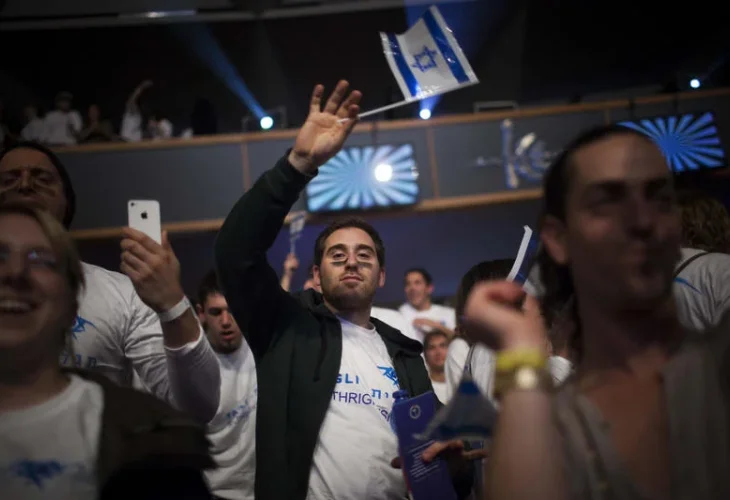 Birthright (Yonatan Sindel/Flash90)
A new study released this week by researchers at Brandeis University has found a sharp divergence among young Jews following summer 2025 Birthright Israel trips, with participants reporting stronger Jewish identity and connection to Israel, while those who signed up but did not go reported declines, according to the report “A Summer of Uncertainty: The Impact on Birthright Israel’s Summer 2025 Cohort.” The findings highlight a significant post–October 7 shift, as researchers documented changes in identity and connection during a period shaped by war, identifying a correlation between participation and increased connection without establishing causation.
Researchers said the most striking finding was the decline among nonparticipants, many of whom did not attend due to disruptions caused by the June 2025 war between Israel and Iran or chose not to go. Those individuals reported decreased connection to Jewish values, history, traditions and a sense of belonging to a worldwide Jewish community.
“Never before in our research on Birthright have we seen such notable declines among nonparticipants,” the study’s authors wrote.
Len Saxe, a lead researcher at Brandeis, suggested the trend may reflect the broader environment many applicants are exposed to. “Many of the applicants live in communities where they hear frequent criticism of Israel,” Saxe said. “Unlike the period on campuses pre-COVID, when Birthright was taking 35,000 North Americans a year to Israel, students don’t know many others who have experience in Israel and know Israelis. Their perspective on the conflict lacks context.”
In contrast, those who participated in Birthright reported significant increases in connection. The share of participants who said they felt “very connected” to Israel rose from 53% before the trip to 74% afterward, according to the report. Participants also reported stronger identification with Jewish identity, values and community.
“Among those with the least prior connection to Judaism and Israel, including those politically liberal, they showed the largest increase in their connection to Israel, as well as other facets of their Jewish identities,” Saxe said. The study also found that even participants whose trips were cut short due to fighting still reported meaningful changes in their understanding of their Jewish identity.
At the same time, the composition of Birthright participants has shifted since October 7. In 2025, 54% of participants had prior Israel experience, up from 38% in 2023. About one in five participants were Orthodox, more than triple the share from two years earlier, and 38% had attended Jewish day school, compared to 23% previously.
The report also identified a political shift among participants, with 42% identifying as conservative and 34% as liberal, a reversal from 2023, when a majority identified as liberal. “October 7 continues to shape American Jewry in numerous ways, and the 2025 Birthright Israel trips illustrate that,” the authors wrote.
Birthright leadership framed the findings as evidence of the program’s continued role in strengthening Jewish identity. “The cultural headwinds facing young Jews are real, and they are pushing Jewish connection and pride downward,” said Gidi Mark, the organization’s international CEO. “But what this research makes unmistakably clear is that Birthright Israel moves participants in the opposite direction. The decline occurred only among those who did not go.”
Elias Saratovsky, president and CEO of the Birthright Israel Foundation, said the findings point to a broader generational challenge. “We are at a crossroads. If our community does nothing, we risk losing the younger generation,” Saratovsky said. “But if we invest in an effective intervention — Birthright Israel — we can win them back.”
The study does not determine why nonparticipants experienced declines or whether participation directly caused the increases observed among attendees, but it highlights a growing gap in how young Jews relate to Israel and their own identity following October 7.

