

Saudis and UAE Inch Toward Open Fight With Iran After Energy Strikes
A Wall Street Journal report says both Gulf powers are nearing a decision on direct involvement. Riyadh has opened its bases to U.S. forces, and a source warns: "It's only a matter of time."
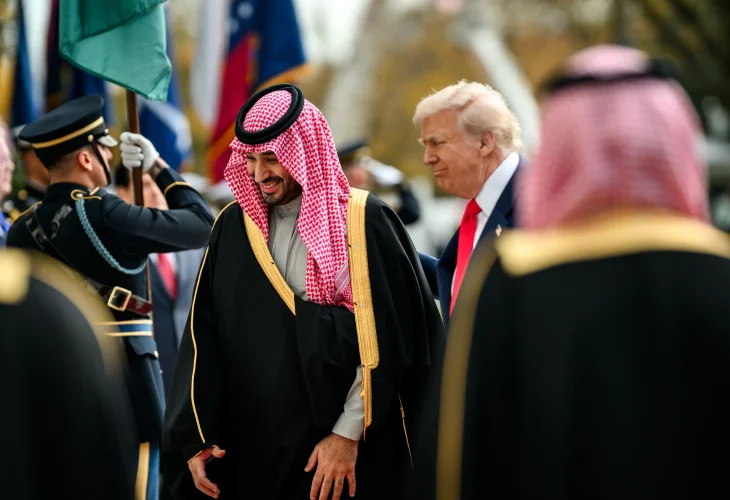 Trump and bin Salman (Credit: Shutterstock)
According to a report published overnight Tuesday in the Wall Street Journal, Saudi Arabia and the United Arab Emirates are nearing a decision point on whether to take a direct role in fighting Iran. This follows Iranian attacks on key energy infrastructure.
According to the report, Saudi Arabia has already made a significant policy shift by allowing the United States to use military bases on its soil for strikes against Iran. One location is the "King Fahd" Air Base on the western side of the Arabian Peninsula. That marks a reversal from the start of the fighting, when Riyadh said it would not allow its facilities or airspace to be used for offensive operations in an effort to stay out of the confrontation.
But the security reality has changed: according to the report, Iranian missiles and drones have been launched at major energy facilities and even toward the capital, Riyadh, hardening the Saudi position. Crown Prince Mohammed bin Salman is now considering direct participation in strikes to restore deterrence against Iran. A source familiar with the details told the Wall Street Journal that "It's only a matter of time before the kingdom enters the war".
The United Arab Emirates is stepping up moves against Iran, mainly by shutting institutions and tightening oversight of Iranian assets in an effort to hit the regime's funding sources. At the same time, Saudi Arabia is signaling its patience is running out. Saudi Foreign Minister Prince Faisal bin Farhan said last week: "Saudi Arabia's patience in the face of Iranian attacks is not unlimited". He added: "Anyone who believes the Gulf states are incapable of responding is mistaken".
Despite the stepped-up preparations, both countries are for now refraining from an official declaration that they are joining the fight, mainly out of concern over a direct escalation with Iran. However, as the attacks continue and the threat to the Strait of Hormuz grows, internal and regional pressure to toughen the response is only increasing.

