

Israel News
How Netanyahu’s Final Push Helped Shape Trump’s Khamenei Strike Decision
Reuters describes last-minute call citing assassination threats and intelligence window before order was given
- Brian Racer
- | Updated
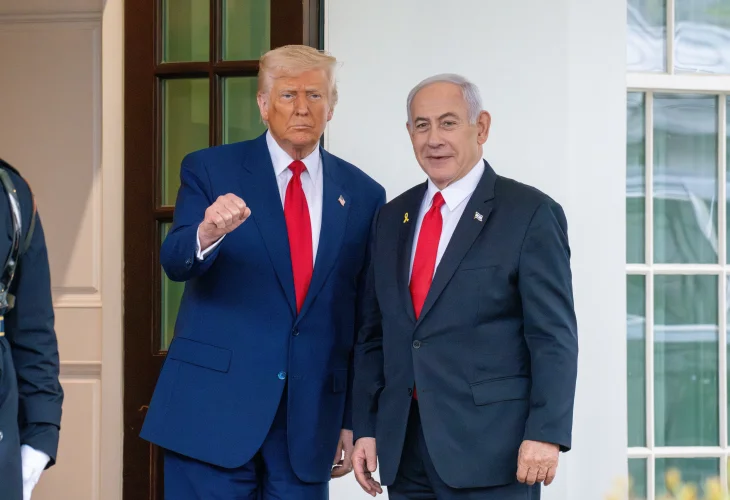 Donald Trump and Benjamin Netanyahu (Shutterstock)
A Reuters report published yesterday revealed new details about how Prime Minister Benjamin Netanyahu made a final case to President Donald Trump shortly before the strike on Iran that killed Supreme Leader Ali Khamenei. The report indicates Netanyahu urged action during a late-stage call, as Trump was already moving toward military intervention.
The account sheds light on the decision-making process behind one of the most consequential strikes in the region in years. It highlights how Israeli intelligence assessments, U.S. strategic calculations, and a narrowing operational window converged in the final hours before Trump approved the operation. The revelations come as Washington simultaneously explores possible diplomatic talks with Tehran following the escalation.
According to Reuters, Netanyahu and Trump had been discussing Iran for months. The two met on December 29, 2025, at Mar-a-Lago, and again in Washington in February, where Netanyahu presented intelligence on Iran’s ballistic missile program and nuclear progress. Less than 48 hours before the strike, Netanyahu spoke with Trump by phone, arguing that a rare intelligence opportunity had emerged.
Netanyahu emphasized that senior Iranian leadership could be vulnerable within a limited timeframe and warned that such a chance might not come again. He also referenced previous Iranian assassination threats against Trump, presenting the moment as both strategically and personally significant, according to the report.
Trump had already approved the concept of a U.S. role in a potential operation but had not finalized the timing or scope. The Reuters report states that he weighed concerns about escalation against the possibility of delivering a decisive blow. Following the call and updated intelligence, Trump issued the final order on February 27, and the operation began the next day.
The White House later framed the campaign in broader terms. Spokeswoman Anna Kelly said the objective was to “destroy the Iranian regime's ballistic missile and production capacity,” dismantle its naval capabilities, end its ability to arm proxy groups, and ensure Iran cannot obtain a nuclear weapon.
However, U.S. intelligence assessments cited by Reuters suggested a more complex outcome. The CIA had concluded prior to the strike that eliminating Khamenei would likely result in a hardline successor rather than a more moderate leadership. Reuters reported that Mojtaba Khamenei has since been named supreme leader, underscoring those concerns.
Netanyahu has rejected claims that Israel pushed the United States into the war. Speaking on March 19, he dismissed such reports, saying, “Does anyone really think that someone can tell President Trump what to do? Come on.” The comment reflects Israel’s position that the decision ultimately rested with the U.S. president.

