

Israel News
US Proposes Iran Plan Starting With Ceasefire Before Nuclear Talks
Israeli officials say the approach could reduce wartime leverage, as Israel was briefed but not involved in negotiations
- Brian Racer
- | Updated
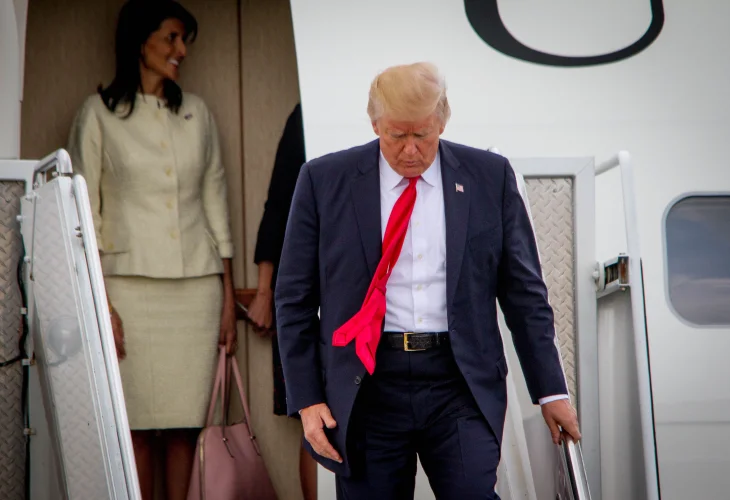 Donald Trump (Shutterstock)
The United States has presented Iran with a 15-point plan to end the war that begins with a temporary ceasefire before negotiations on nuclear and military demands, according to Israeli and international reports Tuesday. Israeli officials say the approach could halt fighting before Iran agrees to its core conditions.
According to Channel 12 and confirmed by an Israeli official speaking to The Times of Israel, the concern is not over the substance of the demands but the sequence. Israeli officials fear Washington is prioritizing a pause in fighting followed by negotiations, rather than requiring Iran to meet key terms before any ceasefire takes effect.
The proposal outlines strict requirements for Iran that would be negotiated during the ceasefire period, rather than enforced beforehand. According to reports in The Wall Street Journal, Iran would be required to dismantle its nuclear program, permanently forgo nuclear weapons, and end all uranium enrichment on its territory. Its existing stockpile of highly enriched uranium would be transferred to the International Atomic Energy Agency (IAEA) under an agreed timeline, while key facilities at Natanz, Isfahan and Fordo would be dismantled and placed under full international oversight.
Beyond the nuclear file, the plan also addresses Iran’s broader regional posture. It calls for limits on Iran’s ballistic missile program, both in range and quantity, and restrictions on future use to self-defense. It further requires Iran to halt funding, arming and directing its regional proxies, and to ensure the Strait of Hormuz remains open as a free maritime corridor.
In exchange, the United States and the international community would lift nuclear-related sanctions and support Iran’s civilian nuclear program, including assistance with energy generation at the Bushehr plant. The proposal also includes removing the “snapback” mechanism, meaning sanctions could not be automatically reimposed if Iran violates the agreement, and would instead require a new political decision.
But according to the same reports, the mechanism for reaching such an agreement is what has raised alarm in Israel. The plan envisions a monthlong ceasefire period during which negotiations over the 15 points would take place, a structure developed by White House envoy Steve Witkoff and senior adviser Jared Kushner. According to Channel 12, Israeli officials fear that such a pause would shift the process from enforcing conditions to negotiating them, potentially reducing leverage gained during the ongoing military campaign by easing military pressure on Iran before it agrees to key demands.
President Donald Trump said Tuesday that the United States and Iran are “in negotiations right now,” describing recent discussions as “very good and productive,” after making similar remarks a day earlier when he delayed planned strikes. He has also suggested that Iran is eager to reach a deal, at one point saying the regime has effectively agreed it will not pursue nuclear weapons.
Iranian officials however said Tuesday that no direct negotiations with the United States are taking place, contradicting Trump’s claims, while reports indicated Iran is considering the proposal but maintaining conditions it is unlikely to accept. According to the Wall Street Journal, Iran has demanded the closure of US military bases in the Gulf, the ability to maintain its ballistic missile program without restrictions, and control over transit through the Strait of Hormuz, positions a US official described as unrealistic.
The diplomatic channel itself has also drawn attention. The proposal was reportedly delivered via Pakistan, whose army chief, Field Marshal Syed Asim Munir, has emerged as a key intermediary between Washington and Tehran. Pakistani Prime Minister Shehbaz Sharif said his country is prepared to host talks if both sides agree.
Some diplomats have noted that the current proposal may be based in part on a similar framework presented in 2025 that Iran ultimately rejected, raising further questions about whether the plan reflects a new diplomatic approach or a revival of earlier terms under changed battlefield conditions.
For now, there is no indication that a ceasefire is imminent. While diplomatic efforts appear to be intensifying, Israeli officials have indicated they expect the fighting to continue in the coming weeks, as the gap between the sides remains substantial and unresolved.

