

World News
Top Democrats Reject AIPAC as 2028 Race Begins to Take Shape
Influential pro-Israel lobby pushes back after multiple White House hopefuls distance themselves, as declining support for Israel makes the move politically advantageous
- Brian Racer
- | Updated
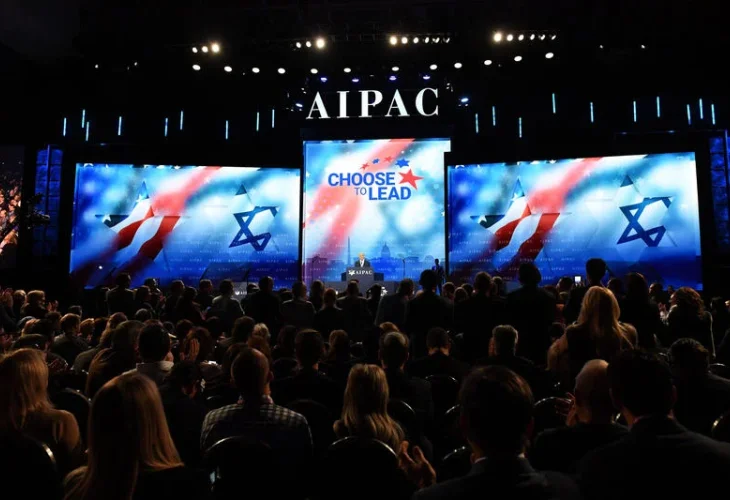 AIPAC (Haim Zach / GPO)
The pro-Israel lobby group AIPAC pushed back Tuesday after a report revealed that several leading Democratic figures had rejected or distanced themselves from its support. The response highlights a broader shift inside the Democratic Party, where distancing from AIPAC is increasingly seen as politically advantageous ahead of a likely contentious primary season, as voter attitudes toward Israel continue to change.
“AIPAC has never given to a presidential campaign,” the group said in a statement. “Millions of Democrats are AIPAC members who will support candidates that best reflect their values, including a strong US-Israel partnership.” The organization added that “singling out and excluding millions of pro-Israel Democrats is wrong and undemocratic.”
Among those rejecting AIPAC’s backing are New Jersey Sen. Cory Booker, California Gov. Gavin Newsom, Arizona Sen. Ruben Gallego, Kentucky Gov. Andy Beshear, Pennsylvania Gov. Josh Shapiro, former Chicago mayor Rahm Emanuel, Michigan Sen. Elissa Slotkin, and Connecticut Sen. Chris Murphy.
A spokesperson for Shapiro said he has “never taken money or solicited support from AIPAC.” Booker said his decision is part of a broader pledge to reject all political action committee funding. “I don’t believe we should be accepting any PAC money at all from anybody,” he said. Murphy, meanwhile, said, “I don’t take their money, they’re running ads against me,” while Gallego has said he “wouldn’t take AIPAC money.”
The distancing reflects a wider recalibration among Democrats as Israel becomes a more divisive issue within the party’s base. Veteran Democratic strategist Mark Longabaugh said the issue is likely to shape the coming presidential contest. “This is going to be a huge flashpoint in the primary throughout 2027 and into 2028,” he said.
Recent polling underscores the shift. An NBC News survey conducted from February 27 to March 3 and released in March found that 39 percent of registered voters held negative views of Israel, compared to 32 percent with positive views. Among Democrats, 57 percent viewed Israel negatively. A Quinnipiac University poll released March 9 found that 62 percent of Democrats believe the United States is too supportive of Israel.
The issue has also been amplified by AIPAC’s heavy spending in recent primaries. The group and its affiliates spent roughly $22 million in Illinois races earlier this month, drawing criticism from some Democratic leaders and contributing to renewed scrutiny of its role in party politics.
Still, the party is not unified in its approach. Some potential 2028 contenders, including former Vice President Kamala Harris and former Transportation Secretary Pete Buttigieg, declined to comment on AIPAC when asked. Booker also cautioned against singling out the group, calling the focus on AIPAC “problematic” and arguing that the broader issue is money in politics. “AIPAC is not the problem in America. The problem in America is money in politics,” he said.
AIPAC and its allies have vowed to remain active despite the pushback. “We aren’t going to be deterred in ensuring that pro-Israel voices are heard in federal elections,” said Patrick Dorton, a spokesperson for AIPAC’s affiliated super PAC. He added that the group would continue working “with mainstream Democrats across the party to strengthen the U.S.-Israel relationship.”
No major Democratic contender has openly embraced AIPAC as the early contours of the 2028 race begin to emerge, suggesting the group’s role in the party will remain a central point of tension in the years ahead.
Questions & Answers
+What is AIPAC and what does it do?

