

Wonders of Creation
From Earthquakes to Weather: How Scientific Scales Work
Discover how scientific scales like Richter and Celsius help us measure earthquakes, temperature, and better understand the world around us.
- Debbie Reichman
- | Updated
 (Photo: shutterstock)
When we hear the word “ladder,” we usually think of a tool that helps us climb higher. But there are other kinds of “ladders” in the world as well. Scientific scales can also act like ladders, helping us move from low to high and understand the world around us in a clearer way.
These scales allow us to measure and interpret the wonders of Hashem’s creation, from the power of the earth to the temperature of our surroundings.
Measuring the Power of the Earth: The Richter Scale
One well known scale is the Richter Scale, used to measure the strength of earthquakes.
Geologists use this scale to describe the magnitude of an earthquake, which means the amount of energy released during the event. This information helps scientists better understand earthquakes and prepare for future ones, especially in areas where they are more likely to occur.
The Richter Scale is logarithmic. This means that each whole number increase represents a much stronger earthquake. For example, a magnitude 7.0 earthquake releases about 30 times more energy than a 6.0 earthquake.
Although the Richter Scale is still widely known because of its simplicity, scientists today often use a more precise system called the Moment Magnitude Scale when taking detailed measurements.
Measuring Temperature: The Celsius Scale and Beyond
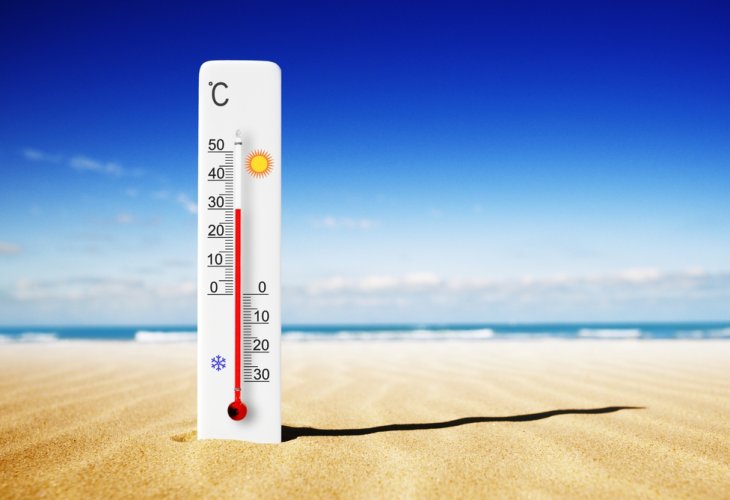
Another familiar scale is the Celsius Scale, which is used to measure temperature.
In 1724, Swedish scientist Anders Celsius introduced this system. He set 0 degrees as the freezing point of water and 100 degrees as the boiling point. This simple and clear structure made the scale easy to use and widely accepted around the world.
Over time, other temperature scales were developed as well.
The Kelvin scale begins at the lowest possible temperature, known as absolute zero, which is equal to minus 273.15 degrees Celsius. The Rankine scale also starts at this same point and is mainly used in scientific contexts.
There is also the Réaumur scale, which is similar to Celsius but divides the range between freezing and boiling into 80 degrees instead of 100.
In the United States, the Fahrenheit scale is commonly used. It is based on a different system, where the freezing and boiling points of water are set at different values.
Understanding the World Step by Step
These scales may seem like simple tools, but they play an important role in helping us understand the world in an organized and meaningful way.
Like a ladder, each step on a scale brings us closer to clarity. Whether measuring the power of an earthquake or the temperature of the air, these systems help us see patterns, make predictions, and better appreciate the precision within creation.

