

Raising Children
How Your Perception Shapes Your Child’s Future
Why seeing your child as a capable and good soul can transform their confidence, behavior, and long term development
- Rabbanit Penina Leshem
- | Updated
Is a zebra black with white stripes, or white with black stripes?
When I first heard this question, it did not really take me toward zebras. It made me think about our children and our students.
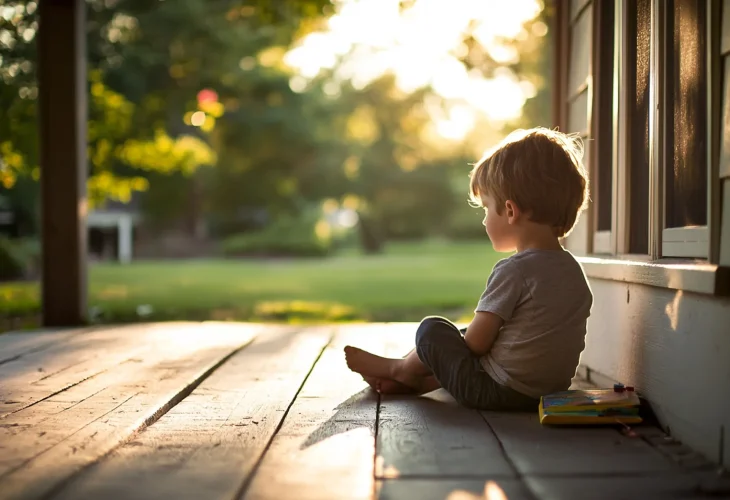
Your daughter, or the student you are teaching, what do you see in her? A white soul with black stripes? Or a black figure with a few white stripes?
What We Really See in Our Children
I once met a young mother with a two month old baby, sweet and angelic. I warmly congratulated her and asked how she was managing. She replied that it was not easy, because “he is a difficult baby. He has a stubborn personality.”
Let me be clear. I am not judging anyone, certainly not a woman after giving birth. But my heart ached to hear the label this baby had already received after just two months.
Instead of seeing a white soul, a pure and innocent child, with a few external challenges that do not define his true essence, she saw something else. She saw the difficulty as his identity. “That is his nature. He is stubborn. He is overly demanding.” And only then added, almost as an afterthought, “Yes, he is very cute and I love him, of course, but…”
We do not even need to say it out loud. What we think is enough. It passes to the child, heart to heart. Their soul senses what we truly think of them, and it shapes them.
The Power of Environment
Our personality, abilities, and talents are shaped by both heredity and environment. Some traits are inherited, but much of who we become is influenced by the environment around us.
Our environment includes everything that is not genetic. It is the sum of a person’s experiences, the people they encounter, the society they grow up in, and the messages they receive about themselves. Messages like “you are capable” and “you are good,” or, on the other hand, “you cannot” and “you are weak.”
Every person has an internal mechanism that leads them to act according to what they believe about themselves. If a person believes they are capable and good, they will act in ways that confirm that belief. If they believe they are weak or flawed, they may behave accordingly.
This creates a self fulfilling cycle. A person raised in an environment that labels them as weak or problematic may indeed struggle or fail. But a person who is encouraged and believed in will often rise to meet that belief.
The more these experiences repeat, the stronger the belief becomes. Different environments create different people, who see themselves differently and respond differently to the same situations, not necessarily based on objective reality, but based on what they have learned to believe about themselves.
The Critical Early Years
In the early years of life, the influence of the environment is especially powerful. A weakening or critical environment in childhood can deeply affect a child’s development and their belief in themselves.
Research has shown that a negative environment can significantly limit a child’s abilities and talents, even when they have strong natural potential.
The question, then, returns to us: When you look at your child, what do you truly see?

