

Raising Children
Education Is Growth: Why Children Need Time to Thrive
How patience, consistency, and the right environment help children grow into confident, capable individuals
- Rabbi Yisrael Azulai
- | Updated
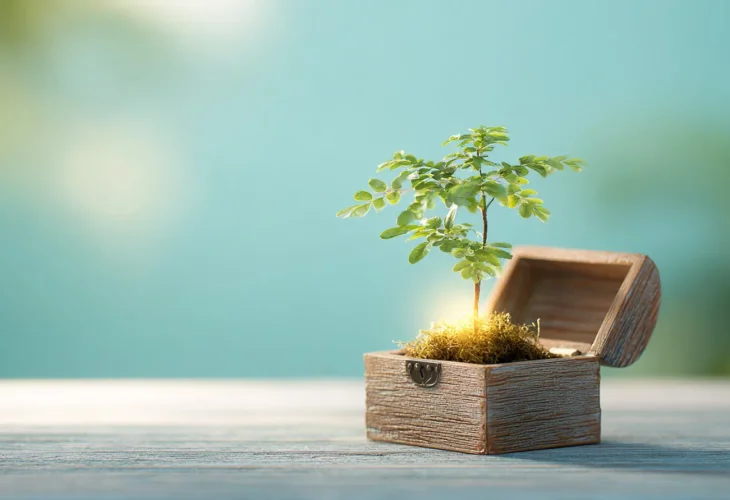
Tu Bishvat marks the New Year for trees. Our sages identified a deep connection between the tree and the human being.
There is a shared principle that connects people, trees, and education. One place where this connection appears is in Parashat Terumah, which describes the construction of the Mishkan and its vessels. The Ark of the Covenant, which held the Tablets, was made of acacia wood and overlaid with pure gold, inside and outside.
We may ask, why was the most sacred object in the Mishkan made of simple wood covered in gold, while other items were made entirely of gold?
The answer lies in the symbolism of the tree.
Inside the Ark were the Tablets — the Torah. The word “Torah” means instruction, guidance for life. Above the Ark were the cherubim, shaped like children, symbolizing the education of the next generation. The wood itself represents growth — just like a tree grows through a long process of planting, nurturing, and care.
A tree does not grow overnight. In the same way, education is not immediate. It is a gradual process of development that requires patience and consistent investment.
Education Is a Process, Not Immediate Results
This is the way that we must understand education. Anyone entering the field must recognize that education is growth. It is not control, not instant results, but a continuous process. Only later do we see the fruits.
Many educational systems expect quick and dramatic changes, and quickly lose patience. However, education is not about immediate outcomes, but a long journey in which a child develops physically, emotionally, and spiritually.
Like a tree, a child needs the right environment: support, encouragement, and steady care. Growth happens step by step, sometimes slowly, sometimes with sudden breakthroughs. Patience is essential as results are not always visible right away, and learning often requires repetition, correction, and persistence.
A parent or educator who understands this does not give up easily. They maintain faith in the process and build a personal connection with the child.
Practical Ways to Foster Growth-Based Education
Following are several practical approaches to education based on growth and patience:
Set long-term goals – Focus on developing skills, values, and character over time, rather than expecting immediate success.
Create a supportive environment – Ensure the child feels safe, understood, and accepted, even during struggles.
Emphasize effort and progress – Highlight improvement and effort, not just outcomes.
Use gradual learning – Adapt teaching to the child’s pace, with clear stages and achievable steps.
Allow space for mistakes – Let children learn through trial and error without fear.
Develop emotional and social skills – Teach self-control, empathy, communication, and problem-solving.
Involve parents – Align educational approaches at home and school to support the child consistently.
Encourage self-awareness – Help children track their own progress and build internal motivation.
Stay connected to the child – Never give up on them; keep reaching out and engaging.
Maintain collaboration – Work together with all those involved in the child’s education toward a shared goal.
The Long-Term Investment of True Education
Education based on growth and patience is a long-term investment that yields deep and lasting results. It requires faith in the process, commitment over time, and an understanding that meaningful growth cannot be rushed.
Just as a tree requires ongoing care before it bears fruit, so too, children need nurturing, patience, and belief in their potential.
If we raise children in this way — each according to their unique path, we will one day be able to say that we have truly succeeded in nurturing a generation to be proud of.

